
10 Best Trench Gratings for Drainage Projects

Choosing the right Trench Gratings can shape how safely and reliably a drainage project performs. A busy loading bay has different demands from a garden path. One may face forklift wheels, oil, and frequent washdowns. The other may need only to move rainwater without spoiling the landscape. Small details matter.

This guide to the 10 best trench gratings for drainage projects compares practical options by material, load suitability, opening design, and maintenance needs. Galvanized steel can suit many general applications, while stainless steel may be worth considering where corrosion is a concern. Ductile iron is often selected for heavier traffic, but the right choice still depends on the system and site conditions. Check the manufacturer’s load classification and installation guidance rather than judging strength by appearance alone. A narrow slot may look neat. It can also collect leaves or sediment, so cleaning access deserves attention.

There is no universal winner. Project budgets, local rainfall, vehicle movement, and exposure to chemicals all affect the decision. Even a well-rated grate can disappoint if it does not fit the channel correctly or is installed poorly. That part is easy to overlook. The comparisons ahead highlight useful strengths and trade-offs, while recognizing that product specifications vary by manufacturer. Treat them as a starting point, then confirm dimensions, materials, and rated performance for your exact application.
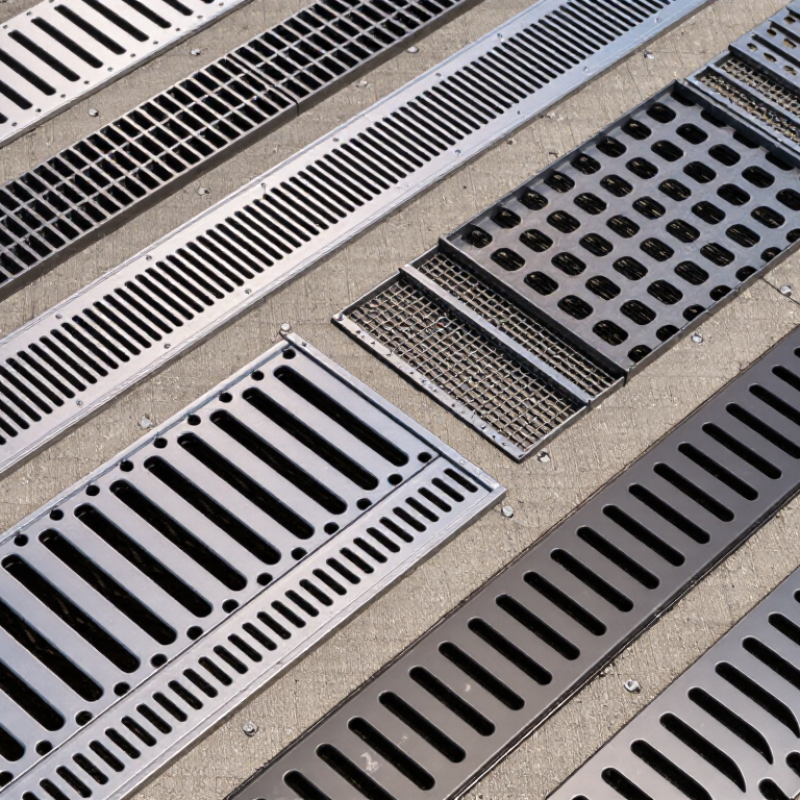
10 Best Trench Gratings for Drainage Projects

How Trench Gratings Work in Drainage Systems

A trench grate is the visible entry point to a drainage system. Water flows across the pavement, passes through the grate openings, then enters a channel that carries it toward an outlet or storage structure. The Federal Highway Administration’s Urban Drainage Design Manual, HEC-22, explains that inlet performance depends on flow rate, pavement slope, grate geometry, and approach conditions. In practice, a long grate does not guarantee good capture if water reaches it too quickly or debris blocks its openings. Leaves, grit, and plastic can collect along the upstream edge. Small details matter.

Designers use rainfall intensity and the area draining toward the trench to estimate the incoming flow. HEC-22 provides methods for evaluating inlet interception and bypass flow, helping engineers check whether water may continue past the grate. A useful review considers the whole route: surface slope, channel capacity, outlet size, and downstream connection. Grate openings also need to balance water entry with pedestrian safety and maintenance access. Real sites are less tidy than drawings. Sediment builds up, and installation levels can vary slightly. That is worth checking. Routine inspection helps reveal blocked slots, standing water, or loose sections before they reduce drainage performance.

Key Factors for Selecting a Trench Grating

Key Factors for Selecting a Trench Grating

Start with the load, not the appearance. EN 1433 classifies drainage channels by test load, from A15 at 15 kN to D400 at 400 kN. A light-duty walkway and a delivery-yard entrance need different ratings. Check the expected vehicles, turning movements, and occasional heavy equipment; a quiet site today may not stay quiet. The rating alone is not a complete design review.

Hydraulic capacity matters just as much. FHWA’s Urban Drainage Design Manual, HEC-22, explains how inlet geometry, approach flow, and roadway conditions affect drainage performance. Compare the grate’s clear opening and slot layout with the project’s design flow, and consider whether leaves, sediment, or grit could block it. A narrow slot may catch less debris, but can also restrict inflow. There is no universal best pattern.

Material and installation deserve close attention. Cast iron, steel, and stainless steel differ in corrosion resistance, weight, and maintenance needs; local exposure to road salt or standing water can change the choice. Check that the frame can be firmly anchored and that the finished grate sits flush with the surrounding surface. Small installation errors are easy to overlook, yet they can create rattling, trip edges, or uneven load transfer. Verify dimensions and load class against the project documents before ordering.

10 Best Trench Gratings for Different Drainage Needs

Drainage needs vary with flow, traffic, debris, and maintenance access. For light pedestrian areas, galvanized steel or molded polymer gratings can suit shallow channels. Heavier vehicle routes call for ductile iron or reinforced steel units with a verified load rating. Narrow-slot designs limit visible openings, while wider bars can pass leaves and sediment more readily. Heel-safe patterns help around public walkways. For corrosive or coastal sites, corrosion-resistant materials may reduce upkeep, though they still need inspection. Removable panels make cleaning easier; hinged panels can be safer where frequent access is needed. Ten practical choices include galvanized steel, stainless steel, ductile iron, cast iron, reinforced steel, polymer concrete, fiberglass, molded polymer, heel-safe bar grating, and narrow-slot grating.

The U.S. Environmental Protection Agency reports that stream health often declines as watershed impervious cover approaches 10 percent. That figure is not a trench-grating design rule, but it underlines why dependable runoff control matters. Select openings and channel capacity using site-specific rainfall, slope, debris load, and local design criteria. A grating that looks robust may still clog if its slots trap leaves. That detail is easy to miss.

Tips: Check the manufacturer’s load-class documentation, clear opening dimensions, and corrosion guidance. Inspect the channel after heavy rain, not only during scheduled maintenance. If sediment builds up at the outlet, the grate may not be the real problem.

Comparing Grating Materials, Load Ratings, and Designs

Trench grating selection starts with the load class, not appearance. EN 1433, the European standard for drainage channels in traffic areas, defines classes from A15 at 15 kN to F900 at 900 kN. B125 suits many pedestrian areas and car parks; D400 is intended for carriageways. These figures describe standardized test loads, not a promise that every installation will perform identically. Bedding, frame support, and installation quality matter. A loose frame can rattle under a wheel, even when the grate’s rating looks adequate.

Material changes the trade-offs. Ductile iron handles heavy traffic and repeated impacts, but adds weight and may need corrosion protection in aggressive environments. Galvanized steel is lighter and often easier to handle, though damaged coatings can expose the base metal. Stainless steel resists corrosion well, but costs more. Polymer concrete and composite grates can reduce weight and resist corrosion; confirm their load class and fixing details before specifying them. Small openings help catch debris, yet can clog with leaves after a storm. That detail is easy to overlook. Choose slot width, bar spacing, and surface texture for the site’s debris, runoff, and pedestrian needs. Standards guide comparison, but local conditions still deserve a site check.

Installation and Maintenance for Long-Term Performance

10 Best Trench Gratings for Drainage Projects: Installation and Maintenance for Long-Term Performance

Choosing a trench grating is only part of reliable drainage. Correct installation helps prevent rocking, blocked flow, and premature wear. Match the grating’s load rating to expected traffic, and check that the channel bed is stable and level. Set the frame to the finished surface, allowing water to flow toward the channel rather than pool beside it. The U.S. EPA’s 2022 Clean Watersheds Needs Survey estimated $115.2 billion in stormwater management needs over 20 years. That figure highlights why routine care matters; a small channel left clogged can create costly problems.

Tips: Before opening a site, confirm the grate sits flush and cannot shift underfoot or under vehicle loads. After installation, remove mortar, soil, and packaging from the channel. Inspect after heavy rain and seasonal leaf fall. Clear sediment with a scoop or suitable flushing method, then check outlets for obstructions. Look for cracked concrete, loose fasteners, sharp damage, and corrosion. Keep a simple inspection log with dates and photos. It is easy to skip this when the channel looks clean. That is not always enough: fine sediment can settle below the grate and reduce capacity unseen. Use cleaning tools that will not damage the coating or channel surface, and replace distorted sections promptly.

10 Best Trench Gratings for Drainage Projects – Installation and Maintenance for Long-Term Performance
Grating Type Typical Material Common Applications Typical Clear Opening / Width Range Load-Class Selection Guidance Installation Considerations Maintenance for Long-Term Performance
Galvanized steel bar grating Hot-dip galvanized carbon steel Car parks, service yards, commercial areas, and general site drainage Common channel clear widths are approximately 100–300 mm; bar spacing varies by design. Select a complete, tested channel-and-grating system for the project’s required EN 1433 class. Do not infer a load class from material alone. Set the channel on a suitable concrete bed and haunch; align and secure the grating with the specified locking system. Remove leaves, sediment, and debris; check for coating damage, corrosion, loose locks, and movement.
Ductile iron grating Ductile cast iron Roads, loading areas, industrial yards, and locations subject to repeated wheel traffic Common channel clear widths are approximately 100–300 mm, with larger formats available in some systems. Often considered for heavier-duty applications; verify the certified system class and installation details against the design load. Provide the specified concrete support and bedding; ensure the frame is fully supported and level with the finished surface. Clear the channel and outlet; inspect the frame, seating surfaces, fasteners, and grating for damage or rocking.
Stainless steel bar grating Stainless steel Food-processing areas, commercial kitchens, wash-down zones, and corrosive or hygienic environments Common channel clear widths are approximately 100–200 mm; confirm the selected system’s available sizes. Choose a tested load class appropriate to pedestrian or vehicle traffic; corrosion resistance does not determine structural capacity. Use compatible fixings and follow the system’s support details; avoid contamination from incompatible metals during installation. Wash away grease and deposits; inspect welds, supports, fixings, and surfaces for corrosion or damage.
Composite grating Glass-fibre-reinforced polymer (FRP/GRP) Coastal facilities, chemical-processing sites, utilities, and other areas where corrosion resistance is important Common channel clear widths are approximately 100–200 mm; panel and bar configurations vary. Use only where the manufacturer’s tested system rating meets the required application; check concentrated and wheel loads as well as span. Follow the specified support spacing and fixing method; cut or drill only as permitted by the system instructions. Remove debris and inspect for cracks, delamination, loose connections, UV-related deterioration, and damaged edges.
Slotted heel-safe grating Stainless steel, galvanized steel, or ductile iron Pedestrian routes, plazas, accessible paths, and public areas where small openings are preferred Slot openings are product-specific; select an opening configuration suitable for the accessibility requirements of the site. Confirm both the required structural class and the opening geometry; a narrow slot alone does not establish load capacity. Orient slots as specified and install flush with the surrounding surface to reduce trip hazards and maintain drainage flow. Clear narrow slots regularly, especially where leaves or litter collect; check flushness and secure seating.
Mesh grating Galvanized steel or stainless steel Pedestrian areas, service platforms, landscaped sites, and locations needing a high open area Mesh aperture and channel width vary by system; common channel widths are approximately 100–300 mm. Verify the tested load rating, mesh aperture, support span, and intended traffic type for the complete assembly. Check that mesh panels sit securely in the frame and that edges and joints do not create trip or snag hazards. Remove trapped leaves and sediment; inspect mesh intersections, edges, supports, and locking points for damage.
Perforated plate grating Stainless steel, galvanized steel, or coated steel Pedestrian zones, building entrances, terraces, and areas where a relatively smooth walking surface is needed Perforation size, pattern, and channel width vary; check the system drawings for actual dimensions. Use the system’s tested load class and confirm that the perforation pattern is suitable for the expected traffic and footwear. Install with the specified supports and retainers; maintain an even, stable surface level at adjoining pavement. Clear blocked perforations and inspect for corrosion, deformation, loose fixings, and surface slipperiness.
Longitudinal bar grating Galvanized steel or ductile iron Roadside channels, vehicle-access routes, and linear drainage runs Grating bar direction and channel width are system-specific; commonly used channel widths range from about 100–300 mm. Confirm the tested class for the installation location and check the manufacturer’s requirements for wheel-load orientation. Keep the frame correctly aligned with the channel; install restraints and joint details as specified for traffic areas. Inspect bar alignment, frame seating, fasteners, and joints; remove silt that could reduce channel capacity.
Lockable security grating Ductile iron or galvanized steel Public streets, utility areas, and sites where unauthorized removal is a concern Available in multiple channel widths; confirm the precise opening and locking arrangement for the chosen system. Specify the required certified load class separately from the security feature; check that locks are suitable for the exposure conditions. Fit the locking components as directed and make sure maintenance personnel can safely access them with the correct tools. Clear the grating and test locks during inspections; replace damaged hardware and ensure the grating remains seated.
Heel-safe composite or narrow-slot grating FRP/GRP or metal with narrow openings Walkways, cycle routes, accessible public spaces, and landscaped paths Opening dimensions are system-specific; select a configuration that complies with applicable local accessibility requirements. Check the certified structural rating and the suitability of the opening for pedestrians, cycles, and any maintenance vehicles. Install level and secure, with joints aligned and no protruding edges; confirm that the design drains adequately for the site. Remove debris from openings, check fixings and surface condition, and repair any uneven or damaged sections promptly.
Selection note: EN 1433 load classes commonly range from A15 for pedestrian and cyclist areas to F900 for very heavy-duty applications. Typical examples include B125 for footways and comparable areas, C250 for kerbside channels, D400 for carriageways, and E600 for heavy-duty areas such as docks and industrial sites. The correct class depends on the actual location, traffic, support, and installation. Confirm dimensions, certification, drainage capacity, and installation requirements in the project specification and the selected system’s technical documentation.

Company Info

Universal Pumping

625 Apache Trail
Woodstock, GA 30189

Mon - Fri | 9:00 AM - 5:00 PM

Connect With Us

About Universal Pumping

Universal Pumping is staffed with industry professionals with 20-45 years experience with high pressure pumping systems. We represent only the “elite producers” in pump manufacturing: Britain’s EMS and Germany’s EMMERICH. Our engineering and manufacturing approach is conservative, and we do not use “guess work” in the design or sales of our pumping and filtration equipment.