
2026 Best Color TFT LCD Screen Types for Global Buyers

Choosing a Color Tft Lcd Screen for 2026 requires more than comparing inch sizes and unit prices. Global buyers must examine brightness, viewing angle, touch integration, interface stability, operating temperature, and long-term supply. A screen may look vivid under showroom lighting, yet become unreadable inside a sunlit vehicle or factory window.

Omdia’s Display Long-Term Demand Forecast identifies automotive, information technology, and industrial applications as important demand areas. TrendForce’s LCD panel outlook also highlights continuing price pressure and uneven panel utilization. These reports suggest a practical reality: purchasing conditions can change quickly. Ross Young, co-founder of Display Supply Chain Consultants, has described the sector simply: “The display industry is a cyclical industry.” Buyers should remember that sentence.

Small details matter. A 7-inch module with 800 × 480 resolution may suit a controller, but not a medical dashboard requiring sharper text. A 1,000-nit panel may improve outdoor visibility, while increasing heat and power consumption. Long-term buyers should request optical test data, sample aging results, warranty terms, and lifecycle commitments. Ask for evidence, not attractive claims.

No forecast is perfect. Neither is every supplier promise. This guide compares common Color Tft Lcd Screen types, including TN, IPS, and advanced wide-viewing-angle designs. It considers performance, cost, durability, customization, and global logistics. The goal is not to declare one universal winner. It is to help buyers select a dependable display for real working conditions, even when budgets, regulations, and supply plans remain uncertain.
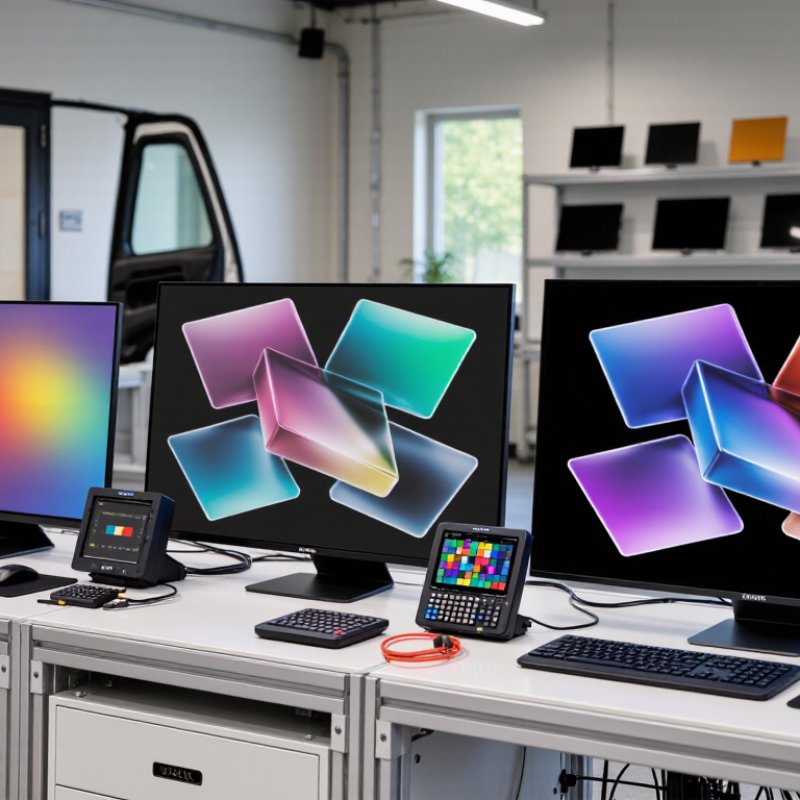
2026 Best Color TFT LCD Screen Types for Global Buyers

What Is a Color TFT LCD Screen?

A color TFT LCD screen is a flat-panel display that uses thin-film transistors to control individual pixels. Each pixel contains red, green, and blue subpixels. Their brightness levels combine to create millions of visible colors. A backlight supplies the light, while liquid crystals regulate how much light passes through each color filter.

This structure explains the screen’s practical strengths. It offers stable image quality, mature production, and many interface options. Common panel modes include TN, IPS, and VA. IPS usually provides wider viewing angles, while VA often delivers deeper contrast. TN can support fast response at lower cost. However, these are general tendencies, not guarantees. Panel tuning still matters.

Industry data supports this technology’s global relevance. Omdia’s 2024 Display long-term demand outlook shows LCD continuing to represent the largest share of display area demand, especially in televisions, vehicles, industrial equipment, and monitors. The International Data Corporation’s 2024 worldwide device reports also indicate strong ongoing demand for visual interfaces across computing and connected equipment. For buyers, specifications deserve careful checking. A 5-inch screen with 800 × 480 pixels may suit a control panel, but it can look coarse at close range. Brightness, viewing angle, operating temperature, touch structure, and backlight lifetime affect field performance. Color accuracy may be overlooked. That can become an expensive mistake.

2026 Best Color TFT LCD Screen Types for Global Buyers - What Is a Color TFT LCD Screen?

A color TFT LCD screen uses thin-film transistors to control individual pixels, while liquid crystals, color filters, and a backlight produce the displayed image.

Comparison of Common Color TFT LCD Screen Types
Screen Type Operating Principle Typical Color Depth Typical Viewing Angle Typical Contrast Ratio Typical Response Time Key Advantages Common Applications
TN TFT LCD Twisted Nematic liquid-crystal cells change light transmission when voltage is applied. Usually 16.7 million colors with 8-bit processing; some low-cost panels use 6-bit color with dithering. About 90°–160°, depending on the viewing direction and panel design. Approximately 600:1–1,200:1. Approximately 1–5 ms for many modern panels. Low cost, fast switching, and efficient operation. Gaming displays, industrial instruments, embedded control panels, and entry-level monitors.
IPS TFT LCD In-Plane Switching aligns liquid-crystal molecules parallel to the panel surface. Typically 16.7 million colors; higher-end panels may support 1.07 billion colors with 10-bit processing. Usually 170°–178° horizontal and vertical. Approximately 700:1–1,500:1. Approximately 1–8 ms, depending on the panel and measurement method. Accurate color reproduction, stable image quality, and wide viewing angles. Professional monitors, medical equipment, tablets, automotive displays, and human-machine interfaces.
VA TFT LCD Vertical Alignment cells normally block more backlight and tilt when voltage is applied. Usually 16.7 million colors; 10-bit processing is available in selected panels. Generally 160°–178°, with some color and contrast change at extreme angles. Approximately 2,000:1–5,000:1. Approximately 4–16 ms, depending on gray-to-gray performance. High native contrast and deep black levels without using an OLED panel. Televisions, desktop monitors, digital signage, and multimedia displays.
MVA / PVA TFT LCD Multi-domain vertical-alignment structures divide each pixel into regions to improve viewing performance. Typically 16.7 million colors; advanced implementations can support wider color processing. Generally 160°–178°. Approximately 2,000:1–4,000:1. Approximately 4–12 ms in many current designs. Balanced contrast, viewing angle, and image uniformity. Office monitors, control rooms, signage, and general-purpose commercial displays.
TFT LCD with LED Backlight A TFT LCD panel uses white or colored LEDs as the backlight instead of fluorescent lamps. Commonly 16.7 million colors; the final color range depends on the panel and backlight. Determined primarily by the TN, IPS, or VA panel structure. Typically about 600:1–5,000:1, depending on panel type. Determined primarily by the LCD mode and driving method. Thin construction, lower power consumption, long backlight life, and no mercury-containing fluorescent tube. Most modern monitors, industrial displays, portable devices, and embedded systems.
Buyer note: Actual specifications vary according to panel size, resolution, backlight design, driving electronics, operating temperature, and measurement standards. Confirm brightness, interface, touch function, operating temperature, lifetime, and mechanical dimensions before purchasing.

How Color TFT LCD Technologies Differ

2026 Best Color TFT LCD Screen Types for Global Buyers

Color TFT LCD technologies differ in structure, color control, viewing angle, and operating behavior. TN panels switch quickly and cost less, but their colors and vertical viewing angles are limited. IPS panels keep colors more stable when viewed from the side. They suit medical instruments, control panels, and dashboard displays. VA panels offer deeper blacks and stronger contrast, although motion can appear slower in some designs.

Color performance also depends on the backlight and pixel depth. A standard white LED backlight is efficient, but it may not cover a wide color range. An 8-bit panel displays smoother gradients than a 6-bit panel with frame rate control. This difference becomes visible in blue skies, thermal maps, and product images.

Specifications should include brightness, contrast, viewing angle, response time, and color coverage. A single “million colors” claim is not enough.

Outdoor use creates another distinction. High-brightness TFT LCDs improve readability under direct sunlight, while transflective designs combine reflected and transmitted light. Touch layers can reduce clarity if bonding is poor. Engineers should test the complete assembly, not only the bare panel.

No panel wins every test. A wide-viewing IPS screen may consume more power than expected, and a bright screen can generate noticeable heat. Early samples sometimes look perfect indoors, then fail beside a window. That mistake is easy to repeat.

Key Specifications for Comparing TFT LCD Screens

2026 Best Color TFT LCD Screen Types for Global Buyers

When comparing TFT LCD screens, start with the application, not the catalog title. A 5-inch display for outdoor equipment may need 800 nits or more. Indoor panels often perform well around 300 to 500 nits. Check resolution, pixel density, contrast ratio, and viewing angle together. A higher resolution is not always better. It can increase power use without improving the user’s experience. Response time also matters for moving images, while color depth affects gradients, maps, and medical-style interfaces. In practical evaluations, I compare screens under actual lighting, not only laboratory figures.

Tips: Request samples before bulk decisions. Test the panel through its intended interface. Confirm operating temperature, storage temperature, backlight life, touch compatibility, and connector position. Measure power draw during bright scenes. Small details can become expensive redesigns.

Reliability depends on more than image quality. Review the LCD’s interface, such as RGB, LVDS, or MIPI, and confirm controller compatibility. Check whether the screen supports gloves, moisture, or protective glass when needed. Mechanical drawings should show active area, bezel size, mounting holes, and cable clearance. I sometimes overvalue brightness and overlook heat buildup behind the panel. That mistake deserves more attention. Ask for inspection records, production consistency data, and realistic lead-time information. A dependable comparison includes both performance and integration risk.

Best TFT LCD Types for Different Global Applications

Choosing the best color TFT LCD depends more on the application than on headline resolution. Omdia’s 2024 Display Long-Term Demand Forecast indicates continued growth in automotive display area through 2030, driven by larger instrument clusters and center screens. IPS TFT LCDs suit dashboards, navigation units, and control panels because they provide wide viewing angles and stable color. High-brightness versions, often above 800 cd/m², remain easier to read under direct sunlight.

Industrial equipment needs a different balance. TN panels can offer fast response and lower cost for simple meters, barcode devices, and factory interfaces. VA panels provide stronger contrast for dark monitoring rooms and security displays. For outdoor terminals, transflective TFT LCDs can reduce dependence on backlights, although their color performance may look less vivid. Keep it practical. A beautiful sample can disappoint beside a window.

Medical and transport applications demand careful validation. The International Energy Agency reported more than 17 million electric cars were sold globally in 2024, increasing demand for reliable cockpit displays and compact rear-seat interfaces. IPS panels with optical bonding can reduce reflections and improve touch accuracy. TÜV Rheinland’s display testing guidance also highlights flicker, brightness consistency, and viewing comfort as important evaluation areas. Buyers should verify operating temperature, sunlight readability, lifetime data, and local certification requirements. There is no universal winner. Even experienced teams sometimes overvalue resolution and underestimate heat, gloves, dust, or installation depth.

How to Select a TFT LCD Supplier and Display Solution

2026 Best Color TFT LCD Screen Types for Global Buyers

How to Select a TFT LCD Supplier and Display Solution

Selecting a TFT LCD supplier starts with the application, not the catalog. IPS panels suit wide viewing angles and accurate color. TN panels often reduce cost and response time. VA panels can deliver stronger contrast. Transflective displays remain useful for outdoor equipment.

Fortune Business Insights estimated the global TFT-LCD market at about USD 178.9 billion in 2024, with continued growth through 2032. This scale increases supplier choices, but also increases quality variation. Request measured data for brightness, contrast, color uniformity, response time, and operating temperature. Do not accept typical values without test conditions.

Field experience shows that sunlight readability can defeat an otherwise excellent screen. Check the cover glass, optical bonding, touch performance, and backlight lifetime together. Ask for samples from the same production process. Verify them at low temperatures, high humidity, vibration, and repeated power cycles.

Supplier evaluation also needs traceability. Review quality certifications, change-notification procedures, failure analysis, and long-term component planning. A five-year product should not depend on a short-lived panel source. Confirm firmware support and custom tooling responsibilities in writing.

A perfect spreadsheet can mislead. I still prefer a simple sample test beside the final enclosure. Viewing angles may look acceptable in a dark laboratory, then fail beside a window. That practical gap deserves attention.

Company Info

Universal Pumping

625 Apache Trail
Woodstock, GA 30189

Mon - Fri | 9:00 AM - 5:00 PM

Connect With Us

About Universal Pumping

Universal Pumping is staffed with industry professionals with 20-45 years experience with high pressure pumping systems. We represent only the “elite producers” in pump manufacturing: Britain’s EMS and Germany’s EMMERICH. Our engineering and manufacturing approach is conservative, and we do not use “guess work” in the design or sales of our pumping and filtration equipment.