

Universal Pumping | High Pressure Pumps
High Pressure Pumps for Difficult to Pump Slurry, Sludge, and Food Waste.
Choosing the right Circuit Breaker Board in 2026 requires more than comparing prices or enclosure designs. Global buyers must examine voltage, current capacity, fault levels, installation environments, maintenance needs, and local certification requirements. A board suitable for a small office may fail in a factory, data center, solar installation, or coastal warehouse.
This guide introduces the main circuit breaker board types available to international purchasers. It covers MCB, MCCB, RCBO, ACB, DC, modular, and smart distribution boards. Each type offers different protection, switching, monitoring, and expansion capabilities. Real project conditions matter. A dusty workshop, for example, may need stronger enclosure protection than a clean commercial building. Humidity, heat, cable size, and available installation space also influence the final selection.
Look beyond the catalogue.
Experienced electrical engineers usually verify breaking capacity, busbar construction, terminal quality, thermal performance, and coordination between protective devices. Buyers should also request test reports, wiring diagrams, material specifications, and traceable inspection records. International standards can differ, and certification accepted in one market may not satisfy another. That detail is easy to overlook.
No single board wins every project. A low-cost option may create higher maintenance costs later. Smart monitoring can improve visibility, yet it may add configuration work and cybersecurity concerns. Product descriptions are not always complete. Careful technical review remains essential.
This 2026 overview helps procurement teams compare practical options with greater confidence. It also highlights common selection mistakes, because even experienced buyers sometimes prioritize price before protection, serviceability, and long-term reliability.
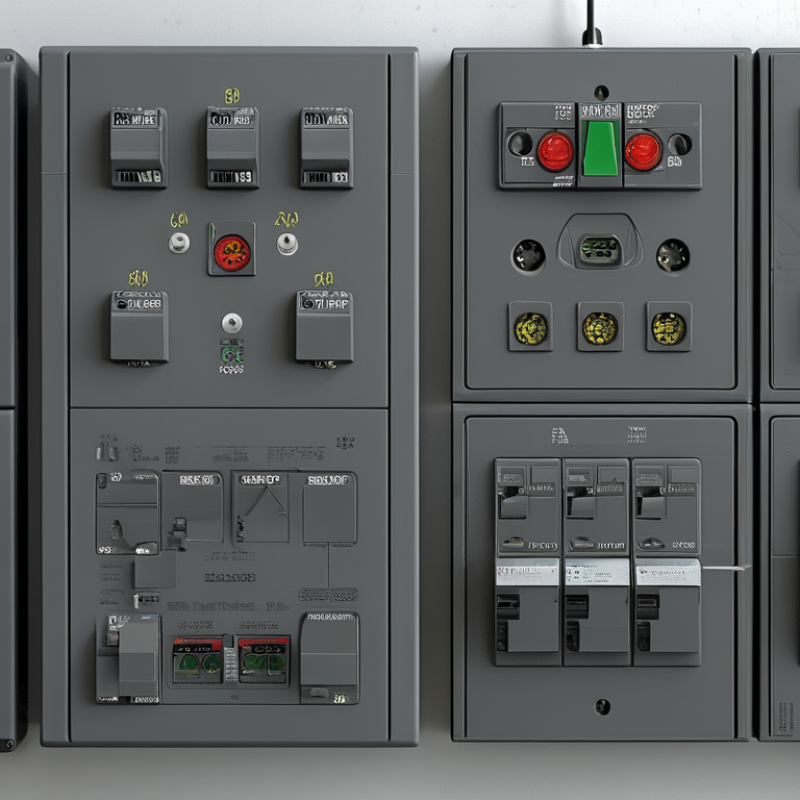
A circuit breaker board is the control point for a building’s electrical distribution. It receives power from the incoming supply and divides it into protected branch circuits. Inside, a metal or flame-resistant enclosure holds breakers, busbars, neutral terminals, and earth terminals. Clear labeling matters. A small label can prevent a dangerous mistake during maintenance.
Each breaker protects a cable from overload and short-circuit damage. Thermal protection responds to sustained overcurrent, while magnetic protection acts rapidly during a severe fault. Some boards also include residual-current protection, which helps reduce electric shock risks caused by leakage. These devices do different jobs. They should not be treated as interchangeable.
For global buyers, the board’s rated voltage, current, frequency, and short-circuit capacity require careful checking. The enclosure must suit its environment, such as a dry indoor room or a dusty outdoor cabinet. Installation space also matters when adding surge protection or monitoring equipment. A practical inspection checks terminal tightness, conductor size, circuit identification, and protective coordination.
A frequent purchasing mistake is choosing a board by appearance or circuit count alone. More spaces do not always mean better performance. Compatibility with local wiring rules and approved testing requirements must be confirmed before installation. Standards vary by market, and documentation may be incomplete. That detail deserves a second review. No board is universal.
A practical comparison of common circuit-breaker types used in low-voltage distribution boards, consumer units, control panels, and industrial switchboards.
| Circuit Breaker Type | Primary Function | Typical Installation Location | Typical Current Range | Typical Voltage Scope | Common Trip or Protection Features | Typical Breaking Capacity | Best-Fit Applications | Key Buyer Considerations |
|---|---|---|---|---|---|---|---|---|
| Miniature Circuit Breaker (MCB) Branch-circuit protection | Protects final circuits from overload and short-circuit damage by automatically disconnecting the circuit. | Residential consumer units, commercial distribution boards, lighting panels, and small control panels. | Commonly 0.5–63 A; some product families extend to approximately 125 A. | Usually low-voltage AC systems up to 230/400 V AC; DC ratings depend on the specific design. | Thermal overload protection and magnetic short-circuit protection. Common trip curves include B, C, and D. | Common ratings include 4.5 kA, 6 kA, and 10 kA, depending on the product and applicable standard. | Lighting, socket outlets, small appliances, office circuits, and general building services. | Verify pole configuration, trip curve, rated current, short-circuit rating, terminal capacity, mounting system, and local certification requirements. |
| Molded-Case Circuit Breaker (MCCB) Higher-current protection | Provides adjustable or fixed overload and short-circuit protection for larger feeders and equipment. | Main distribution boards, industrial panels, commercial buildings, generators, and motor-control assemblies. | Commonly about 16–1,600 A; larger frames are available for specialized systems. | Commonly used in low-voltage systems up to 690 V AC; exact AC and DC limits are design-specific. | Thermal-magnetic or electronic trip units, adjustable long-time and short-time settings, instantaneous protection, and optional earth-fault protection. | Often approximately 18–100 kA at the rated voltage, with the exact value varying by frame size and configuration. | Feeders, large HVAC systems, pumps, industrial machinery, data-center distribution, and generator outputs. | Check interrupting rating at the actual system voltage, coordination settings, busbar compatibility, accessories, enclosure heat rise, and maintenance requirements. |
| Air Circuit Breaker (ACB) Main incomer protection | Protects and switches high-current low-voltage circuits, often with advanced selectivity and communication functions. | Main switchboards, service entrances, generator paralleling systems, and large industrial distribution sections. | Typically 630–6,300 A, depending on the frame and application. | Commonly used on low-voltage AC systems up to 690 V AC. | Electronic protection with long-time, short-time, instantaneous, and ground-fault functions; may support zone-selective interlocking and measurement. | Commonly 42–150 kA at low-voltage ratings, subject to the tested configuration and system voltage. | Utility incomers, bus couplers, large generators, industrial plants, hospitals, airports, and high-load commercial facilities. | Evaluate withdrawable or fixed construction, service continuity, short-circuit withstand, arc-flash strategy, protection coordination, control voltage, and communication protocol. |
| Residual Current Circuit Breaker (RCCB/RCD) Earth-leakage protection | Disconnects the supply when residual current indicates leakage to earth, helping reduce electric-shock and fire risks. | Residential, commercial, construction, outdoor, wet-area, and temporary power distribution boards. | Commonly 16–125 A; residual operating-current settings often include 10, 30, 100, and 300 mA. | Usually 230/400 V AC in low-voltage distribution systems. | Residual-current protection only; it does not normally provide overload or short-circuit protection and must be paired with suitable overcurrent protection. | Short-circuit capability is commonly limited by the associated backup protective device; verify the tested combination. | Socket circuits, bathrooms, kitchens, outdoor circuits, construction equipment, and fire-risk areas. | Choose the correct residual-current type, such as AC, A, F, or B, based on the connected loads. Confirm sensitivity, time delay, number of poles, test function, and local installation rules. |
| Residual Current Breaker with Overcurrent Protection (RCBO) Combined circuit protection | Combines overload, short-circuit, and residual-current protection in one device. | Modern residential consumer units, commercial final-circuit boards, and applications requiring individual circuit monitoring. | Commonly 6–40 A for final circuits; broader ranges exist depending on the design. | Commonly 230 V AC for single-phase circuits; two-, three-, and four-pole versions may support 400 V AC systems. | Thermal-magnetic overcurrent protection plus residual-current protection. Type A is widely used for circuits containing electronic loads. | Common ratings include 4.5 kA, 6 kA, and 10 kA, depending on the device and standard. | Residential socket and lighting circuits, electric vehicle auxiliaries, appliances, offices, and circuits where nuisance tripping should be localized. | Check neutral-pole switching, residual-current sensitivity, trip curve, breaking capacity, busbar format, leakage-current compatibility, and board space. |
| DC Circuit Breaker Direct-current protection | Interrupts overload and short-circuit currents in direct-current systems where the arc does not naturally extinguish at a current zero. | Photovoltaic combiner boxes, battery storage systems, telecom power systems, electric vehicles, and DC control panels. | Commonly 1–630 A; specialized battery and industrial designs can be higher. | Typical ratings range from 48 V DC to 1,500 V DC, depending on the application and pole arrangement. | Thermal-magnetic or electronic overcurrent protection; some designs include polarity-sensitive operation, auxiliary contacts, and remote trip functions. | Highly dependent on DC voltage, current, time constant, and circuit configuration; do not substitute an AC-only rating. | Solar PV strings and arrays, battery racks, UPS systems, telecom rectifiers, and DC motor circuits. | Confirm the certified DC voltage, current direction, number of poles, maximum prospective fault current, isolation requirement, creepage and clearance, and energy-storage fault behavior. |
| Motor Protection Circuit Breaker (MPCB) Motor feeder protection | Protects motor circuits against overload, phase loss, and short circuit while providing manual motor isolation. | Motor-control centers, machine control panels, pump panels, compressors, and conveyor systems. | Commonly approximately 0.1–100 A, with the adjustable range determined by the motor frame and device design. | Commonly used in low-voltage AC motor circuits up to 400/690 V AC. | Adjustable thermal overload protection and instantaneous short-circuit protection; phase-failure sensitivity is available in many designs. | Often in the range of 10–100 kA at the rated voltage, subject to the tested combination and backup protection. | Three-phase induction motors, pumps, fans, compressors, machine tools, and small industrial automation systems. | Set the overload dial to the motor nameplate current, verify the motor starting current, coordinate with contactors and overload relays, and check enclosure temperature derating. |
| Automatic Transfer Circuit Breaker Assembly Power-source transfer | Transfers a load between normal and alternate power sources while providing switching and protective functions. | Emergency distribution boards, standby-generator systems, data centers, healthcare facilities, and critical infrastructure. | Commonly 40–4,000 A, depending on the transfer architecture and switchgear design. | Commonly low-voltage systems up to 400/480 V AC; higher-voltage designs require dedicated equipment. | Source monitoring, undervoltage and phase-loss detection, adjustable transfer delay, return delay, interlocking, and optional overcurrent protection. | Determined by the integrated switching or breaker devices and the tested transfer assembly. | Backup generators, dual utility supplies, emergency lighting, fire pumps, medical loads, and uninterrupted power strategies. | Review open-transition or closed-transition operation, neutral switching, short-circuit rating, bypass-isolation capability, generator compatibility, control logic, and maintenance bypass requirements. |
Technical note: Current, voltage, breaking-capacity, and residual-current values are representative ranges used for preliminary selection. Final specifications must be verified against the applicable IEC, UL, or regional standard, the actual prospective fault current, system earthing arrangement, ambient conditions, enclosure design, and local electrical regulations.
Universal Pumping
625 Apache Trail
Woodstock, GA 30189
Mon - Fri | 9:00 AM - 5:00 PM
Universal Pumping is staffed with industry professionals with 20-45 years experience with high pressure pumping systems. We represent only the “elite producers” in pump manufacturing: Britain’s EMS and Germany’s EMMERICH. Our engineering and manufacturing approach is conservative, and we do not use “guess work” in the design or sales of our pumping and filtration equipment.


