
Universal Pumping | High Pressure Pumps
High Pressure Pumps for Difficult to Pump Slurry, Sludge, and Food Waste.
Choosing reliable suppliers in 2026 requires more than comparing catalog prices. Generator Engine Spare Parts must match the engine model, operating environment, and maintenance schedule. A small mismatch in a piston ring, fuel pump, or gasket can cause vibration, smoke, overheating, and costly downtime. This guide introduces leading supplier types and explains how buyers can evaluate their real capabilities.
The review focuses on manufacturing experience, technical documentation, quality control, delivery consistency, and after-sales support. Strong suppliers should provide accurate part numbers, dimensional drawings, material details, and compatibility guidance. Factory audits, traceable inspection records, and recognized quality systems also deserve close attention. Still, paperwork is not enough. A supplier may show attractive certificates yet respond slowly when an emergency seal kit is needed at a remote power station.
Practical evidence matters. Look for suppliers that understand diesel generator engines, not only general industrial components. Their teams should explain lubrication limits, installation tolerances, storage conditions, and common failure patterns clearly. Customer references can reveal whether promised lead times survive real orders. Some suppliers may offer lower prices, but inconsistent rubber compounds or poorly finished bearings can create hidden expenses.
No supplier is perfect. Buyers should compare risk, not just cost. This introduction sets a clear framework for identifying dependable Generator Engine Spare Parts suppliers in 2026. It also encourages careful verification, because engine reliability depends on details that online brochures often overlook.
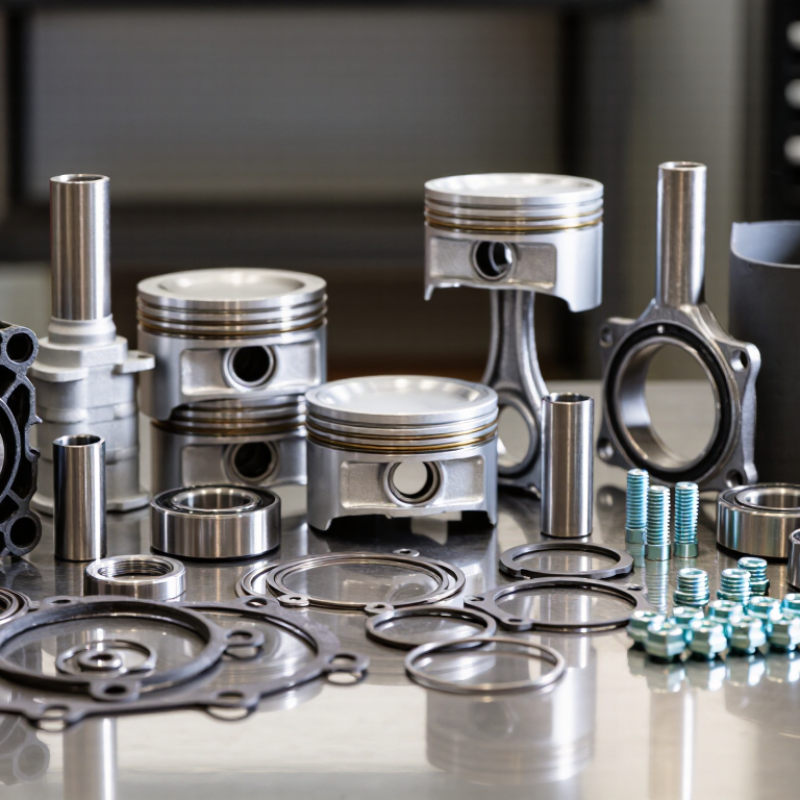
Generator engine spare parts suppliers provide replacement components that keep diesel and gas generator engines operating safely. Their products may include oil filters, fuel injectors, pistons, bearings, gaskets, sensors, belts, and cooling-system parts. A dependable supplier does more than ship a box. They help identify the correct component through the engine model, serial number, operating hours, and maintenance records.
Experienced suppliers usually maintain detailed catalogs and technical cross-reference systems. They can explain whether a part suits continuous operation, standby service, high temperatures, or dusty environments. Good suppliers also provide material specifications, dimensional checks, batch records, and clear warranty terms. These details matter when a small gasket failure can stop a hospital backup system or a remote worksite.
Real service experience still matters.
A reliable supplier asks practical questions before recommending parts. They may request photos, measurements, or failed-component reports. Packaging should protect precision surfaces from moisture and impact. Delivery speed is useful, but accuracy matters more. No supplier gets every decision right, and some catalog information can be outdated. Buyers should verify critical dimensions and installation instructions with qualified technicians. Regular feedback can expose weak assumptions and improve future purchasing decisions.
A reliable generator spare-parts supplier should prove quality beyond a polished certificate. The 2023 ISO Survey recorded more than one million ISO 9001 certificates worldwide. Certification helps, but it cannot replace batch-level evidence. Ask for material certificates, inspection records, calibration dates, and traceable lot numbers. Check seals, packaging, and machining marks before installation. Small defects often appear there.
Compatibility requires more than matching a part number. Confirm engine model, build code, voltage, frequency, dimensions, materials, and operating temperature. Review the supplier’s cross-reference method. Request drawings or controlled technical datasheets. I once considered a visually identical gasket acceptable; its compound rating was wrong. That mistake could have caused leakage and downtime. A competent supplier should explain differences clearly, not simply promise a fit.
Reliability must be measured with evidence. Uptime Institute’s 2024 Annual Outage Analysis reported that 54% of surveyed outages created costs above 100,000 dollars. Preventive sourcing deserves similar attention. Compare quoted lead times with actual delivery records. Review fill rates, warranty cases, response times, and emergency stock locations. The supplier should provide replacement recommendations based on service hours, not only calendar dates. ISO certification is useful, yet a clean audit can still hide weak batch control. Ask for recent customer references, independent test reports, and a documented corrective-action process. Perfect scorecards do not exist. Consistent records matter more.
A practical, brand-neutral supplier evaluation scorecard for diesel and gas generator engine spare parts. The criteria are based on commonly used quality-management, dimensional-control, material-verification, and maintenance practices.
| Evaluation Dimension | What a Qualified Supplier Should Provide | Recommended Acceptance Benchmark | Verification Evidence | Weight | Suggested Scoring Guidance |
|---|---|---|---|---|---|
| Quality Management System | A documented quality system covering purchasing, production, inspection, nonconforming products, corrective action, and customer complaints. | Current ISO 9001 certification from an accredited certification body, with the certificate scope covering the relevant manufacturing or trading activities. | Certificate number, scope, expiry date, certification-body verification, internal quality procedures, and recent audit findings. | 15% | 0–5 5 = independently verified and well implemented; 3 = valid certificate with limited evidence; 0 = no controlled system. |
| Part Compatibility | Accurate cross-reference information based on engine family, model, configuration, serial-number range, application, and revision level. | Compatibility must be confirmed from manufacturer part numbers, engineering drawings, service documentation, or a controlled cross-reference database. A visual match alone is insufficient. | Compatibility declaration, dimensional drawing, engine application list, serial-number coverage, and written confirmation of exclusions. | 18% | 0–5 5 = documented fitment and configuration control; 3 = partial cross-reference; 0 = unverified interchangeability claims. |
| Material and Metallurgy | Correct material grade, heat treatment, coating, and surface condition for the intended engine application. | Material grade and treatment should match the approved drawing or technical specification. Critical steel components should have traceable heat or batch identification. | Material certificates, heat-treatment records, coating specifications, hardness reports, and sample-based positive material identification where appropriate. | 12% | 0–5 5 = complete traceability and test records; 3 = basic certificates; 0 = undocumented material claims. |
| Dimensional Accuracy | Parts manufactured within drawing tolerances, including critical diameters, flatness, runout, surface finish, and sealing dimensions. | Inspection results should demonstrate conformity to the latest approved drawing or specification. Critical dimensions should be checked with calibrated instruments or a coordinate-measuring system when required. | Inspection reports, control plans, calibrated-equipment records, first-article inspection reports, and measurement-system records. | 15% | 0–5 5 = complete dimensional report; 3 = sample inspection only; 0 = no measurable conformity evidence. |
| Sealing and Gasket Performance | Gaskets, seals, O-rings, and sealing surfaces suitable for the specified fuel, oil, coolant, temperature, and pressure conditions. | Elastomer and gasket materials should be selected for the operating medium and temperature range. Sealing parts must not be supplied with unknown material substitutions. | Material designation, temperature range, compatibility statement, compression or leakage test results, and storage-life information. | 10% | 0–5 5 = application-specific material evidence; 3 = generic specification; 0 = unknown sealing material. |
| Functional Testing | Testing appropriate to the part category, such as pressure testing, leakage testing, balancing, electrical continuity, or bench testing. | Test methods, sampling frequency, and acceptance limits should be defined before shipment. Safety-critical or high-risk parts require stronger verification than routine service items. | Test procedure, test equipment identification, acceptance criteria, test record, and retained sample policy. | 12% | 0–5 5 = repeatable and documented tests; 3 = informal inspection; 0 = no functional verification. |
| Traceability and Identification | Permanent or durable identification linking each part or batch to production, inspection, material, and shipment records. | Packaging labels should include part number, revision or variant, quantity, batch or lot number, manufacturing date where applicable, and storage requirements. | Sample labels, lot records, production travelers, barcode system, certificate-of-conformity process, and recall procedure. | 8% | 0–5 5 = end-to-end traceability; 3 = batch-level records; 0 = unmarked or untraceable parts. |
| Packaging and Preservation | Packaging that protects machined surfaces, elastomers, electrical terminals, and corrosion-sensitive components during storage and transport. | Parts should be clean, sealed or protected as appropriate, immobilized against impact, and supplied with corrosion protection compatible with the application. | Packaging specification, transit test or damage history, desiccant and corrosion-protection method, and shelf-life instructions. | 5% | 0–5 5 = engineered packaging and preservation; 3 = basic protective packaging; 0 = recurring transit or corrosion damage. |
| Supply Reliability | Stable capacity, controlled subcontracting, realistic lead times, safety-stock planning, and advance notice of engineering or material changes. | Supplier should provide historical on-time delivery data, production capacity information, escalation contacts, and a documented change-notification process. | On-time delivery report, lead-time commitment, capacity statement, business-continuity plan, and change-control procedure. | 10% | 0–5 5 = measurable performance and contingency planning; 3 = stated capability; 0 = repeated unexplained delays. |
| Warranty and Corrective Action | Clear warranty terms, complaint-response process, root-cause analysis, replacement policy, and corrective-action tracking. | Quality complaints should receive containment, root-cause analysis, corrective action, and effectiveness verification. Response times should be contractually defined for critical parts. | Warranty policy, sample 8D or corrective-action report, complaint log, return-material process, and effectiveness-review records. | 5% | 0–5 5 = documented and time-bound process; 3 = replacement-only policy; 0 = unclear responsibility. |
| Technical Support | Qualified technical personnel able to review installation conditions, tolerances, failure symptoms, and application-specific risks. | Supplier should be able to provide installation instructions, torque or clearance data where relevant, troubleshooting support, and technical responses in a defined timeframe. | Technical contact list, installation documentation, response-time commitment, failure-analysis capability, and training records. | 5% | 0–5 5 = engineering-level support; 3 = basic sales support; 0 = no technical ownership. |
Recommended decision rule: Calculate the weighted score using a 0–5 rating for each dimension. A supplier scoring 4.0 or higher, with no score below 3 in compatibility, material control, dimensional accuracy, or functional testing, can be considered a strong candidate for qualification. Always validate critical parts through sample inspection, controlled installation, and application-specific testing before full-scale purchasing.
2026 Top Generator Engine Spare Parts Suppliers?
Generator engines commonly require replacement parts that protect combustion, cooling, lubrication, and starting systems. Oil filters, fuel filters, and air filters are frequent purchases because contamination quickly increases wear. Belts and hoses also need attention. Cracked rubber may appear minor, but it can stop coolant circulation or charging performance.
Technicians regularly replace fuel injectors, injection pumps, water pumps, thermostats, gaskets, seals, and engine bearings. Starter motors and batteries support reliable starting, especially after long standby periods. Sensors can fail quietly and produce inaccurate temperature, pressure, or speed readings. Small parts matter.
A dependable supplier should provide accurate dimensions, material details, compatibility data, and batch traceability. Match every part with the engine model, serial range, operating speed, and duty cycle. Never rely on appearance alone. I have seen similar-looking gaskets cause leaks after installation. That mistake is expensive. Maintenance teams should inspect mating surfaces, torque settings, and lubrication paths before fitting replacements. Keeping used parts for inspection can reveal the real cause of failure, although busy workshops sometimes discard them too quickly. Regular records make recurring problems easier to detect.
How to Compare the Top Suppliers in 2026
In 2026, generator engine spare parts suppliers should be judged beyond price. The IEA’s Electricity 2024 report projects data-centre electricity demand could exceed 1,000 TWh by 2026. That pressure makes dependable standby power more valuable. Compare each supplier’s stock depth, delivery history, and technical response time. Ask for serial-number traceability, material certificates, inspection records, and warranty terms. A supplier that cannot identify a gasket’s material or an injector’s test status deserves caution.
Uptime Institute’s 2024 Global Data Center Survey reported that 54% of serious outages cost less than $100,000, while 21% cost over $1 million. Small parts can create large losses. Check whether suppliers support planned maintenance for filters, belts, bearings, turbocharger components, and cooling-system parts. Review total cost, not only the invoice. Freight, emergency shipping, fitting errors, and repeat failures can change the calculation. I still see buyers accept the cheapest quote. That decision is often difficult to defend later.
Tips: Request three comparable quotations with identical part specifications. Confirm stock with dated warehouse photos or an inspection report. Test one sample before placing a large order. Ask for references from facilities with similar engine loads. Also examine response coverage outside business hours. Perfect documentation is rare, but missing documentation should never feel normal. Compare lead times honestly, because “available” may mean “available after production.”
This procurement benchmark ranks the main factors buyers should use when comparing generator engine spare parts suppliers. Product authenticity and traceability receive the highest weighting, followed by compatibility, delivery performance, warranty coverage, technical documentation, and regulatory compliance. Suppliers can be scored against these criteria to create a transparent 2026 purchasing comparison.
In 2026, generator parts supply will follow rising demand for dependable backup power. The International Energy Agency reported that data centers used about 460 TWh of electricity in 2022. It expects consumption to exceed 1,000 TWh by 2026. This pressure will increase demand for filters, injectors, control modules, cooling components, and starter batteries.
Digital traceability will become a purchasing requirement. Reliable suppliers will provide serial-level records, test results, and documented compatibility. Predictive maintenance will also influence inventory planning. A sensor may detect abnormal vibration before a bearing fails. That small warning can prevent a costly shutdown. However, not every “smart” component delivers useful information. Buyers should question unclear accuracy claims.
Regional stockholding will matter more than low unit prices. A critical seal sitting overseas is not truly available. Suppliers are likely to keep fast-moving parts near data centers, hospitals, factories, and construction sites. The World Bank’s Commodity Markets Outlook shows continuing volatility across industrial material prices, which may encourage remanufacturing and controlled reuse. Yet reused parts need inspection, traceability, and honest warranty terms. I have seen maintenance teams accept cheaper components, then lose time during installation. That lesson remains uncomfortable. Availability, documentation, and field experience will shape supplier credibility in 2026.
Universal Pumping
625 Apache Trail
Woodstock, GA 30189
Mon - Fri | 9:00 AM - 5:00 PM
Universal Pumping is staffed with industry professionals with 20-45 years experience with high pressure pumping systems. We represent only the “elite producers” in pump manufacturing: Britain’s EMS and Germany’s EMMERICH. Our engineering and manufacturing approach is conservative, and we do not use “guess work” in the design or sales of our pumping and filtration equipment.


