
2026 Top Mobile Home Leveling Methods and Costs?

Mobile Home Leveling can restore more even floor support, but the right approach depends on the home, its foundation, and the cause of movement. A sticking bedroom door, a soft spot near the hallway, or a visible gap around a window may point to uneven support. These clues are useful, but they do not confirm the cause. Soil changes, water drainage, aging supports, and earlier repairs can all affect a home differently.

This guide to 2026 methods and costs explains what homeowners may encounter during an inspection. It covers common approaches, such as adjusting supports or replacing damaged components, while noting that some conditions need more extensive work. Small clues matter. Costs can vary with the home’s size, site access, local labor rates, support system, and any repairs found beneath the floor. A written estimate should describe the proposed work and identify what is not included. A low quote may leave out important repairs, while a high one deserves a clear explanation. Neither price tells the whole story. Because incorrect support adjustments can create new problems, have a qualified professional assess the structure before work begins. This overview offers practical context, not a substitute for an on-site evaluation. It also leaves room for a common uncertainty: visible symptoms do not always reveal how much repair is needed.
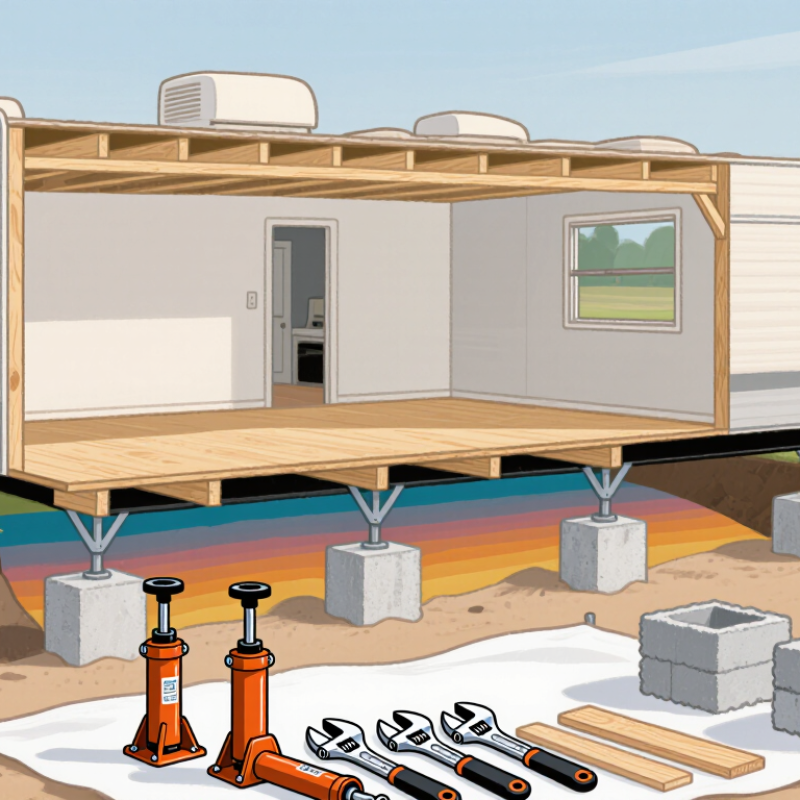
2026 Top Mobile Home Leveling Methods and Costs?

What Mobile Home Leveling Involves and Why It Matters

Mobile home leveling is the process of restoring even support beneath a home, not merely straightening a crooked door. Technicians check floors, piers, beams, and the ground around the home. They may adjust supports with hydraulic jacks, then reset or replace shims and damaged piers. Small shifts matter. HUD’s Manufactured Home Installation Standards, 24 CFR Part 3285, address site preparation, foundation support, and anchoring. These are practical safeguards: uneven support can stress framing, loosen connections, and cause doors or windows to stick. A squeaking door alone proves little, though. It should prompt inspection, not a guess.

The scale is significant. The U.S. Census Bureau and HUD recorded 89,169 manufactured-home shipments in 2023. HomeGuide’s published cost guide estimates basic leveling at roughly $500 to $1,000; broken supports, poor drainage, or difficult access can raise the quote. Ask for an itemized assessment showing which piers need adjustment and whether repairs are included. A level reading is useful, but it cannot reveal every weak support or water problem. Before work begins, confirm the crew will follow the home’s installation specifications and recheck the floor after adjustment.

2026 Top Mobile Home Leveling Methods and Costs: What Leveling Involves and Why It Matters

Method or Service Typical U.S. Cost Range What It Involves When It May Be Appropriate Typical Duration
Level inspection and assessment $300–$800 Checking floor elevations, support points, piers, and visible signs of movement before recommending work. When floors slope, doors stick, or the home’s level and support condition are uncertain. About 1–3 hours on site
Minor releveling and shim adjustment $500–$1,500 Making small height corrections at accessible supports and adjusting or replacing shims as needed. When support components are generally sound and the elevation difference is limited. About half a day to 1 day
Single-section home releveling $800–$2,500 Using lifting equipment to make gradual adjustments, then checking and securing the supports. For a single-section home with uneven floors or settlement that requires more than minor adjustments. About 1 day
Multi-section home releveling $1,500–$4,500 Coordinating adjustments across multiple sections and support lines, including checks around the marriage line. For a multi-section home with uneven support or a noticeable difference in floor height between areas. About 1–2 days
Pier or support repair and replacement $1,000–$4,000 Repairing or replacing damaged, displaced, or inadequate support components; cost depends on quantity and access. When a support has shifted, deteriorated, or cannot safely carry the intended load. About 1–2 days
Foundation system repair or upgrade $5,000–$15,000+ More extensive work to correct or improve the support system; engineering, permits, site work, or added components may affect cost. When there is widespread settlement, recurring movement, or a need for a more substantial foundation solution. Several days or longer

Cost ranges are broad 2026 U.S. planning estimates, not quotes. Actual prices vary with home size, site access, soil and drainage conditions, the number and condition of supports, local labor rates, permits, and required repairs. Leveling should be assessed and performed by qualified professionals; do not work beneath a raised home or adjust supports without proper equipment and safety procedures.

How to Identify Signs of an Uneven Mobile Home

An uneven mobile home often shows small changes before the floor feels noticeably sloped. Check whether interior doors stick, swing open by themselves, or leave uneven gaps around their frames. Windows that suddenly resist opening can offer another clue. Look closely. A marble rolling across the floor may suggest a slope, but one test cannot confirm the cause. Notice whether the floor feels soft or dips near walls, doorways, or heavy appliances. Cracks around trim and gaps between cabinets and walls may also appear. It is tempting to blame every sticky door on the supports, but that assumption can be wrong.

Walk through the home slowly and compare rooms. A level tool can help you record changes in several spots, rather than relying on one reading. Check whether symptoms grow worse after heavy rain, frost, or a major temperature change. Some movement may be seasonal; persistent or worsening signs deserve closer attention. That distinction matters. Avoid crawling beneath the home if the area is unstable, wet, or poorly ventilated. A qualified mobile-home leveling professional can inspect the supports and explain whether adjustment is needed. Share your observations, including when symptoms began. A brief note can help, though it may not capture every detail.

Mobile Home Leveling Methods and When Each Is Used

Mobile home leveling depends on what has moved beneath the home. A technician may start by checking floor slopes, doors that stick, and gaps around windows. A small change in one room does not always mean the whole home needs lifting.

For minor settling, a crew may adjust approved support points with shims or replace compressed materials. This approach suits localized movement when the piers remain stable. If several supports have shifted, technicians may use hydraulic jacks to raise sections gradually, then reset or add piers. Slow, even lifting helps limit stress on the frame and interior finishes. Not a quick fix.

The right method depends on soil, drainage, support spacing, and the home’s condition. Persistent soft ground or standing water may require drainage improvements before new supports will hold. Costs vary with access, labor, damaged materials, and the number of piers needing work; ask for an itemized inspection and quote. I would not judge the job by a low price alone. A surface shim may hide movement rather than address its cause, so a qualified professional should inspect the support system before work begins.

2026 Mobile Home Leveling Methods and Estimated Costs

Indicative U.S. budgeting ranges per home. Actual costs vary with home size, site access, soil conditions, location, and the number of supports needing work.

When each method is used: Shimming or minor adjustment is typically for small, localized unevenness. Pier adjustment is used when existing supports need repositioning or height correction. Adding or replacing piers may be needed when supports are insufficient, damaged, or unstable. Foundation repair or rebuilding is generally considered for extensive structural or support-system problems.

Cost ranges are planning estimates, not a quote. A qualified professional should inspect the home and its support system before work begins.

2026 Mobile Home Leveling Costs by Method and Project Scope

In 2026, mobile home leveling often costs about $450 to $900 for a small adjustment and $1,000 to $3,000 for a full relevel. These are rough U.S. estimates, not fixed quotes. A single-wide with accessible supports may cost less than a double-wide with uneven settling across several rooms. Small differences matter.

The method and project scope drive the final bill. Adjusting existing piers is usually less expensive than replacing damaged supports, which can add $1,500 to $5,000 or more. Difficult access, soft soil, extra blocking, and repairs to skirting can also raise labor and material costs. A site inspection helps clarify what is included.

Ask whether the estimate covers checking the home’s level, adjusting or replacing supports, and a follow-up inspection. Look for specific counts, such as how many piers need work, rather than a vague “relevel” charge. Watch the doorframes. If doors stick or floors slope, those clues help explain the scope, but they do not confirm the cause. A tidy estimate can still miss hidden damage beneath the home; I would question any quote that promises a final price without inspecting the support system.

How to Choose a Leveling Contractor and Prevent Future Shifts

Choosing a mobile home leveling contractor starts with a detailed inspection, not a quick quote. Ask how they will check floor levels, support points, and the condition of existing piers. A qualified contractor should explain whether adjustments, replacement supports, or added piers are appropriate. Request an itemized estimate covering labor, materials, access issues, and follow-up checks. Compare written scopes, not just totals. Ask for relevant experience, references, insurance, and a clear workmanship warranty. Costs vary with the home’s size, site access, damage, and local labor rates, so one price rarely fits every home.

Tips: Photograph doors that stick, gaps in trim, or sloping floors before work begins. Ask what conditions could change the estimate. Keep the answers in writing.

Leveling may involve carefully lifting sections with hydraulic jacks and resetting or adding supports. The right method depends on the foundation and the source of movement. After repairs, reduce future shifts by directing roof runoff away from the home, maintaining drainage, and avoiding soil erosion near supports. Recheck doors and floors periodically, especially after heavy rain or seasonal ground changes. I would not treat a single adjustment as permanent; even a good repair can need monitoring. Stop and seek professional advice if supports look damaged or the home moves noticeably.

Company Info

Universal Pumping

625 Apache Trail
Woodstock, GA 30189

Mon - Fri | 9:00 AM - 5:00 PM

Connect With Us

About Universal Pumping

Universal Pumping is staffed with industry professionals with 20-45 years experience with high pressure pumping systems. We represent only the “elite producers” in pump manufacturing: Britain’s EMS and Germany’s EMMERICH. Our engineering and manufacturing approach is conservative, and we do not use “guess work” in the design or sales of our pumping and filtration equipment.