2026 Top Sand Pump Types for Global Buyers?

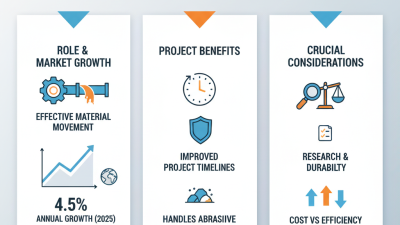
As global construction, mining, and dredging projects expand in 2026, buyers need more than a high-flow sand pump. They need equipment matched to material, distance, depth, and working conditions. A pump handling fine river sand may struggle with sharp gravel or clay-heavy slurry. That difference can affect energy use, wear rates, and project delays.

This guide compares the leading sand pump types available to international buyers. It examines centrifugal, submersible, dredging, slurry, and gravel pumps. Each type offers specific advantages. None is perfect. Centrifugal models often provide strong continuous flow, while submersible units simplify pumping in flooded pits and underwater locations. Heavy-duty gravel pumps can manage larger solids, but their components usually require closer inspection.

Real purchasing decisions involve more than advertised capacity. Buyers should check solids concentration, particle size, head pressure, suction distance, motor protection, and replacement-part availability. A pump rated at 500 cubic meters per hour may deliver less under difficult site conditions. This is where specifications can mislead.

Small details matter.

Reliable suppliers should provide performance curves, material data, testing records, warranty terms, and installation guidance. Regional voltage, customs requirements, operator training, and service response also deserve attention. Field experience shows that poor sizing often causes more trouble than brand selection. Still, field conditions vary, and published data cannot replace a proper site assessment. Use this overview as a practical starting point, then confirm every choice with qualified engineers and documented operating conditions.

2026 Top Sand Pump Types for Global Buyers?

Define Duty Data: Flow, Head, NPSH, Particle Size, and Solids Loading

2026 Top Sand Pump Types for Global Buyers?

Define Duty Data: Flow, Head, NPSH, Particle Size, and Solids Loading

Sand pumps should be selected from duty data, not catalog names. The USGS Mineral Commodity Summaries 2025 places U.S. construction sand and gravel output near one billion metric tons in 2024. That scale creates harsh, variable pumping conditions. State the required flow in m³/h, total head in meters, and operating hours per day. Include particle size, shape, hardness, and solids loading by weight or volume. A small change in these details can alter wear, power demand, and pump life.

NPSH needs equal attention. Calculate available NPSH from the actual suction pipe, temperature, elevation, and slurry level. Compare it with the pump’s required NPSH at the real flow rate. Hydraulic Institute standards, including ANSI/HI 9.6.1, emphasize suitable inlet conditions and NPSH margin. More margin is not always better, but too little invites cavitation. I have seen buyers report clean-water data for abrasive slurry. That shortcut looks efficient. It usually is not.

Tips: Send a duty sheet with normal, minimum, and maximum flow. Add a sample solids analysis, not only “sand.” Mention start-up conditions and settling risk. ISO 5199 guidance also supports clear performance documentation for centrifugal pumps. Recheck your numbers after pilot testing. Field data can disagree with the first estimate. That is normal.

Classify Centrifugal Sand Pumps Using ANSI/HI 12.1–12.6 Slurry Terms

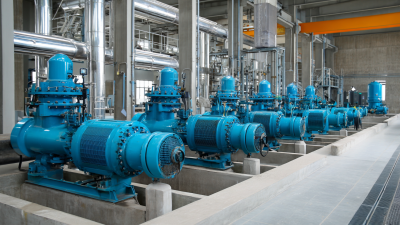
For 2026 global buyers, centrifugal sand pump selection should begin with slurry language, not marketing labels. ANSI/HI 12.1–12.6 provides a practical framework for describing rotodynamic slurry pump duties. It considers solids concentration, particle size, specific gravity, settling behavior, and abrasive effects. These details separate a pump for fine, low-density sand from one handling coarse, rapidly settling solids. The distinction matters.

A suitable classification may include dilute or dense slurry service, settling or non-settling behavior, and light, moderate, or severe abrasion. Buyers should record the sand size, liquid density, temperature, flow rate, and required head. A small sample from the actual site can reveal more than a general catalogue. Measure it carefully. Pump construction then follows the duty. Open or semi-open impellers may suit certain solids, while robust enclosed designs can support other hydraulic requirements. The standard does not simply name one universal “sand pump.” It encourages consistent terminology for comparing performance and operating limits. In practice, site data is often incomplete, so early selections can be imperfect. Recheck the duty after field testing. Watch for reduced flow, rising power demand, vibration, and accelerated wear. These signs may indicate incorrect slurry classification, not only poor pump quality. A clear specification should state both liquid performance and solids-handling conditions. That makes technical offers easier to compare across countries and operating environments.

Compare Submersible, Dredge, and Gravel Pumps by Solids-Passage Size

2026 Top Sand Pump Types for Global Buyers?

Solids-passage size often decides whether a sand pump survives real jobsite conditions. Submersible pumps commonly pass about 20–100 mm solids, depending on impeller design and duty. They suit pits, drainage sumps, and mixed water with occasional debris. A 50 mm passage may handle stones, cloth, and compacted mud better than a narrow high-head model. Check the actual clearance, not only the catalog headline.

Dredge pumps usually provide larger passages, often around 50–150 mm. Their casing and impeller support continuous sand, silt, shells, and small gravel movement. However, abrasive solids can reduce wear-part life quickly.

Gravel pumps go further, with passages commonly reaching 100–300 mm for coarse gravel and screened rock. Their flow path must remain open, or production drops sharply. Bigger is not automatically better. Oversized openings may reduce pressure and increase energy use.

Field checks should measure the largest solid, its shape, and its concentration. A rounded 80 mm stone is different from a flat 80 mm plate. That detail is easy to miss. Operators should also inspect suction hoses for bends, because a suitable pump can still clog upstream. Published sizes vary by manufacturer and operating speed, so buyers should request test data, wear allowances, and a clear solids-passage definition.

I still question any selection based on one number alone. Real slurry changes during every shift.

Screen Diaphragm and Positive-Displacement Pumps for Low-Flow Sand

2026 Top Sand Pump Types for Global Buyers?

Low-flow sand transfer needs control, not simply high horsepower. Screen-diaphragm pumps suit slurry lines with changing solids content. Their diaphragm separates the drive mechanism from abrasive liquid. A screened inlet can stop larger stones before they reach the pumping chamber. This protects valves, but it also creates a pressure loss. The screen needs frequent cleaning in silty pits. It is not a cure.

Positive-displacement pumps deliver measured flow at low speed. That helps when feeding filters, sampling systems, small hydrocyclones, or dosing lines. Their check valves and elastomers still face wear from sharp quartz particles. Specify hardened wetted parts, replaceable seats, and a flushing connection. Field inspections should track vibration, stroke rate, and pressure changes. Small errors become expensive quickly.

The United Nations Environment Programme estimates that 40–50 billion tonnes of sand and gravel are used globally each year (Sand and Sustainability, 2019). USGS reported approximately 96 million metric tons of industrial sand and gravel production in the United States during 2023 (Mineral Commodity Summaries, 2024). These figures show a large market, yet low-flow duty remains highly site-specific. A pump selected from flow rate alone may disappoint. Buyers should test actual particle size, solids concentration, suction lift, and daily operating hours. Cost calculations should include screen cleaning, diaphragm replacement, and downtime. Sometimes, a smaller pump with slower wear performs better than a larger model. That lesson is easy to miss.

How to read the chart: Positive-displacement pumps generally provide the most stable low-flow delivery for sand-bearing fluids. Diaphragm and peristaltic pumps are commonly selected when solids tolerance, dry-running ability, or gentle handling is important. The flow bands are indicative engineering ranges for low-flow sand-slurry service and vary with pressure, solids concentration, particle size, hose or diaphragm design, and system layout.

Verify 2026 Specifications with ISO 9906, API 610, and IEC 60034-1

Global buyers often compare centrifugal slurry, dredging, submersible, and self-priming sand pumps. Their duty conditions differ sharply. The USGS Mineral Commodity Summaries 2025 estimated about 960 million metric tons of construction sand and gravel sold in the United States during 2024. That volume highlights the need for durable solids-handling equipment, not simply higher motor power. Field checks should record particle size, density, temperature, suction lift, and operating hours. A wet pit can expose weak seals quickly.

Verify hydraulic claims against ISO 9906. Request the tested flow, head, efficiency, and tolerance grade, preferably from a witnessed performance test. Do not accept a catalogue curve alone. API 610 is relevant when the pump serves petroleum, petrochemical, or natural-gas facilities. It does not automatically validate every abrasive sand application.

Check casing material, shaft stiffness, wear allowance, seal design, and minimum continuous flow. IEC 60034-1 should support motor rating, temperature rise, insulation, and service conditions. A compliant motor still cannot rescue an undersized impeller.

I have seen specifications pass a desktop review but fail after ten minutes of abrasive service. That is uncomfortable. The weak point was often the solids declaration. Ask whether “maximum particle size” means one occasional stone or continuous feed. Also verify test-liquid viscosity and density. Those details can shift power demand substantially. The Hydraulic Institute’s pump guidance similarly emphasizes duty-point selection and system losses, yet site data remains imperfect. Leave a margin, but document its reason. Oversizing can create recirculation, vibration, and unnecessary energy use.

Company Info

Universal Pumping

625 Apache Trail
Woodstock, GA 30189

Mon - Fri | 9:00 AM - 5:00 PM

Connect With Us

About Universal Pumping

Universal Pumping is staffed with industry professionals with 20-45 years experience with high pressure pumping systems. We represent only the “elite producers” in pump manufacturing: Britain’s EMS and Germany’s EMMERICH. Our engineering and manufacturing approach is conservative, and we do not use “guess work” in the design or sales of our pumping and filtration equipment.