What Is the Best Type of Pressure Filter in China?

Choosing the best pressure filter in China requires more than comparing purchase prices. Industrial water may contain suspended solids, oil, iron, microorganisms, or process chemicals. Each contaminant changes the filtration decision.

China’s Ministry of Water Resources publishes annual water-resource bulletins covering water use, treatment pressure, and supply conditions. The China Statistical Yearbook also shows the scale of China’s municipal and industrial water infrastructure. Meanwhile, Global Water Intelligence’s Global Water Market reports describe continuing investment in water reuse and treatment systems. These sources suggest a clear direction. Demand is growing, but operating conditions remain highly varied.

A pressure filter may use sand, multimedia layers, activated carbon, cartridge elements, or specialized membranes. Sand filters suit many suspended-solids applications. Activated carbon can reduce odors and selected organic compounds. Cartridge systems offer finer protection, but replacement costs may rise quickly. Membrane pressure filters can deliver stronger separation, yet they demand better pretreatment and stricter maintenance.

There is no universal winner.

In practical plant assessments, the best choice depends on flow rate, inlet turbidity, target outlet quality, backwash water, pressure loss, and service skills. A filter that performs well in a laboratory can struggle beside a dusty factory road. A low-cost vessel may also create higher long-term expenses through frequent media replacement and downtime.

This article compares major pressure filter types available in China. It considers performance, materials, automation, certification, local support, and total operating cost. The analysis also recognizes an uncomfortable point: published specifications do not always predict field results. Reliable selection requires test data, transparent supplier records, and a realistic maintenance plan.

What Is the Best Type of Pressure Filter in China?

Pressure Filter Types in China: Sand, Bag, Cartridge, and Filter Press Systems

What Is the Best Type of Pressure Filter in China?

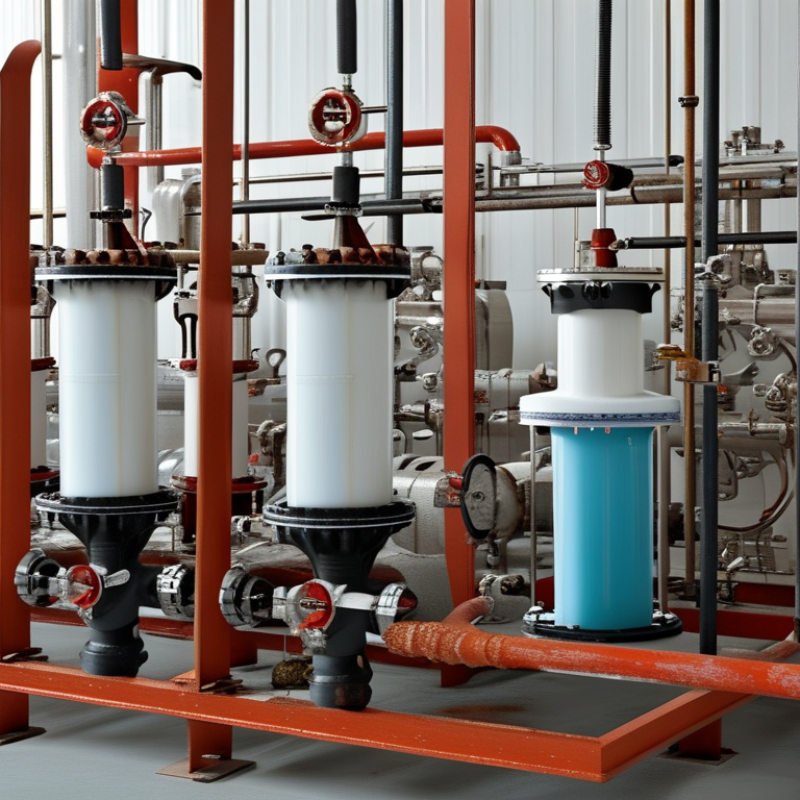
In China’s varied industrial settings, no single pressure filter is always best. Selection depends on water quality, flow, solids, cleaning habits, and available space. Sand filters suit larger water volumes and steady turbidity. They are common in pretreatment, cooling water, and municipal applications. A deep media bed captures suspended particles while allowing longer operating cycles. However, sand systems need backwashing, drainage, and correct media grading. Poor backwash design can return dirt to the process.

Bag filters offer simple, economical protection for pumps and downstream equipment. They work well when solids loads change but remain moderate. Cartridge filters provide finer polishing, especially before membranes or sensitive process lines. Their compact housings save floor space. Yet cartridges can clog quickly in dirty water, increasing replacement costs. Filter press systems handle concentrated sludge rather than continuous polishing. They produce drier filter cakes through pressure dewatering. Operation is slower and more labor intensive. This tradeoff is often underestimated.

Tips: Test a representative water sample before selecting equipment. Record flow rate, particle size, viscosity, and pressure loss. During site checks, I compare clean and loaded pressure readings. Differential pressure gauges reveal clogging earlier than visual inspection. Leave room for bag changes, cartridge removal, and filter-press plate cleaning. Northern facilities may also need freeze protection. Some choices look efficient on paper, but maintenance records often tell a different story.

Compare Operating Pressures from 0.1 to 2.0 MPa Across Filter Designs

What Is the Best Type of Pressure Filter in China?

The best pressure filter depends on pressure, flow rate, liquid quality, and cleaning practice. In Chinese industrial projects, bag and cartridge filters commonly operate between 0.1 and 0.6 MPa. They suit cooling water, process liquids, and prefiltration. Multi-bag housings can often handle 0.6 to 1.0 MPa, depending on vessel construction and sealing design. For applications near 1.0 to 2.0 MPa, choose a pressure-rated housing with reinforced walls, reliable clamps, and tested gaskets. A higher rating does not automatically mean better filtration.

Check operating pressure and differential pressure separately. Operating pressure describes pressure inside the vessel. Differential pressure shows resistance across the filter element. A clean filter may run at 0.1 MPa differential pressure, while a blocked element may exceed safe limits quickly. In field testing, I have seen pressure readings rise faster than expected when operators selected fine media for a dirty liquid. My early mistake was judging only the pump pressure. That approach missed flow decline and seal stress. Confirm design pressure, maximum differential pressure, temperature, material compatibility, and test documentation before purchase.

Tips: Ask for pressure-test records, material certificates, and clear replacement procedures. Compare real flow at 0.1, 0.5, 1.0, and 2.0 MPa. Do not assume every housing reaches 2.0 MPa safely. Inspect clamps and seals regularly. Leave margin for surges. Small details matter.

Assess Filtration Ratings from 1 to 100 Microns for Different Applications

What Is the Best Type of Pressure Filter in China?

Choosing the best pressure filter in China depends on particle size, flow rate, liquid viscosity, and operating pressure. The critical question is not simply, “How fine is the filter?” A one-micron filter may protect a sensitive process, but it can clog quickly in water containing sand or rust. A 100-micron filter handles heavier particles and usually offers longer service life. However, ratings require careful reading. Nominal ratings estimate general removal performance. Absolute ratings indicate tighter, more controlled retention. Ask for the test method and operating conditions. This detail is often missed.

For municipal water, cooling water, or surface water, a staged system often works better. A 100-micron pre-filter can catch visible debris before a 25-micron layer. A 5-micron cartridge may then protect pumps, valves, or membranes. Fine filtration from 1 to 5 microns suits polishing applications, but it needs stable pressure and regular monitoring. Bag filters are practical for higher dirt loads. Cartridge filters usually provide more consistent fine filtration. The right choice changes with the application.

Field checks should include pressure drop, flow stability, temperature, and cleaning access. I once selected a five-micron element by rating alone. Its flow fell sharply after several hours. The rating was correct, but the dirt load was underestimated. That decision needed more reflection. A reliable specification should state micron rating, filtration type, materials, seal compatibility, and replacement pressure. Small details matter.

What Is the Best Type of Pressure Filter in China? Assess Filtration Ratings from 1 to 100 Microns for Different Applications

The chart shows representative filtration-rating ranges commonly used in pressure filtration. Coarse media and bag filters are suitable for irrigation and cooling-water solids, cartridge filters provide finer process filtration, and membrane systems are selected when sub-micron separation is required. Actual selection depends on flow rate, contaminant loading, pressure drop, and whether the rating is nominal or absolute.

Match Flow Rates of 5–50 m³/h with Water Quality and Treatment Capacity

What Is the Best Type of Pressure Filter in China?

For flow rates of 5–50 m³/h, the best pressure filter depends on water quality, not vessel size alone. A multimedia filter suits raw water with suspended solids, while activated carbon targets chlorine, taste, and organic compounds. For fine particles, cartridge or bag filtration may be more suitable after pretreatment. The WHO Guidelines for Drinking-water Quality recommend keeping turbidity below 1 NTU where possible, especially before disinfection. In practice, a 5–15 m³/h system often uses one compact vessel. Flow rates of 15–30 m³/h may need larger vessels or parallel operation. Above 30 m³/h, parallel vessels improve maintenance flexibility and reduce process interruption.

Filter loading matters. AWWA B100 guidance commonly supports rapid granular filtration rates near 5–12 m/h, although media type and water temperature change the result. A filter handling 50 m³/h may therefore require considerable surface area. Do not select by flow rate alone. Laboratory testing is essential. A clean filter can still perform poorly when backwash water is insufficient. That detail is often underestimated.

Tips: Test turbidity, iron, manganese, hardness, oil, and microbial indicators before choosing media. Keep at least 20–30% design capacity for seasonal changes. Measure pressure loss weekly. A rising differential pressure signals fouling, but not always the correct backwash moment. Local operators should verify it through actual water tests, not assumptions.

What Is the Best Type of Pressure Filter in China? - Match Flow Rates of 5–50 m³/h with Water Quality and Treatment Capacity
Design Flow Rate Typical Raw-Water Condition Recommended Pressure Filter Typical Filter Media or Element Typical Filtration Performance Operating Mode Indicative Design Loading Expected Treatment Capacity Best-Fit Applications Main Design Consideration
5–10 m³/h Low to moderate turbidity, generally below 30 NTU, with visible suspended solids. Single-media pressure sand filter Graded silica sand or garnet-supported sand bed Commonly removes suspended solids and reduces turbidity to approximately 5–10 NTU, depending on influent quality and pretreatment. Continuous filtration with periodic water backwash Approximately 8–15 m/h surface loading Suitable for small commercial, irrigation, utility, and general process-water systems Groundwater polishing, cooling-water pretreatment, irrigation water, and municipal prefiltration Does not reliably remove dissolved salts, pesticides, microorganisms, or very fine colloids without additional treatment.
5–10 m³/h Variable turbidity, fine particles, iron or manganese after oxidation, and a need for more stable outlet quality. Multimedia pressure filter Anthracite, silica sand, and support gravel Often achieves approximately 3–10 NTU outlet turbidity when correctly sized and operated; performance depends strongly on coagulation and influent chemistry. Filtration followed by periodic backwash and rinse Approximately 8–12 m/h surface loading Good capacity for compact systems where a more stable solids-loading profile is required Surface-water pretreatment, industrial utility water, and pretreatment before activated carbon or membrane systems Requires sufficient backwash flow and pressure; oxidized iron and manganese may require chemical conditioning.
10–20 m³/h Moderate turbidity, organic color, taste, or odor after suspended solids have been removed. Activated-carbon pressure filter Granular activated carbon, usually with a supporting underbed Reduces chlorine, taste, odor, and some dissolved organic compounds. It is not designed as the primary filter for heavy suspended solids. Continuous adsorption with periodic backwash; carbon replacement or reactivation is required Approximately 5–12 m/h hydraulic loading; empty-bed contact time commonly 5–15 minutes for many applications Appropriate for medium-flow process water and drinking-water polishing when preceded by effective particulate removal Dechlorination, odor control, organic polishing, and pretreatment for reverse osmosis Carbon must be protected from excessive turbidity, oil, and biological growth; breakthrough testing is necessary.
10–20 m³/h Fine suspended solids, pipe scale, rust, or intermittent particle spikes; turbidity generally below 50 NTU after upstream clarification. Automatic self-cleaning screen filter Stainless-steel wedge-wire or perforated screen, typically 50–200 μm Removes relatively large and medium suspended particles while maintaining a low consumables requirement. Automatic screen flushing using a small portion of filtered water Commonly selected by screen area and solids loading rather than only by media velocity Suitable for continuous industrial, irrigation, and cooling-water service Irrigation, cooling towers, industrial wash water, and protection of downstream pumps or membranes Not suitable for dissolved contaminants or very fine colloids; screen mesh must match the downstream equipment.
20–30 m³/h High or variable suspended-solids loading, including surface water or process water with fine and coarse particles. Parallel multimedia pressure-filter system Anthracite, silica sand, garnet, and graded support layers Typically provides better solids capture and longer filter runs than a single-media bed when the media layers are correctly selected. Duty/standby or duty/duty parallel operation with automatic backwash sequencing Approximately 8–12 m/h per vessel; actual sizing depends on peak flow and water quality Provides operational redundancy and allows one vessel to remain in service during backwash of another Municipal pretreatment, industrial process water, commercial water plants, and membrane pretreatment Vessel diameter, backwash water availability, air scour requirements, and valve automation affect total footprint and cost.
20–30 m³/h Low turbidity after clarification, but stringent requirements for fine-particle removal before reverse osmosis or high-pressure equipment. Bag-filter housing bank Polypropylene or polyester bags, commonly 1–25 μm nominal rating Captures fine particulate matter; a 5 μm nominal bag is commonly used as a polishing stage, but actual removal depends on the element rating and particle distribution. Disposable or cleanable element replacement; no conventional backwash Generally lower flow per element than media filters; multiple bags in parallel are required for 20–30 m³/h Well suited to intermittent or variable flows where fine-particle polishing is more important than low operating cost RO protection, coatings, chemicals, food-process water, and final particulate polishing Element replacement frequency increases sharply with solids loading; differential-pressure monitoring is essential.
30–40 m³/h Moderate turbidity and organic matter requiring both particulate reduction and taste, odor, or chlorine control. Dual-stage pressure filtration train Stage 1: multimedia bed; Stage 2: granular activated carbon bed The first stage removes suspended solids while the second stage reduces oxidants, taste, odor, and selected organic compounds. Independent backwash and rinse cycles for each pressure vessel Multimedia: approximately 8–12 m/h; activated carbon: approximately 5–12 m/h Suitable for medium-to-large commercial and industrial treatment capacity with improved protection of downstream membranes Drinking-water polishing, food and beverage pretreatment, process-water reuse, and RO feed preparation The carbon stage must be protected from solids; the total contact volume should be calculated from contaminant load, not flow alone.
30–40 m³/h Turbidity generally below 10–20 NTU after pretreatment, with a requirement for strong microbial and fine-colloid reduction. Pressurized ultrafiltration system Hollow-fiber or inside-out UF membranes, commonly with approximately 0.01 μm nominal pore size Typically removes suspended solids, bacteria, and most colloids; virus removal depends on membrane integrity, operating conditions, and validated design. Crossflow or dead-end filtration with automatic backwash and periodic chemically enhanced cleaning Typical membrane flux is approximately 40–100 L/m²·h, subject to feed-water quality and membrane type High-quality pretreatment for reverse osmosis and advanced water-reuse systems Surface water, tertiary wastewater treatment, industrial reuse, and high-quality process-water production Requires reliable pretreatment, integrity monitoring, chemical cleaning, and a plan for concentrate or backwash disposal.
40–50 m³/h High suspended-solids loading or changing raw-water quality, with a need for continuous operation and reduced downtime. Multiple-vessel automatic multimedia filter Anthracite, silica sand, garnet, and graded support gravel in parallel vessels Commonly provides reliable turbidity and suspended-solids reduction when preceded by screening or coagulation where necessary. Fully automatic filtration, backwash, rinse, and vessel sequencing Approximately 8–12 m/h per vessel; design should include peak flow and one-vessel-out-of-service conditions Strong choice for 40–50 m³/h systems requiring redundancy, stable pressure, and manageable backwash intervals Municipal water, industrial utilities, cooling-water makeup, and membrane pretreatment Parallel configuration is normally preferable to one oversized vessel because it improves maintenance flexibility and operating continuity.
40–50 m³/h Low turbidity after clarification, but strict requirements for bacteria, colloids, and consistent feed quality. Parallel pressurized ultrafiltration system Hollow-fiber UF membrane modules with automatic backwash and chemical cleaning Commonly produces low-turbidity filtrate and substantial removal of bacteria and colloids; final performance must be verified by site testing. Multiple modules operating in parallel with automated backwash and chemically enhanced cleaning Approximately 40–100 L/m²·h membrane flux, adjusted for temperature and feed-water quality Appropriate where high filtrate quality and stable RO protection are more important than the lowest capital cost Water reuse, surface-water treatment, industrial process water, and advanced pretreatment Membrane area, recovery, cleaning frequency, temperature correction, and backwash-water management determine actual capacity.
Engineering note: The performance ranges above are indicative design values rather than guaranteed results. Final pressure-filter selection should be confirmed using raw-water analysis, peak and average flow, temperature, allowable pressure loss, backwash-water availability, required outlet quality, and pilot or laboratory testing where water quality is variable.

Choose the Best Filter by GB/T 150 Compliance, Cost, and Maintenance Needs

The best pressure filter in China is not chosen by flow rate alone. GB/T 150 compliance should guide the vessel design, fabrication, and inspection process. Confirm the applicable edition and pressure category with a qualified engineer. Request material certificates, welding records, non-destructive testing reports, and pressure-test results. These documents are practical evidence, not decorative paperwork.

For high-flow industrial water, a vertical multi-element filter can reduce floor space and replacement labor. A bag filter may cost less initially, but frequent bag changes can increase annual spending. Cartridge filters offer finer removal, although their replacement cost may rise quickly with heavy contamination. Compare purchase price, energy use, element life, and disposal work over three to five years. The cheapest quotation can be misleading.

Maintenance details often decide the real winner. Choose a housing with a wide opening, visible pressure gauges, a low-point drain, and safe venting. Operators should replace elements without lifting awkward covers or standing near trapped pressure. Keep spare seals and filter elements in a dry, labeled cabinet. I have seen maintenance plans fail because they considered media price but ignored cleaning time. That mistake is easy to repeat. A final selection should match the water quality, pressure, temperature, inspection requirements, and available technician skills.

Company Info

Universal Pumping

625 Apache Trail
Woodstock, GA 30189

Mon - Fri | 9:00 AM - 5:00 PM

Connect With Us

About Universal Pumping

Universal Pumping is staffed with industry professionals with 20-45 years experience with high pressure pumping systems. We represent only the “elite producers” in pump manufacturing: Britain’s EMS and Germany’s EMMERICH. Our engineering and manufacturing approach is conservative, and we do not use “guess work” in the design or sales of our pumping and filtration equipment.