
What Is the Best Steel Pipe for Your Project in 2026?

What does “best” mean when choosing a Steel Pipe for a project in 2026? It depends on what the pipe must carry, where it will operate, and how it will be installed. A water line buried in damp soil has different needs from a high-temperature process line or a structural support exposed to weather. Pressure, temperature, corrosion risk, pipe diameter, wall thickness, and connection method all affect the choice. Small details matter. They can shape safety, maintenance, and long-term cost.

This guide compares common options, including carbon steel, stainless steel, and coated pipe, while explaining where each may fit. It also looks at grades, schedules, relevant specifications, and documentation such as mill test certificates. These records help buyers verify what they are receiving; a product description alone may not tell the whole story. No material is ideal for every job. A thicker wall may add weight and cost, while a protective coating may need inspection over time. It is easy to focus on the purchase price. That can be a costly shortcut. The right decision starts with clear project conditions and confirmation against applicable engineering requirements. When service conditions are uncertain, consult a qualified engineer or pipe specialist before ordering. Expect trade-offs, and check them carefully.
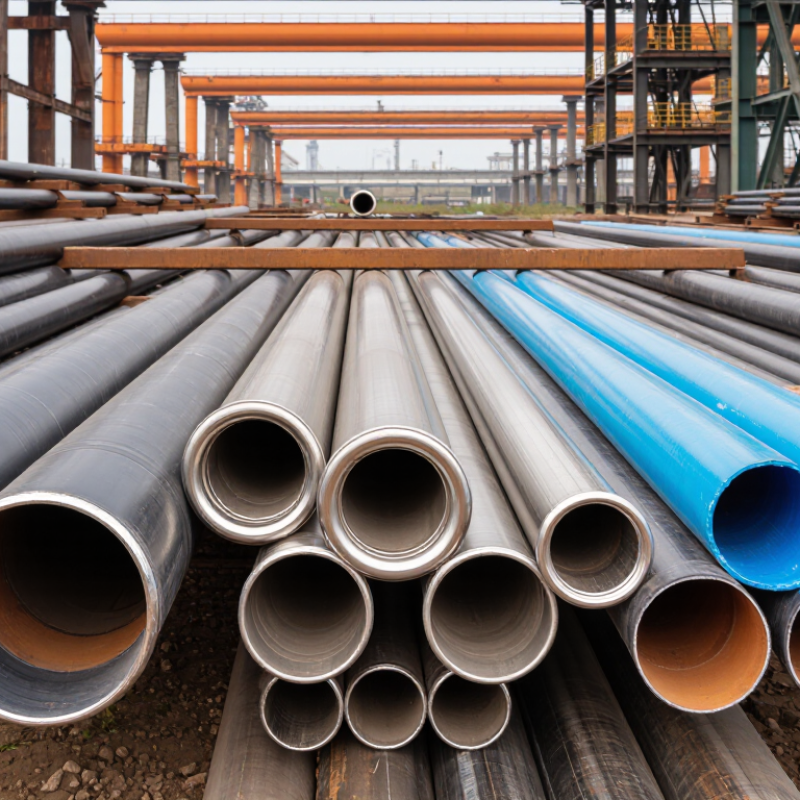
What Is the Best Steel Pipe for Your Project in 2026?

What Steel Pipe Is and How It Is Made

Steel pipe begins as steel made from iron ore or recycled scrap. The World Steel Association’s World Steel in Figures 2024 reports 1,892.2 million tonnes of crude steel production worldwide in 2023. That scale supports many pipe-making routes, but the route affects the finished pipe. For seamless pipe, mills heat a solid billet, pierce it, then roll and size the hollow shell. For welded pipe, they form steel strip or plate into a cylinder and join its edges. The seam is then inspected, and the pipe may receive heat treatment or further sizing.

These steps influence wall thickness, dimensions, and suitability for pressure or structural service. A smooth surface can mislead; appearance alone cannot confirm internal quality. Inspection records and specified testing matter. One nuance: manufacturing route is only part of selection. Steel grade, corrosion exposure, temperature, and connection method also matter.

Tips: Check the project specification before comparing prices. Confirm grade, outside diameter, wall thickness, and inspection requirements. Ask whether the pipe is seamless or welded, and request traceable test documentation. Small details count. A missing tolerance can cause fitting problems, even when the pipe looks right.

Which Project Requirements Guide Steel Pipe Selection in 2026?

What Is the Best Steel Pipe for Your Project in 2026?

Which Project Requirements Guide Steel Pipe Selection in 2026?

Start with the pipe’s job, not its price. Will it carry water, gas, or process fluid? Note the working pressure, temperature range, flow needs, and exposure to moisture or chemicals. A pipe outdoors near coastal air may need different corrosion protection than one inside a dry building. Small details matter.

Next, confirm the required diameter, wall thickness, steel grade, and connection method. These choices affect strength, fit, installation time, and maintenance. Check project specifications and applicable engineering standards before ordering. If the system faces pressure changes, vibration, or heat cycling, have a qualified engineer review the design. I’ve seen projects lose time over a fitting that did not match the specified wall thickness. It is easy to overlook.

Tips: Keep a written list of service conditions, dimensions, and inspection needs. Ask for material test documents, and verify that markings match the order. Measure twice. A little uncertainty at the planning stage is normal; guessing at the final specification is not.

What Is the Best Steel Pipe for Your Project in 2026?

Compare minimum specified yield strength for selected steel pipe grades.

How to use this comparison: Higher yield strength can matter when design loads or wall thickness are critical. It does not determine the best pipe on its own: also assess corrosion exposure, operating temperature, pressure, fabrication needs, applicable codes, and total lifecycle cost.

Values are rounded minimum specified yield strengths: ASTM A106 Grade B, 240 MPa; ASTM A312 TP304, 205 MPa; ASTM A312 TP316L, 170 MPa; ASTM A790 UNS S32205, 450 MPa. Confirm the applicable standard edition and product requirements for your project.

How Carbon, Alloy, and Stainless Steel Pipes Differ

What Is the Best Steel Pipe for Your Project in 2026?

How Carbon, Alloy, and Stainless Steel Pipes Differ

Carbon steel pipe is often chosen for its strength, availability, and lower purchase cost. It suits many structural and utility applications, but moisture can cause rust, so coatings and maintenance matter. Alloy steel adds elements such as chromium or molybdenum to improve performance under heat, pressure, or wear. The exact benefit depends on the grade, not just the word “alloy.” Stainless steel contains at least 10.5% chromium, according to the British Stainless Steel Association. This chromium-rich surface helps resist corrosion, making stainless useful in damp or chemically aggressive environments. It is not immune to every chemical, though.

The cost of corrosion deserves attention. NACE International’s 2016 IMPACT study estimated global corrosion costs at US$2.5 trillion, or 3.4% of global GDP, based on 2013 data. That figure covers many industries, not pipes alone, but it shows why lifecycle costs can outweigh a low initial price. One easy-to-miss detail: fittings, welds, and water chemistry can change how a pipe performs. A material choice that looks obvious on paper may need revisiting.

Tips: Match the pipe grade to pressure, temperature, fluid chemistry, and installation conditions. Check the relevant material specification and test certificates; “stainless” alone is not enough. When conditions are uncertain, get a qualified materials engineer to review them.

How Pipe Size, Grade, and Standards Affect Performance

A pipe’s nominal size can be misleading: it does not state the exact internal diameter. ASME B36.10M dimensional tables list a 2-inch Schedule 40 pipe with a 0.154-inch wall, while Schedule 80 has a 0.218-inch wall. The thicker wall can improve pressure capacity, but it also reduces the bore and may affect flow and pumping needs. Check the actual outside diameter, wall thickness, and design conditions—not just the size stamped on a drawing. Small detail. Big consequence.

Grade matters just as much. ASTM A53 and A106 Grade B specify a minimum yield strength of 35,000 psi; API Specification 5L grade X52 sets a 52,000 psi minimum. These figures are not a complete design decision: temperature, corrosion allowance, weldability, and loading still matter. A higher grade may permit a thinner wall in some designs, but assuming it is automatically the better choice is a tempting shortcut—and sometimes a costly one. Match the material specification to the service, then verify the calculation and required inspection records with a qualified engineer.

What Is the Best Steel Pipe for Your Project in 2026? — How Pipe Size, Grade, and Standards Affect Performance
Selection Factor Common Option or Reference Verified Characteristics Performance Considerations
Nominal pipe size NPS 2, NPS 4, NPS 8 NPS is a nominal designation, not a direct measurement of the pipe’s inside diameter. For these sizes, standard outside diameters are 2.375 in, 4.500 in, and 8.625 in, respectively. Choose size based on required flow, allowable pressure loss, connection compatibility, and the applicable piping design code.
Wall thickness Schedule 40 and Schedule 80 For NPS 2, Schedule 40 wall thickness is 0.154 in and Schedule 80 is 0.218 in. For NPS 4, the corresponding thicknesses are 0.237 in and 0.337 in. A thicker wall generally reduces the available inside diameter and increases pipe weight. Pressure capacity must be calculated for the specified material, temperature, dimensions, and design conditions.
Dimensions standard ASME B36.10M Provides dimensions and weights for welded and seamless wrought steel pipe, including many carbon and alloy steel pipe sizes and schedules. Use this dimensional reference when the selected product and project specification call for its size and schedule tables.
Stainless pipe dimensions ASME B36.19M Covers dimensions for stainless steel pipe and includes schedules identified with an “S,” such as Schedule 10S and Schedule 40S. Confirm the specified schedule and actual wall thickness rather than assuming stainless pipe dimensions match every carbon-steel schedule designation.
General carbon-steel pipe ASTM A53/A53M, Grades A and B Specifies black and hot-dipped zinc-coated welded and seamless steel pipe in the product forms and grades covered by the standard. Often considered for general service. Verify the product type, grade, end finish, coating requirements, and project code before selection.
High-temperature carbon-steel pipe ASTM A106/A106M, Grades A, B, and C Specifies seamless carbon steel pipe for high-temperature service. The standard includes three grades with different specified mechanical property requirements. Suitable only when the operating conditions and design rules permit the selected grade. Check temperature-dependent allowable stresses and material certificates.
Pipeline steel API Specification 5L, such as Grade B, X42, X52, and X65 Defines requirements for line pipe. In grade designations such as X42, X52, and X65, the number indicates a specified minimum yield strength in ksi. Grade selection depends on pipeline design, pressure, diameter, wall thickness, toughness, manufacturing route, and the specified product specification level.
Stainless steel pipe ASTM A312/A312M, including TP304 and TP316 grades Covers seamless, straight-seam welded, and heavily cold-worked austenitic stainless steel pipe for the applications defined by the specification. Stainless steel can improve corrosion resistance in suitable environments, but grade choice requires checking the fluid, temperature, concentration, and corrosion risks.
Structural tubing ASTM A500/A500M Covers cold-formed welded and seamless carbon steel structural tubing in round and shaped sections. Structural tubing is not automatically interchangeable with pressure piping. Confirm that the product standard is permitted for the intended structural or pressure-containing use.
Corrosion protection Uncoated, galvanized, or specified protective coating ASTM A53/A53M includes pipe supplied with black or hot-dipped zinc-coated finishes within its scope. Other coating systems require their own project specifications. Coating choice depends on the internal and external environment, installation conditions, maintenance plan, and compatibility with the service fluid.
Project verification Applicable material specification, dimensional standard, and design code Product standards define requirements for pipe; dimensional standards define sizes; design codes establish rules for systems and operating conditions. Before purchase, confirm the latest contractually required editions, grade, size, schedule, manufacturing method, inspection, testing, and documentation.
Selection note: No single steel pipe is best for every project. Final suitability depends on design pressure and temperature, fluid, corrosion conditions, loads, joining method, applicable codes, and the project specification. Dimensions and properties should be verified against the governing standard and supplier material documentation.

How to Match Pipe Type to Project Conditions and Budget

What Is the Best Steel Pipe for Your Project in 2026?

Match pipe material to the fluid, pressure, temperature, and installation environment—not just the purchase price. Carbon steel is often a practical choice for structural work and many closed-loop systems. It is widely available and easy to fabricate, but exposed surfaces may need coatings or linings. Stainless steel can suit hygienic or corrosive service, though chloride-rich conditions can still cause pitting. Check the fluid chemistry before choosing a grade.

Budget for service life, too. NACE International’s 2016 IMPACT study estimated global corrosion costs at $2.5 trillion annually, or 3.4% of global GDP, based on 2013 data. That figure covers many industries, not pipe alone, but it shows why maintenance belongs in the estimate.

Compare material, joining, coating, inspection, and replacement costs. A spreadsheet will miss some site realities; cramped access can make a simple repair expensive.

Tips: Confirm pressure and temperature ratings, then check wall thickness against the project specification. Test the water or process fluid. Ask suppliers for material certificates, and compare lead times alongside price. A small sample review can prevent a costly mismatch.

Article Source:

Company Info

Universal Pumping

625 Apache Trail
Woodstock, GA 30189

Mon - Fri | 9:00 AM - 5:00 PM

Connect With Us

About Universal Pumping

Universal Pumping is staffed with industry professionals with 20-45 years experience with high pressure pumping systems. We represent only the “elite producers” in pump manufacturing: Britain’s EMS and Germany’s EMMERICH. Our engineering and manufacturing approach is conservative, and we do not use “guess work” in the design or sales of our pumping and filtration equipment.