
Universal Pumping | High Pressure Pumps
High Pressure Pumps for Difficult to Pump Slurry, Sludge, and Food Waste.
Choosing the best Tokimec Equivalent Pump in 2026 is not simply a matter of matching a brand name. The right alternative must suit the hydraulic system it will serve. A pump that looks similar may still differ in displacement, pressure rating, shaft dimensions, port layout, or control method. Small mismatches matter. They can affect installation, performance, and service life.
This guide explains how to compare candidates using practical details, not broad claims. Check the original pump’s nameplate, technical documentation, and operating conditions before selecting a replacement. Pay close attention to fluid type, required flow, continuous pressure, rotation direction, and available mounting space. Then compare those details with current manufacturer datasheets and confirm compatibility with a qualified hydraulic specialist when needed. That sounds obvious. It is often missed. A Tokimec Equivalent Pump may be suitable for one machine and unsuitable for another, even when both use the same pump family. There is no single option that is best for every application. The most reliable choice is the one supported by verifiable specifications, a clear supply chain, and appropriate technical assistance. This overview will help readers identify what to check, where uncertainty remains, and which questions to ask before ordering in 2026.
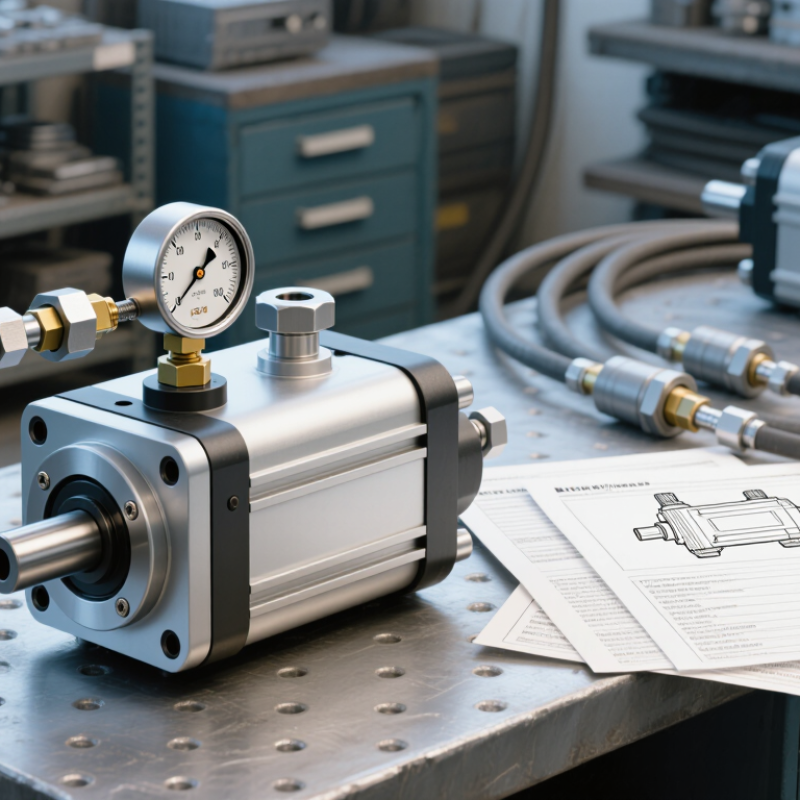
A hydraulic pump is defined by more than its housing. Its core identity includes pump type, displacement, pressure range, flow rate, rotation direction, and shaft configuration. These details determine whether it can deliver the required oil volume under load. Mounting dimensions and port locations matter too. A pump that looks similar may still require altered hoses or a different coupling.
Fit matters.
An equivalent pump should match the original unit’s duty, not merely its advertised size. Compare rated and peak pressure, speed limits, viscosity range, control method, and fluid compatibility. Check the mounting face, shaft diameter, keyway, and inlet and outlet positions against machine drawings or the removed pump. Then review performance curves at the actual operating speed. A practical assessment also considers heat, noise, and pressure loss in the existing circuit.
Not appearance alone.
Still, the comparison can be less tidy than a catalog suggests: worn components, uncertain labels, or previous repairs may obscure the original specification. When data are incomplete, measure carefully and confirm the selection with a qualified hydraulic technician. A small mismatch can cause slow movement, excess heat, or premature wear.
A reliable pump match starts with the nameplate and the machine’s operating conditions, not appearance alone. Record displacement, rated pressure, rotation direction, shaft dimensions, mounting pattern, and port locations. Measure carefully; a few millimeters can prevent installation. Confirm flow at the actual drive speed, since a pump with similar displacement may deliver too much or too little oil. Check the control type as well, including pressure compensation or load-sensing features. Small details matter.
Then compare the pump’s working range with the system’s real demands. Note normal and peak pressure, fluid viscosity, operating temperature, and duty cycle. A unit rated for brief peaks may not suit continuous high-pressure work. Check inlet conditions and case-drain requirements against the machine layout. Ask for a dimensional drawing and performance data before ordering, and verify the part number against service records where possible. A clean spreadsheet can still miss a worn coupling or unusual port arrangement. I have seen that happen. If the machine has been modified, its current fittings may not match its original specification, so inspect the installation directly.
Use the original pump’s nameplate and machine documentation as the reference. The example values below illustrate how to compare specifications; they are not specifications for a particular pump.
| Specification | Example reference | What the replacement should meet | How to verify |
|---|---|---|---|
| Pump type | Fixed-displacement vane pump | Match the required design and control method; a variable-displacement pump is not automatically interchangeable. | Check the pump documentation and the machine’s hydraulic circuit. |
| Displacement | 25 cm³/rev | Match the original displacement or confirm that the machine can accommodate the resulting flow difference. | Compare cm³/rev on the nameplate or technical sheet. |
| Flow rate | About 37.5 L/min theoretical at 1,500 rpm for 25 cm³/rev | Provide the required flow at the actual operating speed and pressure; actual flow is lower than theoretical flow because of volumetric losses. | Estimate theoretical flow as displacement × rpm ÷ 1,000, then verify the rated flow data. |
| Continuous pressure | 160 bar operating requirement | Rated continuous pressure must meet or exceed the system’s maximum normal operating pressure. | Compare the pump’s continuous rating—not only its peak rating—with system pressure. |
| Peak pressure | Brief transients up to 180 bar | Allowable intermittent pressure and duration must cover the machine’s pressure spikes. | Check the manufacturer’s limits and the relief-valve setting; do not use peak rating as a continuous rating. |
| Operating speed | 1,500 rpm nominal | The normal and maximum drive speeds must remain within the replacement pump’s specified range. | Check motor speed, drive ratio, and pump minimum and maximum speeds. |
| Rotation direction | Clockwise, viewed from the shaft end | Match the required rotation; some pumps are directional and may be damaged if driven incorrectly. | Confirm the viewing convention and rotation marking in the documentation. |
| Mounting and shaft | Flange-mounted; keyed shaft | Mounting standard, pilot diameter, bolt pattern, shaft diameter, length, and connection type must fit the drive. | Compare dimensional drawings and coupling details, not just the pump’s external size. |
| Port layout and size | Separate inlet and outlet ports; sizes to be confirmed | Port locations, thread or flange standard, and flow-path orientation must suit the existing pipework. | Check port drawings and connection standards; avoid forcing mismatched fittings. |
| Hydraulic fluid and viscosity | Mineral hydraulic oil; ISO VG 32 or 46 may be used where specified by the system | The replacement must support the installed fluid and its viscosity across the actual operating-temperature range. | Check fluid type, viscosity limits, and seal compatibility in the pump documentation. |
| Inlet conditions | Flooded inlet, short suction line | Inlet pressure and suction-line losses must stay within the pump’s limits to reduce cavitation risk. | Check allowable inlet pressure, line size, fluid temperature, and installation height. |
| Temperature and seals | Operating range depends on fluid and seal material | The pump’s temperature limits and elastomers must be suitable for the fluid and ambient conditions. | Confirm fluid temperature, seal material, and stated operating limits. |
Three pump types can serve as practical equivalents: variable-displacement axial-piston, vane, and external gear pumps. Axial-piston units suit systems needing high pressure and adjustable flow. Compare displacement control, pressure rating, shaft rotation, mounting, and port layout before selecting one. Small differences can prevent a clean installation.
Vane pumps often provide smoother flow and quieter operation at moderate pressures. Check fluid viscosity and contamination limits, especially in older machinery. External gear pumps are compact and straightforward, but their fixed displacement may not match a system that needs variable output. A pump type is only a starting point. The U.S. Department of Energy and Hydraulic Institute’s 2006 sourcebook estimates that pumping systems use nearly 20% of global electricity and 25–50% of energy in some industrial plants. That makes operating efficiency worth checking alongside fit. I would not treat a similar-looking pump as a drop-in match; even careful comparisons can miss control or connection details.
Equivalent pumps should be compared by their actual operating conditions, not by appearance alone. Check rated flow, pressure range, speed, and displacement against the original unit’s specifications. A pump that matches the model description may still deliver too little flow under load. Small differences matter.
Compatibility starts with the installation details. Confirm the mounting pattern, shaft dimensions, rotation direction, port locations, and connection sizes before ordering. Then check fluid type, temperature range, and any control-valve requirements. Even a slight shaft mismatch can cause vibration or premature wear. A useful comparison includes the machine’s duty cycle, too: intermittent operation may place different demands on a pump than continuous service.
Performance claims deserve careful review. Ask for test data at comparable speed, pressure, and fluid viscosity, rather than relying on a broad efficiency figure. If possible, compare pressure stability and noise during a controlled test. These checks take time. In practice, catalog information can be incomplete, and I would not treat a near match as proof of compatibility. Verify the exact configuration with the equipment documentation and a qualified hydraulic technician before installation.
Selecting an equivalent pump starts with the machine’s actual operating conditions, not its nameplate alone. Record required flow, continuous and peak pressure, shaft speed, rotation, mounting dimensions, port positions, and control type. Then check the fluid’s viscosity and temperature range. A pump that fits the mounting face can still fail if its displacement or shaft direction differs. Measure carefully.
Use the original duty cycle as a reference. The U.S. Department of Energy’s Improving Pumping System Performance sourcebook reports that pumping systems use nearly 20% of global electricity, and 25–50% of energy in some industrial plant operations. That makes efficiency more than a catalog detail. Compare input power and expected operating hours, but do not assume a higher-rated pump will save energy; oversizing can increase heat and wear.
Confirm that the replacement meets the system’s pressure and flow needs at the actual speed and fluid viscosity. Review allowable case pressure, leakage limits, and inlet conditions against the manufacturer’s technical data and relevant hydraulic test standards, such as ISO 4409. Also inspect the coupling, seals, and available installation clearance. Small details matter. A little uncertainty remains when old drawings are incomplete, so verify dimensions and operating readings on site before ordering.
Compare the required hydraulic output at example operating points to help select a suitable equivalent pump for your application.
How to use this chart: Hydraulic output power is calculated as pressure (bar) × flow (L/min) ÷ 600. These are theoretical example duty points, not product ratings; actual shaft power will be higher because of losses. Choose an equivalent by verifying required flow at operating speed, continuous and peak pressure ratings, pump displacement, fluid compatibility, mounting, and control type.
Universal Pumping
625 Apache Trail
Woodstock, GA 30189
Mon - Fri | 9:00 AM - 5:00 PM
Universal Pumping is staffed with industry professionals with 20-45 years experience with high pressure pumping systems. We represent only the “elite producers” in pump manufacturing: Britain’s EMS and Germany’s EMMERICH. Our engineering and manufacturing approach is conservative, and we do not use “guess work” in the design or sales of our pumping and filtration equipment.


