China Best Date Bar Extrusion Line Supplier?
Choosing a China-based Date Bar Extrusion Line supplier involves more than comparing quoted prices. The equipment must handle sticky date paste, added nuts, and changing recipes without producing uneven bars. FAOSTAT reports roughly 9.7 million tonnes of dates produced worldwide in 2022, a large raw-material base for processors. Yet date volume alone does not guarantee demand for any particular machine. Product format, factory capacity, and local processing conditions matter.
A useful technical perspective comes from Dr. Mian N. Riaz, a food extrusion researcher and author. His published work treats equipment design, formulation, and operating conditions as connected factors in extrusion performance. This is a paraphrase, not a verbatim quotation. For buyers, that means asking how a supplier controls feed rate, temperature, and pressure—not simply how fast a line runs. Small details matter. A glossy brochure cannot show whether sticky paste will bridge inside a hopper during a long shift.
This guide examines what “best” should mean in practice: stable output, cleanable food-contact surfaces, recipe flexibility, operator training, and accessible spare parts. It also considers factory testing, installation support, and documented performance claims. Buyers should request product trials using their own date mixture and target bar dimensions. A successful sample is useful, but it is not a full production test. Supplier comparisons can still feel imperfect, especially when specifications use different assumptions. The goal here is a clearer, evidence-led shortlist—not an unsupported ranking of Chinese manufacturers.
What Is a Date Bar Extrusion Line?
China Best Date Bar Extrusion Line Supplier?
What Is a Date Bar Extrusion Line?
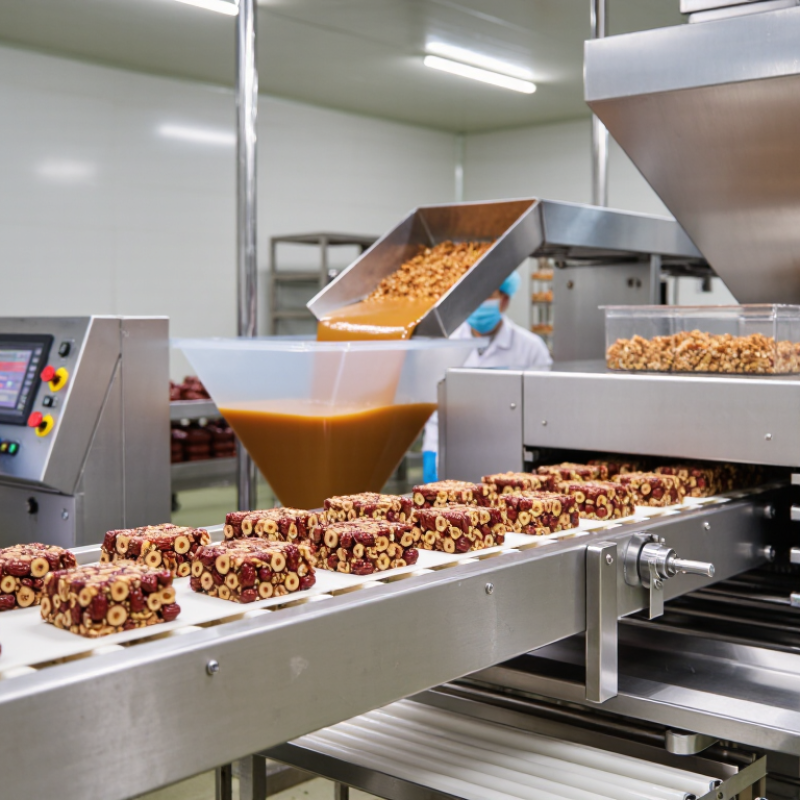
A date bar extrusion line is a food-processing system that shapes date-based mixtures into continuous bars. It typically includes a mixer, feed hopper, forming unit, cutter, and conveyor. The mixture moves through a shaped opening, then the emerging rope is cut into portions. Depending on the recipe, equipment may also include cooling, enrobing, or packaging stages.
The process suits sticky mixtures made with chopped nuts, grains, or other ingredients. Operators adjust feed rate, die size, and cutting speed to control bar dimensions and reduce uneven edges. FAOSTAT’s Crops and Livestock Products database records about 9.7 million tonnes of global date production in 2022, supporting the ingredient’s importance across food supply chains. That figure does not, by itself, indicate demand for any specific machine. Recipes vary. A small change in moisture can affect feeding and bar texture, so trials with the actual mixture matter.
Tips: Ask suppliers to test your recipe, not just a sample dough. Check whether the line allows quick die changes and easy cleaning. Request measured output, bar-weight variation, and waste figures from a practical run. Be cautious: quoted capacity may differ from steady production.
How Does the Date Bar Extrusion Process Work?
A date-bar extrusion line starts with inspection, not the machine. Operators remove pits and damaged fruit, then grind dates into a uniform paste. FAOSTAT’s 2022 Crops and Livestock Products dataset records global date production above 9 million tonnes, but variety and harvest moisture can still differ. That variation changes paste stickiness. Small details matter.
The paste is blended with measured binders and optional nuts or grains, then fed steadily into a forming extruder. A screw moves the mixture through a die, shaping a continuous slab or rope; a cutter sets bar length. Cooling firms the surface before wrapping. Not glamorous, but critical.
Monitor feed rate, product temperature, dimensions, and water activity, and record each trial. A supplier should show how these controls are tested, not just quote machine capacity.
I would not assume one setting suits every recipe; pilot runs often reveal uneven edges or bars that crumble after cooling. Keep samples from each run, then adjust the blend or process based on measured results.
What Equipment and Features Make Up an Extrusion Line?
A practical date-bar extrusion line starts with inspection and preparation equipment. A washer removes dust, while a destoner or pitting unit separates stones from the fruit. A grinder or pulper then creates a consistent date paste. Mixing equipment blends the paste with ingredients such as oats, seeds, or nuts. The mixer should handle sticky material without leaving dry pockets. Small details matter.
The paste moves into a feed hopper and through an extruder. A variable-speed screw helps regulate flow, while interchangeable dies shape bars to the required width and thickness. Controls for pressure and temperature support repeatable production. Not always. Date paste can vary in moisture and firmness, so fixed settings may not suit every batch.
After extrusion, a cutter portions the continuous strip into bars. A cooling conveyor can help stabilize their shape before optional coating or wrapping equipment. Look for food-contact surfaces that are easy to clean, guarded moving parts, and accessible adjustment points. The awkward part is recipe testing: a line can look complete on paper yet struggle with a sticky mixture. Test the actual formulation before settling on screw speed, die size, and cutting settings. That step is easy to underestimate.
How to Evaluate Date Bar Extrusion Line Suppliers in China
China Best Date Bar Extrusion Line Supplier?
How to Evaluate Date Bar Extrusion Line Suppliers in China
When comparing date bar extrusion line suppliers in China, request a trial using your own date paste, not a polished demonstration recipe. Watch hopper feeding, rope consistency, and cutter edges during a sustained run. Small changes in moisture can cause sticking or uneven bar weights. Ask how operators adjust pressure and speed without stopping production.
Review the machine’s contact surfaces, guarding, and cleaning access in person or through a detailed video inspection. Request drawings, electrical specifications, a parts list, and written output figures tied to a defined product size. A quoted capacity means little without those conditions. Check whether the supplier can provide sample bars, test records, and a clear acceptance procedure before shipment.
After-sales support matters when a belt wanders or a sensor fails mid-shift. Confirm response hours, remote troubleshooting options, spare-part lead times, and included training. Speak with a recent customer if possible, while recognizing that one reference cannot prove every claim. No checklist catches everything. Leave time for a factory acceptance test, and record unresolved details in writing. A lower price may come with limited customization, so consider whether the trade-off suits your recipes and maintenance skills.
How to Evaluate Date Bar Extrusion Line Suppliers in China
Suggested evaluation weights for comparing suppliers
Use these suggested weights as a starting point, not as industry survey results. Verify food-contact compliance documentation, test the line with your recipe and target capacity, and compare customization, service, delivery terms, and relevant customer references.
Which Factors Matter When Selecting a Supplier?
When choosing a date bar extrusion line supplier in China, test the machine with your actual recipe, not a generic sample. Date paste varies in moisture, fiber, and stickiness, which can affect feeding, shaping, and cutting. Ask for a trial using your ingredients, then inspect bar weight, edge finish, and consistency across a full production run. Small details matter. Request clear records for output rate, changeover time, cleaning steps, and expected waste. FAO’s 2023 tracking report estimated that 13.2% of food was lost globally between harvest and retail in 2021. That figure covers many foods, not date bars specifically, but it makes yield control worth checking closely.
Evaluate the supplier’s engineering support as carefully as its quoted capacity. Ask how operators adjust roller gaps and cutting length, and whether settings can be repeated after cleaning. Check which product-contact parts can be removed easily; sticky residue in corners can slow sanitation. Request a list of recommended spare parts, realistic delivery times, and a written commissioning plan. Speak with customers running similar products, if possible, and ask what failed during their first months. Run a real trial. A polished demonstration is useful, but it may hide awkward changeovers or hard-to-clean surfaces. I would not treat a fast line speed as proof of a good fit; stable output, accessible service, and repeatable product quality matter more.