
Universal Pumping | High Pressure Pumps
High Pressure Pumps for Difficult to Pump Slurry, Sludge, and Food Waste.
Choosing a Park Music Fountain is not simply a matter of selecting jets, lights, and speakers. The design must fit the park’s size, audience, climate, maintenance capacity, and daily use. A family plaza needs clear viewing areas and safe, predictable circulation. A larger civic park may need stronger sound coverage and more robust water treatment. Small details matter.
The National Recreation and Park Association’s 2024 Engagement With Parks Report found that 84% of U.S. adults consider local parks, trails, and open spaces essential to quality of life. That figure is not fountain-specific, but it shows why public-space features deserve careful planning. Urbanist and public-space researcher William H. Whyte observed, “What attracts people most, it would appear, is other people.” A well-sited fountain can give visitors a reason to gather, pause, and return.
This guide explains how to compare musical programming, water effects, control systems, lighting, operating costs, and long-term maintenance. It also considers practical questions: Can nearby residents hear the show clearly without excessive volume? Can technicians reach pumps and filters without closing the plaza? Does the display still look inviting between performances? A polished rendering can hide these issues. Project teams should verify assumptions with site measurements, supplier specifications, and maintenance plans before committing.
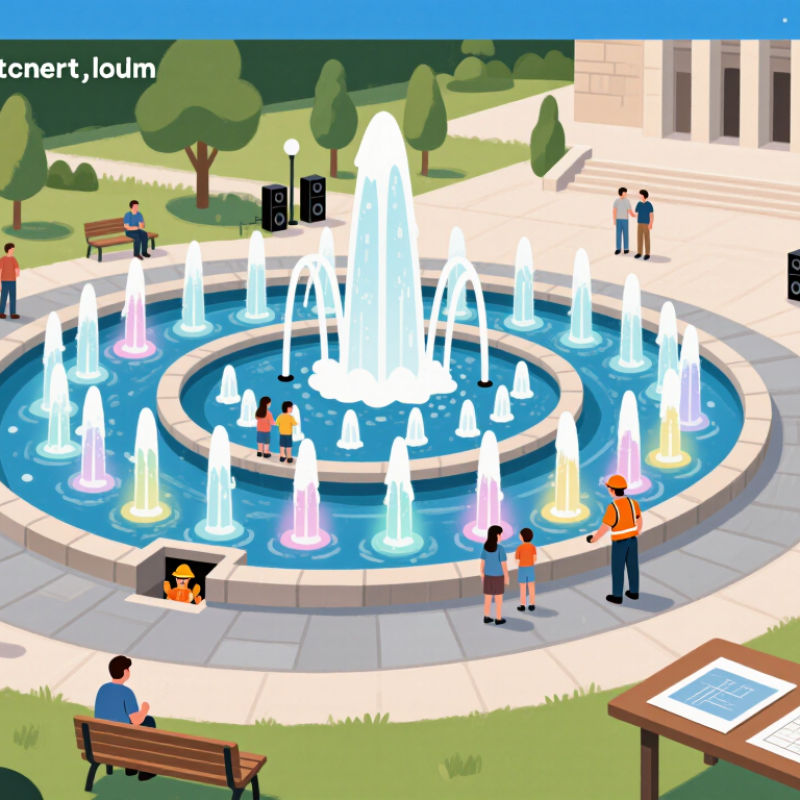
A park music fountain should serve a clear purpose, not simply fill an open space. Decide whether it will create a calm pause, support community events, or become a lively destination for families. Each goal calls for a different visitor experience. A quiet garden may need gentle water patterns and restrained sound. A central gathering place can support stronger visual movement, provided nearby paths remain clear. Think about the feeling people should carry away.
Spend time at the site during different hours. Watch how visitors move, where they stop, and which areas feel noisy or exposed. Notice the benches, play areas, shade, and nearby homes. These details can shape the fountain’s location, sound level, and operating schedule. That matters. A design that feels exciting during a daytime event may seem intrusive on a quiet evening. It is easy to misjudge this from drawings alone.
Translate the intended experience into practical requirements. For relaxed visits, consider shorter musical sequences, softer transitions, and places to sit within view. For events, allow open space for crowds and keep accessible routes unobstructed. Check how sound carries across the park, especially near paths and resting areas. Some assumptions will be wrong; a temporary layout or visitor observation can reveal problems before construction begins. Don’t skip that step.
Use these planning priorities to match fountain design choices to the park’s purpose. Scores are a qualitative starting-point rubric, not results from a visitor survey.
Scale: 1 = lower priority, 5 = higher priority. Validate priorities with site conditions, accessibility needs, community feedback, and operating constraints.
A park music fountain should fit the site before it impresses visitors. Walk the proposed area at different times of day. Note slopes, tree roots, nearby paths, seating, and the direction of prevailing winds. A fountain that sprays toward a walkway can leave paving slippery, even when its design looks modest on paper. Measure the available basin footprint and viewing distance, then check whether maintenance vehicles can reach the equipment area.
Space is only part of the assessment. Confirm water supply, drainage, electrical capacity, and access to safe shutoffs with qualified local professionals. Ask how the system will be winterized and where pumps, filters, and controls can be serviced. These details affect operating costs and future repairs. Small sites often have less room for equipment than expected. That matters.
Review local planning, noise, water-use, accessibility, and safety requirements before fixing the layout. Rules can differ between municipalities, and requirements may depend on the site’s ownership or proximity to homes. Speak with the relevant authorities early; a sound level acceptable in a busy civic park may disturb nearby residents at night. Document assumptions, including expected visitor numbers and seasonal operating hours. They may be wrong. Recheck them against actual site conditions before approving the final design.
Choosing a park music fountain starts with its audience and site, not the biggest basin that fits. Map walking routes, seating, accessible paths, and nearby homes before fixing the footprint. NRPA’s 2024 Agency Performance Review reports a median 10.8 acres of parkland per 1,000 residents; this broad benchmark cannot size a fountain, but it reminds planners to balance one feature against the whole park. Check sightlines from benches and paths. Keep spray clear of seating.
For music, match speaker coverage to the gathering area and test sound at the quietest nearby edge. A few well-aimed speakers usually provide clearer listening than excessive volume. Schedule short sound checks during peak use, since trees, buildings, and wind can change what visitors hear. Keep controls accessible to trained staff. Simple matters.
Water effects should suit local wind, water supply, and maintenance capacity. Low arcs can stay visible without soaking walkways; broad jets need more clearance and may drift. The U.S. EPA’s WaterSense guidance estimates landscape irrigation uses nearly 9 billion gallons daily nationwide, underscoring the value of careful water planning. That figure concerns irrigation, not fountains, so do not treat it as a fountain-use estimate. Specify recirculation, filtration, and a refill plan, then track actual make-up water after opening. The first design may still need adjustment. That is worth planning for.
How to Choose a Park Music Fountain for Your Project?
Compare suppliers by more than the fountain’s appearance. Ask what each proposal includes: hydraulic design, lighting, music controls, installation, commissioning, and staff training. Request examples of similar public projects, then ask how the systems performed after several seasons. A clear service plan matters. A polished rendering can hide awkward pump access or controls that are difficult for park staff to use.
Compare full project costs, not just purchase prices. Check whether estimates include electrical work, drainage, water treatment, freight, seasonal shutdown, and replacement parts. Ask suppliers to identify assumptions and exclusions in writing. For maintenance, clarify inspection frequency, expected filter cleaning, nozzle checks, and response times for faults. A small clogged nozzle can disrupt a carefully timed display. Budget for routine upkeep, too; it is easy to underestimate.
Tips: Get itemized bids using the same project scope. Ask who handles winterization and whether staff can reach pumps without draining the basin. Keep maintenance instructions practical and on site. One detail may still be missed, so review the plan with the people who will operate the fountain each week.
| Project Scale | Typical Supplier Route | Indicative Installed Budget (USD) | Annual Maintenance Planning Allowance | Typical Maintenance Needs | Supplier and Scope Checks |
|---|---|---|---|---|---|
| Small Simple programmed display, typically fewer than 10 water effects; suitable for a neighborhood park or small plaza. | A specialist fountain contractor or aquatic-equipment integrator. Confirm who is responsible for design, installation, controls, and commissioning. | $75,000–$250,000 Planning range for a relatively straightforward installation. Site construction and utility work can significantly affect the total. | Allow roughly 3%–8% of installed system cost per year for routine maintenance planning. Electricity, water, and major repairs are additional. | Inspect pumps, filters, nozzles, and water levels regularly; clean strainers and basin surfaces; check water-treatment levels; winterize where freezing conditions apply. | Ask for an itemized scope covering controls, lighting, water treatment, commissioning, operator training, warranty, and spare parts. Verify that the design matches local water and electrical requirements. |
| Medium Multiple synchronized effects, commonly around 10–30 jets, with programmable lighting and music control. | A fountain specialist-led design-build team, with landscape, civil, electrical, and audio expertise coordinated under clearly defined responsibilities. | $250,000–$750,000 Costs depend on basin construction, jet count, lighting, control complexity, and the amount of site and utility work. | Allow roughly 3%–8% of installed system cost per year for routine maintenance planning. Budget separately for energy, water, treatment supplies, and staffing. | In addition to routine cleaning and water-treatment checks, inspect valves, lighting, sensors, electrical protection, audio equipment, and automated controls. Keep a maintenance log and test programmed sequences. | Compare proposals using the same performance brief. Check commissioning and acceptance-test procedures, control-system documentation, service response times, warranty exclusions, and availability of replacement components. |
| Large Complex choreographed display, often 30 or more effects, with extensive lighting, audio, controls, and custom civil works. | An experienced fountain design-build contractor working with qualified engineering and construction partners. Identify one party accountable for system integration and performance testing. | $750,000–$2,500,000+ Large or highly customized projects can exceed this range, particularly when major basin, structural, electrical, or utility upgrades are needed. | Allow roughly 3%–8% of installed system cost per year for routine maintenance planning; complex systems may require additional specialist service and operator time. | Plan for scheduled pump and filtration servicing, water-quality monitoring, nozzle and valve inspection, control backups, lighting checks, seasonal shutdown or winterization, and periodic specialist inspections. | Require a detailed responsibility matrix, hydraulic and electrical design information, training and handover documents, spare-parts recommendations, preventive-maintenance schedule, and a clear post-warranty service plan. |
Budget note: These are broad, illustrative planning ranges in USD, not supplier quotations or guaranteed market prices. They are intended for early comparison; actual costs vary by location, site conditions, design, construction scope, and procurement requirements. Confirm inclusions and exclusions with qualified suppliers. The maintenance percentage is a planning allowance, not a fixed industry rate; operating energy, water, treatment supplies, staffing, and major refurbishment may be additional.
Choosing a park music fountain begins with the site, not the playlist. Check soil conditions, drainage, nearby paths, and the distance to electrical and water services. Leave clear access for maintenance vehicles and technicians. A narrow service gate can turn a simple repair into a costly disruption. Plan the basin, pumps, lighting, and controls together, with qualified professionals reviewing electrical protection and water management.
Before opening, test each system in stages. Run pumps without music, then check lighting, controls, and individual water features. Watch the jets from several public viewing points; a display that looks balanced from the control room may appear uneven from a bench. Test the show at different volumes and note how wind carries sound toward homes or quiet areas. Keep a written record of faults and adjustments. Test the emergency stop, too.
Long-term operation needs a realistic schedule and an assigned caretaker. Inspect filters, nozzles, seals, and water levels regularly, and clean debris before it blocks a jet. Record pump readings and repairs so gradual changes do not go unnoticed. Seasonal shutdowns may require draining exposed lines and protecting equipment from freezing. Keep common replacement parts on site. Plans rarely survive the first season unchanged; leaves, public use, and weather will reveal what needs refining.
Universal Pumping
625 Apache Trail
Woodstock, GA 30189
Mon - Fri | 9:00 AM - 5:00 PM
Universal Pumping is staffed with industry professionals with 20-45 years experience with high pressure pumping systems. We represent only the “elite producers” in pump manufacturing: Britain’s EMS and Germany’s EMMERICH. Our engineering and manufacturing approach is conservative, and we do not use “guess work” in the design or sales of our pumping and filtration equipment.


