How to Choose a Power Inverter for Home Use?
Choosing a Power Inverter For Home use starts with the appliances you need to run, not the largest model on the shelf. A refrigerator, router, and a few lights may draw modest power together, yet a refrigerator can demand a brief surge when its compressor starts. Read each appliance’s wattage label, then note which devices must operate at the same time. Small details matter. Amory Lovins, an energy-efficiency expert, is often credited with the reminder, “The cheapest energy is the energy you don’t use.” That principle is useful here: measure real needs before paying for excess capacity. Still, choosing a size is not always tidy; labels and actual startup demands can differ.
A reliable comparison should cover continuous output, surge capacity, battery voltage, and waveform. Check that the inverter’s continuous rating can support your planned combined load, and confirm its surge rating can handle motor-driven appliances. For sensitive electronics, a pure sine wave model is often a practical choice. Also check the battery system’s voltage and the manufacturer’s installation guidance. An inverter cannot provide unlimited backup; runtime depends on battery capacity and connected loads. Ask a qualified installer about ventilation, cable sizing, and safe placement, especially for a permanently installed system. Real homes vary. A compact setup might keep a router and lights running, while a larger one may support more essential circuits. The best choice is the one that fits your measured needs, not an impressive number on a box. And if your load estimate feels uncertain, revisit it before buying.
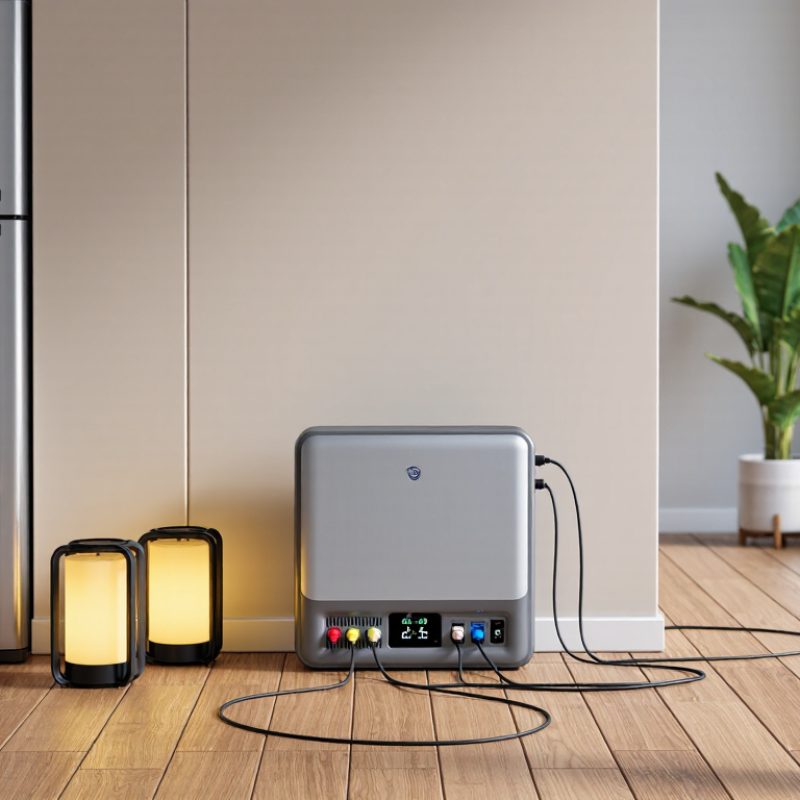
Inventory Loads and Starting Surges: Motors May Need 2–3× Running Power
When choosing a home inverter, list each appliance’s running watts and identify motors: refrigerators, pumps, and air conditioners can draw much more power at startup. A useful first estimate is 2–3 times running power. For example, a 700-watt pump may need 1,400–2,100 watts briefly to start. But this is only a guide. Check the appliance label or manual for starting watts, and confirm the inverter’s surge rating lasts long enough. Add the loads that may run together, not every device in the house.
The U.S. Department of Energy’s 2014 Improving Motor and Drive System Performance sourcebook reports that motor-driven systems use about 68% of electricity in U.S. manufacturing. That figure is industrial, not a household sizing rule; it does show why motor loads deserve attention. Starting current varies by motor and appliance, so estimates can miss the mark. Leave headroom, and avoid choosing an inverter based only on its continuous rating.
Tips: Record the fridge’s running and starting watts, then test your plan with other likely simultaneous loads. A pump starting while a kettle runs can push demand above expectations. Check surge duration, too. A large peak lasting only milliseconds may not be enough for a motor that takes longer to start.
Size Continuous Output with 20–25% Capacity Headroom
A home inverter’s continuous output should comfortably exceed the load you plan to run. List appliances that may operate together, then check their running wattage on labels or manuals. Add those figures; do not rely on a device’s maximum or startup rating as its normal draw. That matters.
Add 20–25% headroom to your total. If your lights, router, and television draw 800 watts together, look for an inverter rated around 960–1,000 watts continuous. This buffer helps prevent routine loads from pushing the inverter near its limit. It also leaves room for small changes, such as adding a lamp.
Check startup demands separately. Refrigerators and pumps can briefly draw much more power when their motors start, even when their running wattage looks modest. Confirm that the inverter’s surge rating can handle those short peaks. Keep it simple. In practice, appliance labels are not always easy to interpret, so estimates may be imperfect. If a load has no clear rating, consult its manual or measure its draw before sizing the system. Don’t count on the headroom margin to cover a large motor’s startup surge.
How to Choose a Power Inverter for Home Use? - Size Continuous Output with 20–25% Capacity Headroom
| Example Load Plan | Simultaneous Appliances and Estimated Running Power | Total Continuous Load | Minimum with 20% Headroom | Minimum with 25% Headroom | Practical Inverter Continuous Rating | Startup / Surge Check |
| Essential electronics | Wi-Fi router: 12 W; four LED lights: 36 W; laptop: 65 W; television: 100 W | 213 W | 256 W | 267 W | 300 W or higher | No major motor load in this example. Check the actual input ratings of each device. |
| Home office | Desktop computer: 250 W; monitor: 40 W; Wi-Fi router: 12 W; two LED lights: 18 W | 320 W | 384 W | 400 W | 500 W or higher | Computer power use varies with workload. Allow for any additional peripherals used at the same time. |
| Kitchen essentials | Refrigerator running load: 180 W; microwave input: 1,200 W; two LED lights: 20 W | 1,400 W | 1,680 W | 1,750 W | 2,000 W or higher | Refrigerator compressors can draw substantially more power when starting. Check the inverter’s surge rating and duration. |
| Water pump and refrigeration | Small pump running load: 600 W; refrigerator running load: 180 W; three LED lights: 27 W; router: 12 W | 819 W | 983 W | 1,024 W | 1,200 W or higher | Pump and refrigerator startup loads may overlap. Verify their starting requirements against the inverter’s surge capability. |
| Room heating and electronics | Portable heater: 1,500 W; laptop: 65 W; two LED lights: 18 W | 1,583 W | 1,900 W | 1,979 W | 2,000 W or higher | Heaters are high-demand loads. Confirm the heater’s nameplate wattage and avoid adding other loads beyond the inverter rating. |
Note: Figures are illustrative estimates. Add the input watts of appliances expected to run simultaneously, then select an inverter whose continuous output is at least 20–25% higher. Use appliance nameplate values where available; motors and compressors may also require a higher short-term surge rating.
Match Battery-Bus Voltage: 12 V, 24 V, or 48 V DC
Choosing the inverter’s DC bus voltage starts with the battery bank, not the wall outlets. A 12 V inverter needs a 12 V battery system; a 24 V or 48 V model needs the matching input. Check the inverter label and battery documentation carefully. AC output voltage is a separate specification.
The difference matters most when loads get larger. At the same power, a 12 V system draws about four times the current of a 48 V system, before conversion losses. For example, a 1,200 W load may draw well over 100 A from a 12 V bank. That means thicker cables, suitable overcurrent protection, and careful installation. Heat can build up in undersized connections. Numbers matter.
For a small backup setup with modest loads, 12 V may be practical. A larger home system often benefits from 24 V or 48 V, if its batteries and inverter are designed to work together. Battery voltage can change under charge or load, so confirm the inverter’s permitted input range, not just its nominal voltage. Check the label. Do not assume batteries can be rewired safely; series and parallel arrangements affect voltage, current, and compatibility. This part is easy to overlook, and a tidy-looking setup can still be mismatched. When in doubt, have a qualified installer verify the design.
Choose Pure Sine Wave Output with Less Than 5% THD
When choosing a home power inverter, prioritize pure sine wave output with total harmonic distortion below 5%. This waveform more closely resembles utility power and can reduce unwanted noise or heat in compatible equipment. That matters. A refrigerator compressor may buzz or run warmer on rougher output, while audio equipment can pick up hum. Check sensitive devices, including medical equipment, against their manufacturers’ power requirements.
THD is not the only specification to inspect. Confirm the inverter stays below 5% THD at your expected load, not just at idle. Read the test conditions, since results can vary with load and battery voltage.
Match continuous wattage to the combined running loads, then allow for motor startup surges. A refrigerator rated at 700 watts may briefly draw much more when its compressor starts. The specification is useful, but it is not the whole story.
Check output voltage, frequency, overload protection, and installation instructions before connecting household circuits. Fixed wiring should be handled by a qualified electrician. It is easy to focus on a neat THD number and overlook poor sizing.
Check Efficiency and Local AC Standards: 90%+ Efficiency; 50/60 Hz
A home inverter’s efficiency tells you how much battery energy becomes usable AC power. Look for 90% or higher, but check the conditions behind that figure. A peak rating may apply only at a particular load, not during everyday use. A refrigerator starting its compressor can draw much more power than it uses while running. Check both startup demand and continuous load. Small losses add up.
Cable length, ventilation, and idle consumption also affect real-world performance. A compact inverter in a closed cabinet may run warm, so allow room for airflow. Compare efficiency data with the load you expect to use, rather than relying only on a full-output figure. Treat 90% as a useful target, not a guarantee. Local AC frequency matters too. Match the inverter’s output to the local standard, usually 50 or 60 Hz, and verify voltage as well. Appliance labels are easy to overlook, but motors and clocks may not work properly with mismatched power.
Choosing a Home Power Inverter: Efficiency and AC Frequency
The curves show normalized AC waveforms: a 50 Hz cycle lasts 20 ms, while a 60 Hz cycle lasts about 16.7 ms. Choose an inverter frequency that matches your local AC standard and the appliances you will power. As a practical screening target, look for rated efficiency of 90% or higher; actual efficiency varies with load and operating conditions.