
Universal Pumping | High Pressure Pumps
High Pressure Pumps for Difficult to Pump Slurry, Sludge, and Food Waste.
Choosing the right Marine Generator Sets in 2026 requires more than comparing rated kilowatts and purchase prices. A reliable choice begins with the vessel’s real operating profile. Consider propulsion support, hotel loads, emergency demand, and future electrical upgrades. A ferry, fishing vessel, and offshore support ship rarely need the same solution.
Small details matter. Salt spray can attack terminals, control panels, and cooling components. Tight engine-room spaces can make routine filter changes surprisingly difficult. Noise and vibration may also affect crew comfort, passenger areas, and sensitive navigation equipment. Experienced marine engineers usually review load studies, fuel systems, ventilation, exhaust routing, and service access before recommending a model.
The strongest evaluation combines manufacturer data, independent testing, installer experience, and verified after-sales support. Confirm compliance with applicable class, flag-state, emissions, and safety requirements before purchase. Requirements can differ between operating regions and vessel types. A polished brochure is not enough.
Look beyond maximum output.
Assess transient response, fuel consumption at partial load, starting reliability, corrosion protection, and spare-parts availability. Hybrid systems and lower-emission technologies may improve efficiency, but their added controls can increase commissioning demands. That trade-off deserves honest attention. No selection guide is flawless, and real-world performance can differ from laboratory figures. Operators should question unclear claims and request documented test results.
This guide explains how to compare Marine Generator Sets for durability, efficiency, safety, and lifecycle value in 2026. It focuses on practical decisions made under heat, vibration, limited space, and changing regulations. A dependable generator should not merely start during a demonstration. It should perform consistently when the vessel is far from convenient support.
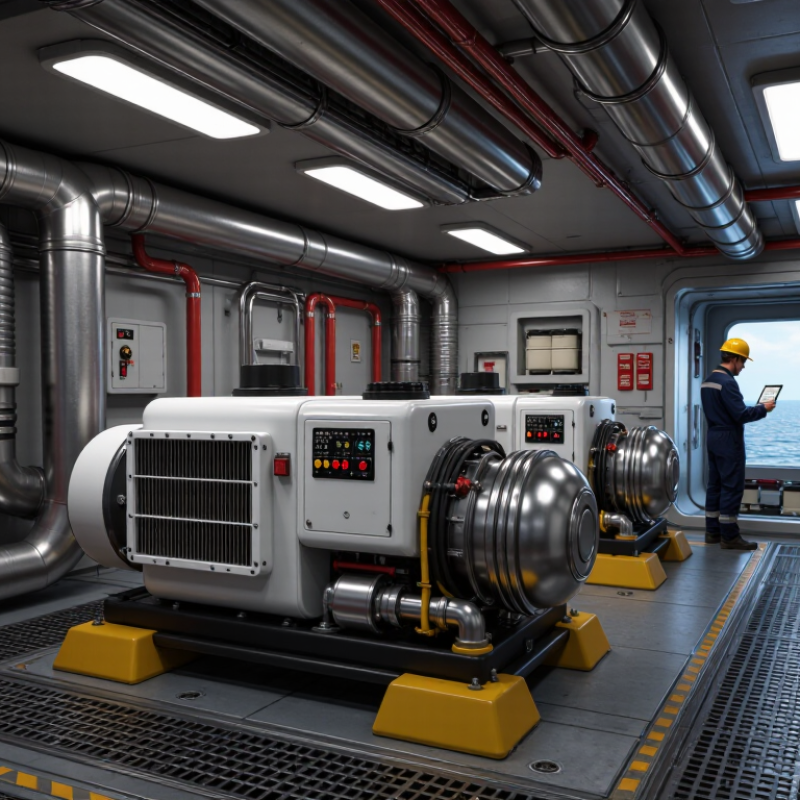
Marine generator selection should begin with real operating data, not only the vessel’s maximum demand. Record propulsion auxiliaries, navigation systems, pumps, ventilation, refrigeration, and hotel loads across several voyages. A generator running near 70–80% of its rated output usually supports efficient combustion and useful reserve capacity. Oversizing can create long periods of low-load operation, increasing incomplete combustion, carbon deposits, and maintenance concerns.
Build a load profile from measured peaks and daily averages. Include motor-starting currents, emergency services, battery charging, and future electrical equipment. Parallel generator sets can cover heavy port operations while allowing one unit to run efficiently during quiet sailing. This approach also supports emissions planning. The IMO 2023 GHG Strategy sets indicative targets for reducing shipping emissions by 20–30% by 2030 and 70–80% by 2040, compared with 2008 levels. DNV’s Maritime Forecast to 2050 also highlights operational efficiency as a major pathway for reducing fuel use. These targets do not replace engineering calculations, however. Every vessel behaves differently.
Tips: Measure loads for at least seven operating conditions. Check the lowest sustained load, not only the peak. Ask the chief engineer to review the data. One spreadsheet may miss a temporary crane load or a reefer surge. Recheck the profile after refits; yesterday’s “typical” load may already be wrong.
Choosing a marine generator set starts with the duty profile, not the largest advertised kilowatt figure. ISO 8528 ratings translate that profile into a defensible selection. Prime Power supports variable loads for extended operation, within ISO limits for average load and maintenance. Continuous Operating Power suits a steady load over long periods. Emergency Standby Power covers limited emergency operation after the main source fails. These ratings are not interchangeable.
Measure real loads at sea, in harbor, and during startup. Record refrigeration compressors, pumps, navigation equipment, and battery chargers separately. A motor can demand several times its running current. That brief surge may determine alternator size. Do not add every nameplate rating blindly. Diversity matters, but assumptions need evidence. If the vessel expects long voyages, using a standby-rated set for routine operation can increase thermal stress and shorten service life. Choose prime or continuous duty for regular hotel or propulsion-support loads.
Ask for the declared ISO 8528 rating, allowable load pattern, transient response, fuel consumption, and derating data. Salt air, engine-room heat, altitude, and fouled cooling surfaces reduce available output. Check performance at the vessel’s actual ambient temperature. The first load estimate is rarely perfect. In practical specification reviews, overlooked starting loads often cause trouble. A smaller set may look efficient on paper, yet fail when a bow thruster starts beside a loaded pump. Recheck measured peak demand and classification requirements before approval.
Choosing a marine generator set in 2026 requires more than comparing power output and fuel consumption. Route compliance matters. In designated NOx Emission Control Areas, IMO Tier III standards can demand up to an 80% reduction in nitrogen oxides compared with Tier I levels.
Start with the vessel’s operating profile. A generator running at low load may produce poor combustion and unstable emissions. Select a set that matches hotel loads, cargo equipment, and standby demands. Exhaust after-treatment systems, such as selective catalytic reduction, can reduce NOx effectively when temperature, urea quality, and dosing remain controlled. Some vessels may use exhaust gas recirculation instead. Check the system’s approved operating range, sensor layout, and response during load changes.
Ask for test evidence, not only catalogue figures. Confirm the generator’s Tier III certification, applicable ECA routes, and installation requirements with the flag administration or classification society. Review fuel compatibility, maintenance intervals, catalyst replacement costs, and access around the exhaust line. A perfect paper specification can still fail at the quay. Faulty sensors, clogged injectors, or incorrect dosing can quickly increase emissions. Remote monitoring helps, but crews still need practical training and clear alarms. One uncomfortable question remains: will the system stay compliant after years of vibration, salt exposure, and irregular maintenance?
When choosing a marine generator set in 2026, compliance must guide the specification. SOLAS requirements affect emergency power, fire protection, electrical safety, and installation arrangements. The vessel’s flag administration may also impose additional interpretations. Check these requirements before comparing fuel consumption or purchase price.
MARPOL Annex VI requires careful control of exhaust emissions. Confirm the applicable NOx Tier for the vessel’s keel date and operating area. Review sulfur limits, fuel compatibility, exhaust treatment, and onboard monitoring procedures. IACS class rules may require approved components, calculated short-circuit protection, insulation testing, and witnessed load trials. Request current certificates, test reports, emissions data, and maintenance instructions. A missing document can delay class approval. It happens more often than expected.
Tips: Build a compliance matrix before ordering. List each SOLAS clause, MARPOL requirement, and IACS rule beside its evidence. Ask the generator supplier to identify assumptions in writing. During harbor trials, test step loading, black-start performance, alarms, and emergency changeover. Record temperatures and voltage stability, not only engine speed. Leave space for inspection access. A compact installation may look efficient, yet poor access can undermine safe maintenance. Rules change, and a checklist can still miss a vessel-specific interpretation. Have the superintendent, electrician, and class surveyor review the final package together.
How to Choose the Best Marine Generator Sets in 2026
Purchase price is only the visible part of a marine generator’s cost. Compare fuel consumption at typical loads, not just the advertised rating. A vessel running at 40% load may burn fuel inefficiently. Record operating hours, average load, fuel price, and annual consumption. A simple log from the engine room often reveals more than a sales sheet.
Maintenance deserves equal attention. Check oil-change intervals, filter prices, inspection labor, and access around the service points. Technicians should be able to reach filters without removing nearby equipment. Ask for documented overhaul intervals and realistic parts availability. A cheaper unit can become expensive after repeated harbor delays and emergency repairs. Downtime costs money.
Build a ten-year total cost of ownership model. Include installation, fuel, scheduled service, major repairs, training, and disposal value. Use three fuel-price scenarios because forecasts are uncertain. Also test heavy weather and seasonal operating patterns. In practice, calculations are rarely perfect. I would review the model every year, especially after the first maintenance cycle. A spreadsheet can still lie. Field records should challenge its assumptions. The best choice is the set that delivers predictable power, manageable service work, and stable costs across changing marine conditions.
| Generator Set Class | Continuous Rating | Typical Prime Fuel Rate | Annual Operating Hours | Average Load Factor | Estimated Annual Energy Output | Estimated Annual Fuel Use | Routine Service Interval | Routine Maintenance Cost per 10 Years | Major Overhaul Allowance per 10 Years | Installed Acquisition Cost | Estimated Fuel Cost per 10 Years | Estimated 10-Year TCO | TCO per Generated kWh |
|---|---|---|---|---|---|---|---|---|---|---|---|---|---|
| Compact Auxiliary | 100 kW | 220 g/kWh | 3,000 h | 65% | 195,000 kWh | 51,100 L | 250 h | $35,100 | $20,000 | $90,000 | $561,800 | $706,900 | $0.36/kWh |
| Small Commercial | 250 kW | 220 g/kWh | 3,000 h | 65% | 487,500 kWh | 127,700 L | 250 h | $87,800 | $45,000 | $175,000 | $1,404,500 | $1,712,300 | $0.35/kWh |
| Medium Commercial | 500 kW | 210 g/kWh | 3,000 h | 65% | 975,000 kWh | 243,800 L | 250 h | $175,500 | $70,000 | $310,000 | $2,681,300 | $3,236,800 | $0.33/kWh |
| Large Commercial | 1,000 kW | 205 g/kWh | 3,000 h | 65% | 1,950,000 kWh | 475,900 L | 250 h | $351,000 | $125,000 | $570,000 | $5,235,000 | $6,281,000 | $0.32/kWh |
Planning assumptions: Diesel density is estimated at 0.84 kg/L; fuel price is assumed at $1.10/L; annual operation is 3,000 hours at a 65% average load factor.
Cost scope: Installed acquisition cost includes the generator package, standard marine controls, installation allowance, commissioning, and basic exhaust and cooling integration.
Maintenance scope: Routine service includes lubricants, filters, belts, inspections, and scheduled labor. Major overhaul allowance covers long-term engine refurbishment and replacement of wear components.
10-year TCO formula: Installed acquisition cost + 10-year fuel cost + routine maintenance cost + major overhaul allowance. Taxes, financing, downtime losses, spare capacity, fuel storage, and regulatory upgrades are excluded.
Note: Values are engineering-planning benchmarks. Actual fuel consumption, service cost, overhaul timing, and installed cost should be confirmed using the selected vessel profile, duty cycle, local fuel prices, class requirements, and service quotations.
Universal Pumping
625 Apache Trail
Woodstock, GA 30189
Mon - Fri | 9:00 AM - 5:00 PM
Universal Pumping is staffed with industry professionals with 20-45 years experience with high pressure pumping systems. We represent only the “elite producers” in pump manufacturing: Britain’s EMS and Germany’s EMMERICH. Our engineering and manufacturing approach is conservative, and we do not use “guess work” in the design or sales of our pumping and filtration equipment.


