How to Choose the Best Plastic Cup Lids Making Machine

Choosing the right Plastic Cup Lids Making Machine can shape your production costs, product quality, and long-term reliability. It is not simply a decision about speed. A suitable machine must match your cup sizes, lid materials, order volume, and available workshop space. For example, a small beverage packaging supplier may need a compact thermoforming system, while a large factory may require automated stacking, trimming, and quality inspection.

Real production experience shows that impressive output numbers do not tell the whole story. A machine rated for 30,000 lids per hour may perform differently with thin PET, recycled materials, or complex lid designs. Ask about actual testing conditions. Request sample lids. Check edge accuracy, sealing performance, energy consumption, and material waste. Small differences become expensive over time.

Maintenance also deserves careful attention. Clear controls, accessible heating elements, and reliable replacement parts can reduce unexpected downtime. A trusted manufacturer should provide installation guidance, operator training, safety documentation, and responsive technical support. Certifications matter, but they should support practical evidence rather than replace it. Some buyers focus too heavily on the lowest purchase price. That choice can become costly when molds wear quickly or service responses are slow.

This guide explains the main factors behind a dependable purchase. It compares machine types, production capacity, compatible materials, automation levels, mold flexibility, and operating costs. It also highlights common evaluation mistakes. No machine is perfect. The best choice is the one that fits your real production conditions, not merely the most attractive brochure.

How to Choose the Best Plastic Cup Lids Making Machine

What Is a Plastic Cup Lids Making Machine?

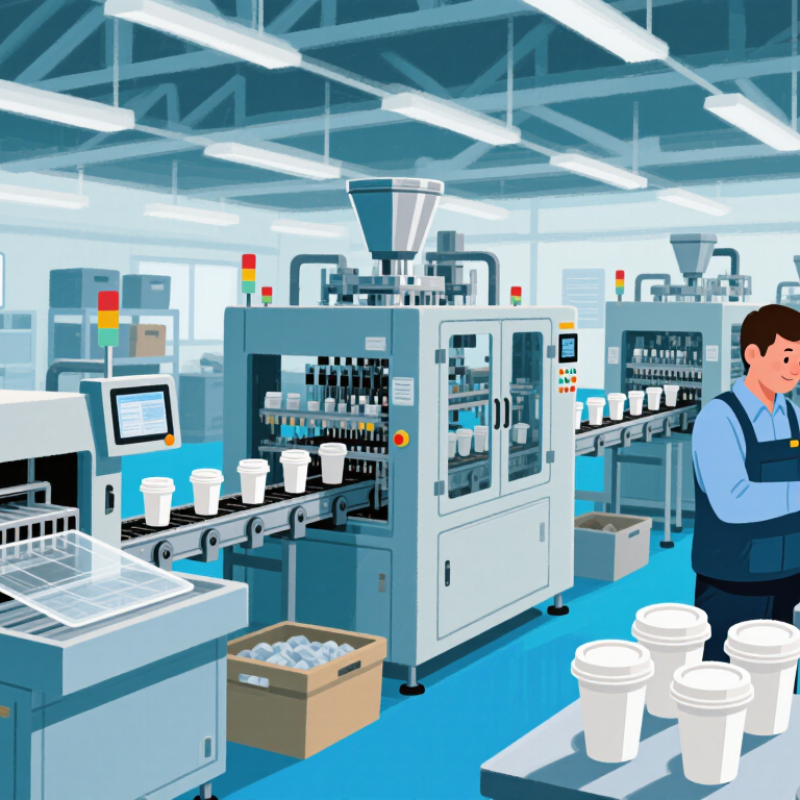
A plastic cup lids making machine is industrial equipment that converts plastic sheets or rolls into finished cup lids. Most models use thermoforming. The material is heated until flexible, shaped over molds, trimmed, and stacked for packing. Some systems also punch straw openings or create raised drinking areas.

The machine’s main sections include a material feeder, heating oven, forming station, cutting unit, and stacking system. Temperature control matters greatly. If the sheet is too cold, the lid may crack around the rim. If it is too hot, the shape can become uneven. Accurate molds help maintain sealing performance and consistent dimensions. Sensors can monitor pressure, temperature, and feeding speed during production.

Lid design affects machine selection. Flat lids need different forming details from dome lids or sip-through lids. Operators should check the target plastic, lid diameter, production speed, mold-change time, and waste rate. Food-contact production also requires suitable materials, cleanable surfaces, and documentation for applicable regional requirements. The first trial is rarely perfect. Small changes in heating time or trimming pressure may improve the result. A machine that looks fast on paper may create excessive scrap in daily operation. Practical testing with the intended material and cup size remains essential.

How Plastic Cup Lid Machines Work

How to Choose the Best Plastic Cup Lids Making Machine

A plastic cup lid machine usually begins with a roll or sheet of plastic. Feeding rollers guide the material at a controlled speed. A heating section then softens it evenly. Too much heat can make the lid thin and weak. Too little heat may cause cracks during forming.

The softened sheet moves into a forming station. A mold shapes each lid using pressure, vacuum, or both. Some machines use plugs to push plastic into deeper areas. Cooling channels then stabilize the shape before trimming. Sharp cutting tools remove excess edges. The finished lids are stacked for packing and inspection. Small details matter here. Uneven cooling can create warping.

When choosing a machine, examine its heating accuracy, mold-change time, forming pressure, and waste control. Check whether operators can adjust temperature by zone. This helps when different plastics or lid designs are used. Production records should include lid weight, sealing performance, and dimensional checks. A clear control panel also reduces training mistakes.

In practice, no setting stays perfect. Room temperature, sheet thickness, and mold wear can change results. A machine may perform well during a short trial but struggle after several hours. That is why extended testing is important. I would also question impressive speed claims without matching quality data. Faster output is not better when lids fail to seal or stack cleanly. Reliable equipment should provide stable cycles, accessible maintenance points, and repeatable results.

How to Choose the Best Plastic Cup Lid Making Machine

Plastic cup lid machines heat a plastic sheet, form it over a mold, trim the lid shape, and stack the finished products. The chart shows the theoretical output of different mold cavity configurations at common reference cycle rates.

Output is calculated as cycle rate × mold cavities. For example, a 12-cavity mold running at 45 cycles per minute can produce 540 lids per minute before accounting for material changes, trimming losses, cooling time, maintenance, and other production downtime.

Key Features to Compare Before Choosing

Choosing the best plastic cup lids making machine requires more than comparing advertised output. Examine the forming method, compatible materials, lid diameters, and maximum sheet thickness. A machine should maintain stable heat across the forming area. Uneven heating can create thin edges, warped rims, or poor sealing. Request production samples using your actual plastic sheet. Test it cold.

Speed matters, but consistency matters more. Compare the drive system, cycle control, and pressure stability during continuous operation. Ask how quickly operators can change molds and adjust lid dimensions. Tool-free adjustments may reduce downtime, but they are not always durable. Inspect the adjustment points carefully. Small loose parts become expensive problems later.

Safety and maintenance deserve equal attention. Look for guarded moving parts, emergency stops, temperature alarms, and clear operating instructions. Sensors should identify sheet misalignment before it produces hundreds of defective lids. Check access to heaters, forming stations, and trimming tools. Easy cleaning supports reliable production, especially when plastic dust gathers around cutting areas. Energy monitoring is useful when the machine runs for long shifts. Keep records. Compare actual output, scrap rate, changeover time, and power use over several days. A supplier’s technical documents, spare-parts list, training plan, and response time also reveal equipment reliability. I would not choose the fastest machine without reviewing these details. High output can hide unstable quality.

How to Choose the Best Plastic Cup Lids Making Machine - Key Features to Compare Before Choosing

Feature to Compare Why It Matters Recommended Benchmark Typical Options Questions to Ask Before Choosing Priority
Forming Technology Determines production stability, tooling flexibility, cycle speed, and the type of lid designs the machine can produce. Choose a pressure-forming or thermoforming configuration that matches the lid geometry and required output. Thermoforming, pressure forming, vacuum forming, or combined forming systems. Can the machine produce flat lids, dome lids, straw-slot lids, sip lids, and custom sealing features? High
Compatible Materials Material compatibility affects product performance, food-contact compliance, heating requirements, and material cost. Confirm compatibility with the exact resin grades planned for production. PP, PET, PS, PLA, and other approved sheet materials, depending on the machine design. What sheet thickness and material types are supported? Are material changeovers documented? High
Lid Diameter Range A wider forming range allows one machine to serve multiple cup sizes and customer requirements. Common commercial ranges are approximately 70–120 mm, but the usable range depends on tooling and layout. Single-size, multi-size, or interchangeable mold configurations. What is the minimum and maximum lid diameter, and how quickly can the mold be changed? High
Production Capacity Output must match the required order volume without sacrificing forming quality or increasing waste. Compare actual good-piece output, not only the theoretical cycle rate. Typical systems may range from about 10,000 to over 50,000 lids per hour. Capacity varies with mold cavities, lid size, material, cycle time, and stacking method. What is the guaranteed output for the intended lid design and material? High
Mold Cavities More cavities can increase output per cycle, while fewer cavities may reduce tooling cost and simplify product changes. Select cavity count according to target volume, machine size, and acceptable tooling investment. Single-cavity prototypes, multi-cavity production molds, and modular mold layouts. Can the machine run different cavity counts, and are spare cavities or inserts available? High
Sheet Thickness Control Consistent thickness supports lid strength, sealing performance, appearance, and material efficiency. Look for stable heating, accurate forming pressure, and adjustable process parameters across the approved thickness range. Thickness capability depends on the machine and material; many commercial systems process thin sheet around 0.2–1.0 mm. What thickness tolerance can be maintained during continuous production? High
Heating System Uniform sheet heating reduces thin spots, deformation, incomplete forming, and inconsistent sealing edges. Prefer independently controlled heating zones with temperature monitoring and easy access for maintenance. Infrared or ceramic heaters with multiple zones and closed-loop temperature control. How many heating zones are available, and how is temperature deviation monitored? High
Forming Pressure and Vacuum Controlled pressure and vacuum improve definition around rims, vents, tabs, and anti-spill features. Compare the available vacuum level, compressed-air pressure, response time, and control accuracy. Vacuum-only forming, pressure-assisted forming, or combined pressure-vacuum forming. Does the machine provide sufficient pressure for the most detailed lid design in the product range? High
Cutting and Trimming Accuracy Accurate trimming is essential for consistent lid dimensions, clean edges, and reliable cup fit. Check dimensional repeatability and the finished edge quality at the required production speed. In-mold cutting, post-form trimming, rotary cutting, or steel-rule die cutting. What dimensional tolerance is achieved on the rim and sealing area? High
Automation Level Automation affects labor requirements, repeatability, changeover time, and the risk of handling damage. For continuous production, consider automatic feeding, forming, cutting, stacking, counting, and fault detection. Manual, semi-automatic, or fully automatic production lines. Which operations require manual intervention during normal production? High
Control System A clear control interface simplifies recipe management, troubleshooting, quality monitoring, and operator training. Look for a touchscreen PLC system with stored recipes, alarm history, parameter protection, and multilingual support. Basic relay control, PLC control, or PLC with touchscreen HMI and remote diagnostics. Can operators save settings for each lid design and export production data? Medium
Changeover Time Short changeovers improve equipment utilization when producing multiple lid sizes or designs. Evaluate mold replacement, sheet-width adjustment, recipe loading, and cleaning time together. Fixed tooling, quick-change tooling, or modular tooling systems. How many operators are needed, and what is the typical changeover time for a trained team? High
Material Utilization and Scrap Trim waste directly affects material cost and may influence the feasibility of recycling or regrinding. Compare nesting efficiency, trim width, automatic scrap collection, and the ability to recycle compatible waste. Scrap collection only, inline granulation, or external recycling arrangements. What percentage of input sheet becomes finished lids under normal operating conditions? High
Energy Consumption Heating and compressed-air systems are major contributors to operating cost in plastic forming. Request measured energy use per 1,000 finished lids under a defined material, size, and cycle condition. Energy demand depends on heater power, cycle rate, sheet thickness, compressor efficiency, and automation. What are the installed electrical load and typical operating consumption? High
Compressed-Air Requirements Insufficient air volume or pressure can cause incomplete forming, unstable cycles, and poor edge definition. Verify pressure, flow rate, air quality, receiver capacity, and compressor compatibility before installation. Requirements vary by forming method and machine size; pressure-assisted systems generally need more air than vacuum-only systems. What are the required air pressure, flow rate, filtration level, and connection size? High
Food-Contact and Safety Considerations Machine materials, lubricants, guarding, and process controls must support the intended food-packaging application. Use suitable stainless-steel contact-area construction and request documentation for applicable local regulations. Food-contact compatible surfaces, interlocked guards, emergency stops, and documented electrical safety controls. Which components contact the sheet, and what compliance documents are supplied? High
Quality Inspection Inline inspection helps identify missing features, incomplete forming, incorrect trimming, and stacking faults early. At minimum, provide sampling procedures; for high-volume production, consider sensors or vision inspection. Manual inspection, sensor checks, camera inspection, and automatic reject systems. Can defects be detected and rejected without stopping the entire production line? Medium
Maintenance and Spare Parts Accessible components and readily available wear parts reduce downtime and simplify preventive maintenance. Check access to heaters, seals, valves, cutting tools, sensors, filters, and lubrication points. Local maintenance support, remote technical support, spare-parts packages, and preventive-maintenance schedules. Which parts are considered consumables, and how quickly can replacements be supplied? High
Installation Requirements Floor space, electrical capacity, ventilation, cooling, compressed air, and material handling must be prepared before delivery. Request a complete utility list, layout drawing, foundation details, and commissioning procedure. Standalone machine, integrated line, or modular line with separate feeding and stacking units. What are the total line dimensions, installed power, utility connections, and environmental requirements? High
Total Cost of Ownership The purchase price alone does not show the long-term cost of energy, tooling, labor, scrap, maintenance, and downtime. Compare the complete cost per 1,000 good lids over the planned service life. Initial equipment cost, molds, utilities, labor, maintenance, energy, training, and spare parts. What is included in the quotation, and what operating costs are excluded? High
Testing and Acceptance Criteria Production trials confirm that the machine can meet the required output, dimensions, appearance, and fit before final acceptance. Define measurable acceptance criteria for good-piece rate, cycle time, lid fit, dimensions, and scrap percentage. Factory acceptance test, sample approval, installation test, and production-capacity verification. Will testing use the actual material, lid design, mold, and operating conditions required for production? High
Note: Capacity, energy use, thickness range, and utility requirements are typical planning benchmarks. Final values should be confirmed through a machine test using the intended material, mold, lid design, and production conditions.

How to Match Machine Types with Production Needs

Choosing the best plastic cup lids making machine starts with matching output requirements, not advertised speed. A small workshop may need a compact thermoforming machine with simple tooling and quick changeovers. It can produce flexible lid designs with moderate investment. High-volume plants often prefer injection molding machines for consistent dimensions, tight sealing surfaces, and automated stacking. However, tooling costs and cooling time can become significant.

MATERIAL & PRODUCTION Material choice also guides the machine type. Thin PET or PP sheets suit thermoforming when lid shapes remain relatively simple. Injection molding is better for thicker lids, detailed ribs, or tamper-resistant features. Production managers should compare hourly output, reject rates, mold replacement time, and operator skill requirements. A fast machine is not always productive. Poor temperature control can create warped rims and loose fits.

In practical production reviews, I check samples from the first and last cycles. The lid should fit the cup evenly, without sharp edges or visible stress marks. Food-contact applications also require documented material traceability and appropriate compliance testing. Machine selection should include these quality controls from the beginning. I have seen teams choose oversized equipment, then struggle with wasted floor space and unstable low-volume runs. That mistake is expensive. A pilot test with the actual resin, mold, and lid design usually reveals more than a sales brochure. Even then, the result may need adjustment. Expecting perfect data too early can hide real production problems.

Factors Affecting Cost, Quality, and Maintenance

How to Choose the Best Plastic Cup Lids Making Machine

Machine cost is only the opening figure. Mold price, cooling capacity, energy use, labor, and rejected lids shape the real investment. PlasticsEurope reports that packaging represented 39.6% of European plastics demand in 2022. That scale increases pressure on material savings and stable output. During a factory trial, measure cycle time, lid weight, sealing force, and scrap rate. A cheaper machine may produce inconsistent edges. That mistake becomes expensive quickly.

Quality depends on control, not only speed. Check temperature zones, pressure repeatability, mold alignment, and automatic fault detection. Thin lids expose small errors. Warping can stop a filling line. OECD’s Global Plastics Outlook states that only 9% of plastic waste was recycled globally from 2019 data. Better machines should reduce trim waste and support approved recycled feedstock where technically suitable. Still, recycled material can change flow behavior. Do not assume identical settings will work.

Maintenance deserves equal attention. Ask for tool-change time, spare-part availability, lubrication points, and access around heaters and sensors. The U.S. Department of Energy estimates compressed air can consume 10–15% of industrial electricity. Leaking pneumatic lines quietly raise operating costs. Preventive checks should record pressure, temperature drift, vibration, and rejected-lid patterns. My first cost estimate would still be imperfect without local energy and labor data. A machine that looks efficient in a brochure may behave differently beside a dusty, fast-moving production line.

Company Info

Universal Pumping

625 Apache Trail
Woodstock, GA 30189

Mon - Fri | 9:00 AM - 5:00 PM

Connect With Us

About Universal Pumping

Universal Pumping is staffed with industry professionals with 20-45 years experience with high pressure pumping systems. We represent only the “elite producers” in pump manufacturing: Britain’s EMS and Germany’s EMMERICH. Our engineering and manufacturing approach is conservative, and we do not use “guess work” in the design or sales of our pumping and filtration equipment.