How to Choose the Right Cylinder Seal Kits?
Choosing the right Cylinder Seal Kits starts with the cylinder’s actual working conditions, not just its model number. Pressure, temperature, fluid type, rod speed, and duty cycle all affect seal performance. A kit that fits the groove can still leak if its material is incompatible with the hydraulic fluid or operating temperature. Small details matter. A scratched rod, a worn gland, or a hardened seal can shorten service life.
Hydraulics author Andrew Parr’s engineering work offers a useful selection principle, paraphrased here rather than quoted verbatim: “Match the seal to the system’s pressure, motion, fluid, and temperature.” Before ordering, check the cylinder manufacturer’s specifications and confirm the seal dimensions, material, and arrangement. If the application involves heavy side loading, frequent cycling, or unusual temperatures, seek advice from a qualified seal supplier. Measure carefully. Do not rely on appearance alone.
This guide explains how to identify seal types, compare materials, verify kit compatibility, and spot common causes of early failure. It also considers practical checks during installation, such as cleaning the gland and protecting sealing lips from sharp edges. A careful choice can reduce leakage and avoid repeat maintenance. Still, no kit can compensate for a damaged rod or incorrect assembly. Inspect the whole cylinder.
Identify the Cylinder Type and Operating Conditions
Identify the cylinder before ordering a kit. A single-acting ram, double-acting tie-rod cylinder, and welded cylinder can use different seal profiles and groove dimensions. Record the bore, rod diameter, stroke, and existing seal arrangement. Measure worn parts carefully; compression can make an old seal look smaller than it was. Small detail. A mismatched rod seal may leak under pressure even when the kit appears close.
Then map the real operating conditions. Note working pressure, oil type, temperature range, speed, side load, and exposure to dust or water. ISO 4406:2021 classifies hydraulic-fluid cleanliness using particle counts at 4, 6, and 14 μm(c); contamination can abrade sealing surfaces and shorten service life. For high heat or rapid cycling, confirm the seal material’s temperature and compatibility limits against the fluid supplier’s technical data. For outdoor equipment, check low-temperature flexibility and wiper design. A standard kit may not suit a cylinder that sees shock loads or gritty washdown. It is easy to overlook side load. It is also easy to blame the seal when a scored rod or worn guide caused the leak. Verify the cylinder drawing and service history where available, and treat uncertain measurements as a reason to inspect further—not guess.
Check Which Seals and Components the Kit Includes
When comparing cylinder seal kits, start with the parts list, not the package photo. One kit may include only pressure seals; another may add a rod wiper, wear rings, O-rings, and backup rings. Check each item against the cylinder drawing or service manual, including quantity and location. Small parts matter. A missing backup ring can let an O-ring extrude under pressure. A worn wiper can admit grit and score the rod. Check the count.
Match seal types and dimensions to the cylinder, not just its bore size. Confirm rod and piston diameters, groove widths, and seal cross-sections. Then verify material compatibility with the hydraulic fluid, operating temperature, and pressure range. Polyurethane, nitrile, and other compounds behave differently; a generic material label is not enough. Look for retaining rings or spacers only when the design calls for them. Extra-looking hardware may belong to another cylinder variant.
Before ordering, compare the kit contents with the parts removed and photograph their positions during disassembly. That record can help prevent a seal from being installed backward. Packaging can be tidy while contents still vary by cylinder revision. I would not assume a kit is complete just because its description says “full set.” If dimensions or materials are unclear, pause and confirm them with a qualified hydraulic service provider. Guessing can mean another teardown.
Match Seal Materials to the Fluid and Environment
How to Choose the Right Cylinder Seal Kits?
Match Seal Materials to the Fluid and Environment
A seal that fits the groove can still fail if its material reacts with the fluid. Nitrile rubber is commonly used with mineral-oil hydraulic fluids, while EPDM generally suits water-glycol fluids but performs poorly in petroleum oils. Fluorocarbon compounds tolerate many hot oils and fuels, though some chemicals, including certain ketones, can damage them. Compatibility depends on the exact compound, not just its material family. Check the fluid’s additives, too.
Temperature and exposure time matter. A cylinder near a furnace, washdown line, or outdoor frost needs a different seal choice than one in a clean workshop. ISO 1817 specifies tests that measure rubber changes after liquid exposure, including mass, volume, hardness, and tensile properties. ASTM D471 also evaluates rubber’s effects after liquid immersion. These methods help compare materials under stated test conditions; they do not guarantee performance in every cylinder. Ask for results using the actual fluid and operating temperature where possible.
Look beyond the fluid name. Pressure spikes, abrasive dust, and a scratched rod can shorten seal life even when the elastomer is chemically compatible. A practical selection record should include fluid type, temperature range, pressure, and contamination risks. One detail is easy to miss: a brief chemical compatibility chart cannot account for every additive or fluid change. When service conditions are uncertain, test a sample seal—and review the result rather than assuming the first choice was right.
Verify Dimensions, Pressure Rating, and Compatibility
Start with the cylinder, not the catalog. Measure rod diameter, bore, groove width, and gland depth; record each in millimeters. A near-match can still twist a seal or leave a leak path. ISO 5597 specifies housing dimensions and tolerances for reciprocating piston and rod seals, making it a useful reference when checking groove geometry. Confirm the kit’s pressure rating against the cylinder’s maximum working pressure and pressure spikes—not just its usual reading.
Compatibility matters just as much. Check the seal material against the hydraulic fluid, operating temperature, and movement speed. ISO 4406:2021 classifies fluid cleanliness by particle counts; code 18/16/13 corresponds to 1,300–2,500 particles per milliliter at ≥4 μm(c), 320–640 at ≥6 μm(c), and 40–80 at ≥14 μm(c). This is a contamination classification, not a universal seal-kit target. Still, dirty fluid can abrade new sealing surfaces.
Tips: Photograph the old seals beside a ruler, then compare their profiles with the kit drawing. Check for scratches on the rod and cylinder bore before installation. I have seen a correct-looking kit fail because one groove measurement was assumed rather than verified. That mistake is easy to repeat.
How to Choose the Right Cylinder Seal Kit
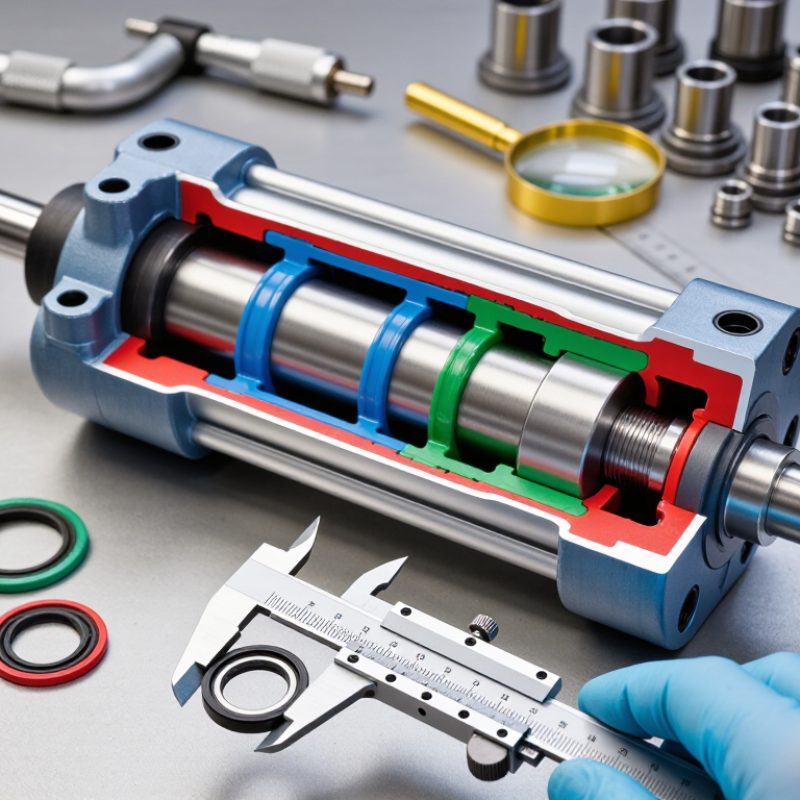
Example dimensional check: Compare the cylinder’s measured bore, rod, and seal-groove dimensions with the kit drawing before ordering. These sample values are illustrative, not a universal specification. Also verify that the kit’s published pressure rating meets or exceeds the system’s requirements for its fluid, temperature, and operating conditions.
Compare Kit Quality, Documentation, and Supplier Support
How to Choose the Right Cylinder Seal Kits?
Compare Kit Quality, Documentation, and Supplier Support
A cylinder seal kit should match the cylinder’s dimensions, operating pressure, temperature, and fluid. Compare seal materials, surface finish, and dimensional consistency rather than judging by package appearance. Check for cleanly molded edges and parts without nicks or deformation. Small details matter. A seal that looks close may still leak if its fit or material is wrong.
Reliable documentation makes that comparison easier. Look for a parts list, material specifications, applicable cylinder details, and clear installation guidance. Confirm that measurements use consistent units and that diagrams identify each seal’s position. If a kit’s contents or compatibility are unclear, ask for written clarification before ordering. That uncertainty matters. Keep the supplied documents with maintenance records, so future technicians can verify what was installed.
Supplier support is also part of kit quality. Ask how compatibility is checked and what information is needed, such as cylinder model, bore, rod diameter, or operating conditions. A useful response should address those specifics, not simply promise a fit. Technical help can prevent avoidable downtime, though it cannot replace accurate measurements. Even experienced buyers can miss a detail when cylinder records are incomplete.