Universal Pumping | High Pressure Pumps
High Pressure Pumps for Difficult to Pump Slurry, Sludge, and Food Waste.
In the food industry, efficiency and safety are paramount. A food pump emerges as a vital tool that helps achieve these goals. According to a 2022 market research report by Grand View Research, the global food pump market is expected to grow significantly, driven by rising demand for processed foods. Industry expert Dr. Mark Thornton emphasizes, "Food pumps ensure the safe and consistent transfer of ingredients." This highlights the integral role of food pumps in maintaining quality and safety standards in food production.
Understanding how a food pump operates is essential for buyers. These devices facilitate the movement of various food products, including liquids and semi-solids. Their design minimizes contamination risk, ensuring hygiene. However, some challenges exist. For instance, selecting the right pump size can be tricky. An inadequate pump can lead to inefficiencies or product loss.
Moreover, the diverse applications of food pumps mean that there is no one-size-fits-all solution. Improper use can lead to mechanical failures or product degradation. As the market grows, so does the need for education on the selection and application of food pumps. Buyers must consider factors such as compatibility and flow rates. Ultimately, a well-informed choice can significantly enhance production processes.
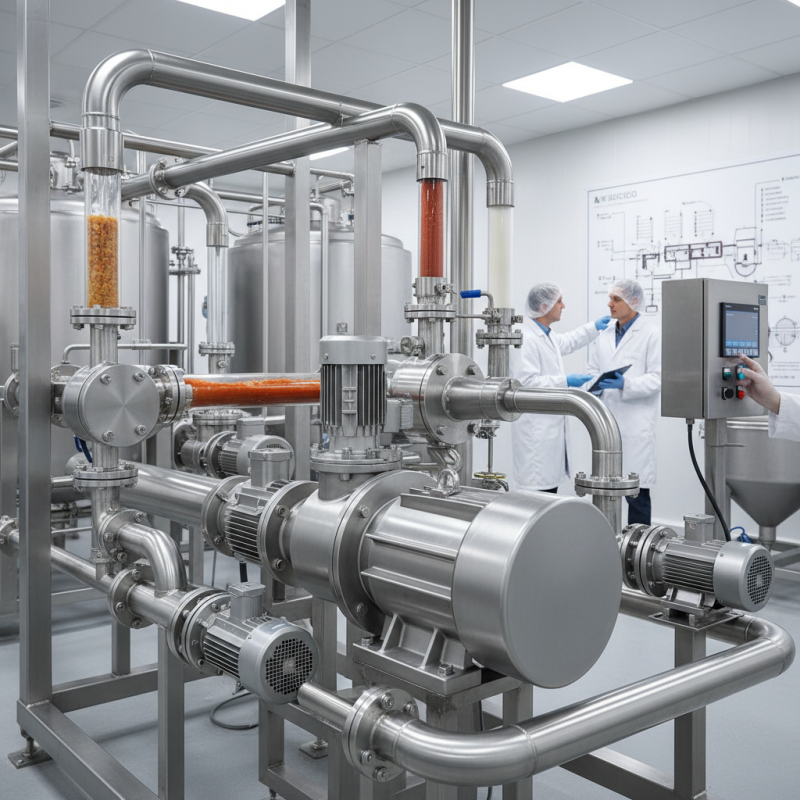
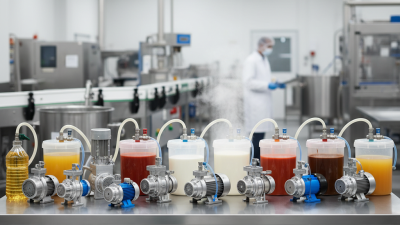
A food pump is a crucial tool in the food industry. It helps transfer food products from one location to another efficiently. Typically, these pumps are used for liquids like sauces, soups, and purees. They ensure a consistent flow and prevent spills or waste during the transport process. Understanding how food pumps work can aid buyers in making informed decisions.
When selecting a food pump, consider the pump's material. Stainless steel is often preferred. It is resistant to corrosion and easy to clean. Additionally, check the pump's flow rate. Different tasks require varying flow rates. Matching the pump to specific needs can enhance efficiency.
Tips for buyers: Always evaluate power requirements. Some pumps need more energy than others. Look for energy-efficient options for sustainability. Also, review user feedback on ease of maintenance. A pump that is complicated to clean may create inefficiencies. Choosing the right food pump can lead to improved productivity, making it a worthwhile investment.
Food pumps play a crucial role in the food processing industry, varying greatly in design and application. Each type of pump serves a specific purpose, reflecting unique operational needs. For instance, positive displacement pumps are widely used for transferring viscous substances. According to a report by Research and Markets, the food pump market is projected to grow annually by 5.6% until 2025. This growth is driven by the increasing demand for processed foods.
Another prominent type is the centrifugal pump, favored for its efficiency in moving liquids. These pumps excel in applications involving thin liquids, like juices or milk. They are also easier to maintain and operate. However, their efficiency can drop with highly viscous fluids. Some manufacturers report that up to 30% of energy may be wasted in such scenarios. It's vital for buyers to assess the specific characteristics of the liquids they plan to pump.
Moreover, diaphragm pumps have gained traction for their ability to handle solids in suspension. This versatility is essential in processes where ingredients contain particles. The adaptability of diaphragm pumps allows them to contribute significantly to operational efficiency. However, selection challenges remain. Buyers must balance cost with the long-term reliability of the pump technology chosen. Such decisions can influence production quality and operational costs.
Food pumps are essential devices in various industries, particularly in food production and processing. They facilitate the transportation of liquid foods and ingredients, ensuring efficient and hygienic handling. Understanding how these pumps operate can help buyers make informed decisions.
The mechanisms behind food pumps vary widely. Many utilize positive displacement technology, which moves fluid by trapping a fixed amount and forcing it through an outlet. This method works well for thicker substances, like sauces and purées. Centrifugal pumps, on the other hand, use a rotating impeller to create flow. These are suitable for thinner liquids and are efficient in large-scale operations.
However, not all food pumps are created equal. Factors such as material compatibility and maintenance significantly impact performance. Buyers should consider the specific requirements of their products and the pump’s design. Regular cleaning and upkeep are essential, yet often overlooked. Reflecting on these aspects can lead to better operational choices and enhanced safety standards in food handling.
| Feature | Description | Common Applications | Operating Principle |
|---|---|---|---|
| Positive Displacement Pumps | These pumps move food through mechanical means, ensuring a constant flow rate. | Sauces, creams, and pastes | Uses rotating gears or pistons to move food item. |
| Centrifugal Pumps | Utilize rotational energy to move liquids through a system. | Broths, juices, and thin liquids | Imparts kinetic energy to the fluid, causing it to flow. |
| Peristaltic Pumps | Food is moved by compressing flexible tubing, minimizing contamination. | Dairy products, juices, and sensitive liquids | Uses rollers to compress the tube, creating suction. |
| Diaphragm Pumps | Employ a diaphragm to create a barrier between the pump and the food. | Pulsating sauces, processing fruit purees | The diaphragm moves up and down, creating a vacuum to draw in food. |
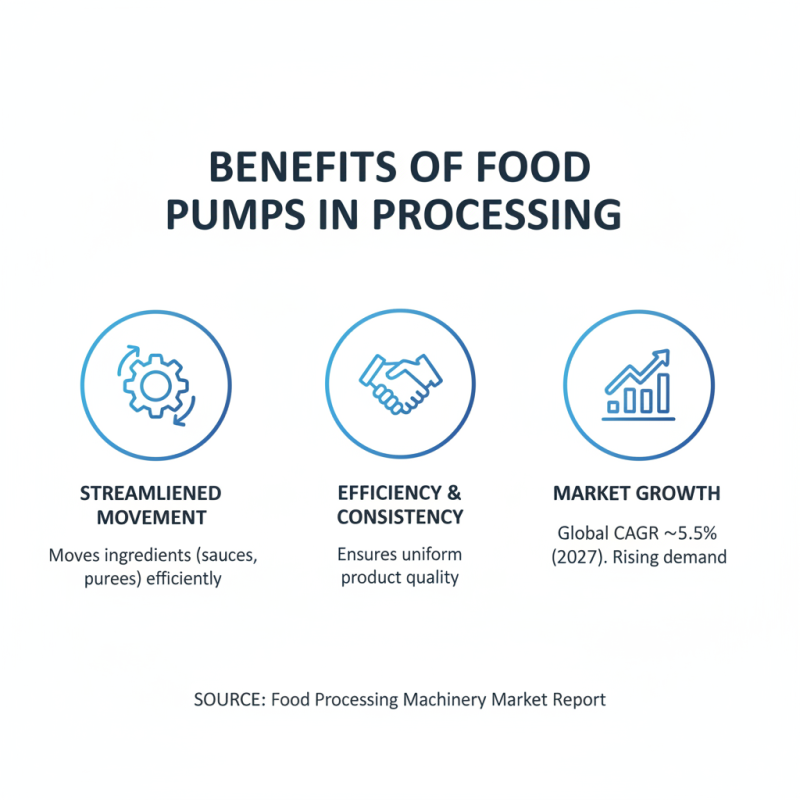
Food pumps are essential in food processing. They streamline the movement of various ingredients. Whether it's thick sauces or delicate purees, a food pump helps ensure efficiency and consistency. According to the Food Processing Machinery Market Report, the global market for food pumps is expected to grow at a CAGR of around 5.5% through 2027. This indicates a rising demand for advanced food handling solutions.
Using food pumps brings several benefits. They reduce the risk of contamination. By minimizing manual handling, food pumps help maintain food safety. Consistency in texture and flavor is another huge advantage. They ensure that products like dressings and soups have uniformity, which is critical for consumer satisfaction. A study by the International Journal of Food Science showed that automated food processing can increase productivity by up to 30%.
Tip: Regular maintenance of food pumps is crucial for optimal performance. Ensure seals and gaskets are checked often. This prevents leaks and maintains hygiene standards.
Cost savings also play a role. While the initial investment may seem high, food pumps can lower labor costs and waste. In the long term, they contribute to improved operational efficiency. However, one must consider the learning curve associated with new equipment. Training staff adequately is vital for maximizing the benefits of these systems.
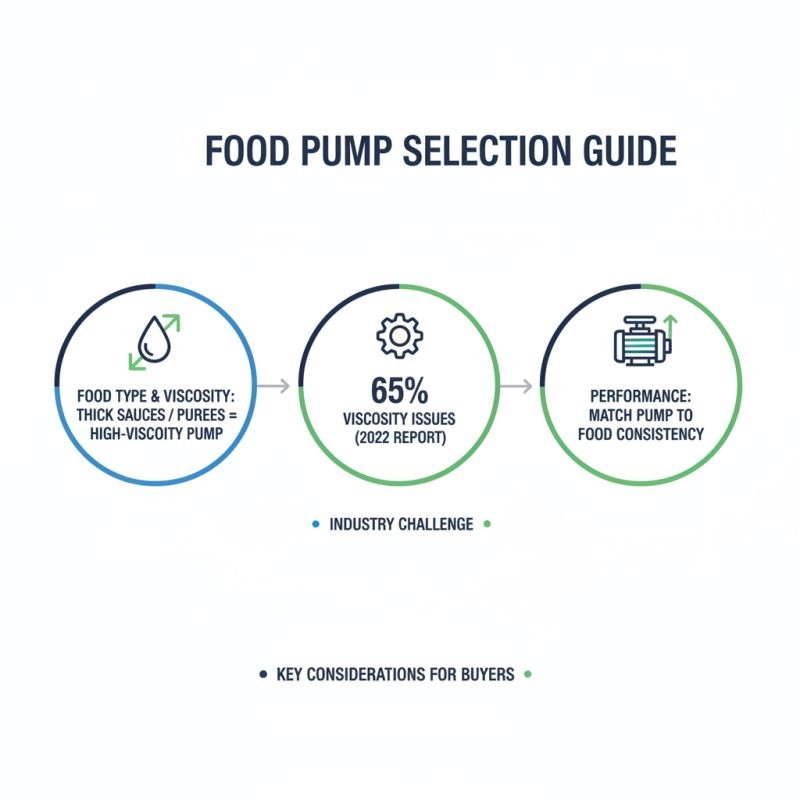
When selecting a food pump, buyers should focus on several key factors. The type of food to be pumped is crucial. Viscosity can greatly affect pump performance. For example, thicker sauces or purees need pumps designed for high viscosity. A 2022 industry report highlights that about 65% of food processing plants encounter issues with viscosity management. This indicates a significant challenge in selecting the right pump.
Another important consideration is the pump’s material. Stainless steel pumps are preferred for their durability and easy cleaning. The FDA requires food-grade materials to ensure safety. A recent market analysis showed that 70% of food businesses favor stainless steel for its corrosion resistance. Additionally, energy efficiency should not be overlooked. Efficient pumps can reduce operational costs. According to a study, energy-efficient pumps can save companies up to 20% on their energy bills annually.
Lastly, maintenance demands must be evaluated. Regular maintenance is vital for reliability. A report revealed that poorly maintained pumps can lead to up to a 30% decrease in performance. Understanding the maintenance needs will help buyers avoid unexpected downtimes. Balancing these considerations is complex. Each buyer must reflect on their specific requirements and resources to make a sound decision.
Universal Pumping
625 Apache Trail
Woodstock, GA 30189
Mon - Fri | 9:00 AM - 5:00 PM
Universal Pumping is staffed with industry professionals with 20-45 years experience with high pressure pumping systems. We represent only the “elite producers” in pump manufacturing: Britain’s EMS and Germany’s EMMERICH. Our engineering and manufacturing approach is conservative, and we do not use “guess work” in the design or sales of our pumping and filtration equipment.