

Universal Pumping | High Pressure Pumps
High Pressure Pumps for Difficult to Pump Slurry, Sludge, and Food Waste.
Choosing among China’s top Wiper Motor Equipment manufacturers requires more than comparing prices or browsing polished catalogs. Automotive production depends on repeatable performance, accurate testing, and dependable technical support. A supplier may offer advanced winding machines, assembly lines, or end-of-line testing systems. However, attractive specifications do not always reflect daily factory performance.
This guide examines how to evaluate manufacturers through practical evidence. Look for documented experience with wiper motor production, measurable equipment accuracy, and clear quality-control procedures. Ask about servo control, torque testing, noise inspection, cycle testing, and spare-part availability. A factory visit can reveal important details, including cable organization, machine cleanliness, operator training, and calibration records. Small details matter. They often expose larger weaknesses.
Reliable manufacturers should explain their engineering process without hiding limitations. They should provide sample results, installation plans, maintenance schedules, and realistic delivery times. Certifications can support credibility, but they should not replace technical verification. Request references from comparable automotive customers when possible. No supplier is perfect. Even experienced teams may overlook communication gaps, software updates, or regional service delays. That is why a structured comparison remains necessary. The right choice balances equipment capability, lifecycle cost, safety, flexibility, and after-sales responsibility. This approach helps buyers avoid rushed decisions and build a more stable production line.
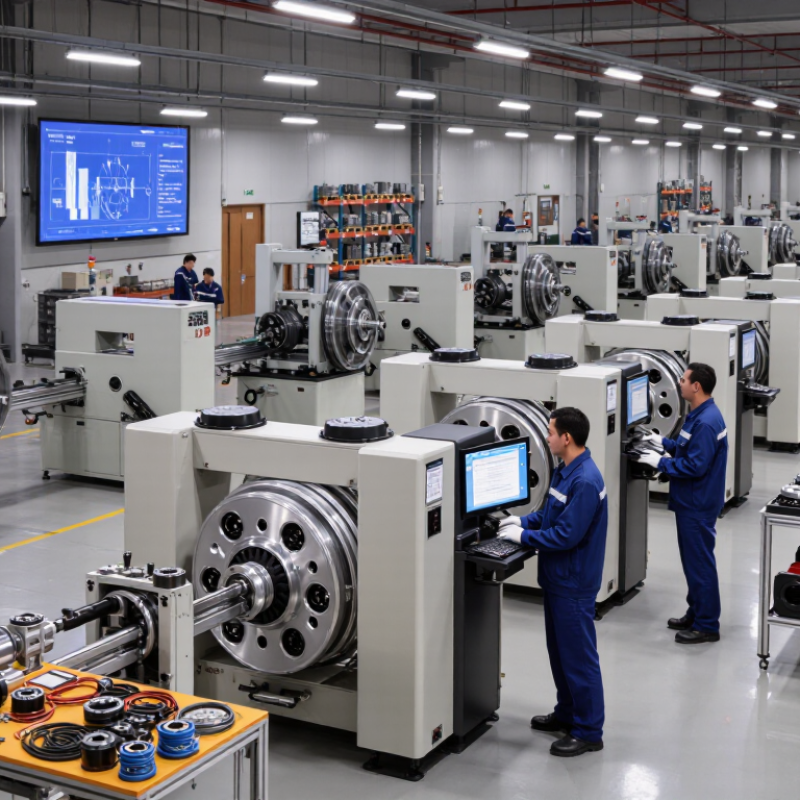
When choosing a Chinese wiper motor equipment manufacturer, define the test scope before comparing prices. A 12V system is not simply a smaller 24V system. Voltage changes current, wiring loss, controller settings, and heat behavior. Your equipment should support both platforms, with adjustable supply protection and clear measurement records. Test motors under realistic glass friction, blade pressure, and linkage resistance. Empty-shaft testing can mislead.
The operating target should cover 30 to 60 wipes per minute. Use a programmable controller to vary speed and record each cycle. Measure starting current, running current, torque, noise, vibration, and motor temperature. A useful rig includes an adjustable mechanical load, encoder, current sensor, and thermal probe. Check repeatability across cold starts and continuous operation. One successful sample means little. Production consistency matters more.
Ask whether the manufacturer calibrates instruments and supplies traceable reports. Verify emergency stops, guarded moving parts, and overload protection. Request sample data for both 12V and 24V tests. Confirm fixture compatibility with your shaft, connector, and linkage geometry. In practice, specifications are sometimes optimistic. I have seen speed pass while temperature drifted beyond the intended range. Leave room for longer endurance testing and software adjustments. A cheaper rig can become expensive when every fixture needs rebuilding.
| Evaluation Dimension | 12 V System Scope | 24 V System Scope | Recommended Equipment Requirement | Selection Checkpoint |
|---|---|---|---|---|
| Rated supply voltage | 12 V DC nominal | 24 V DC nominal | Programmable DC output supporting both nominal voltages, with polarity protection and adjustable voltage control | Confirm that the equipment can test both voltage classes without changing the main power hardware |
| Practical voltage test window | Typically 9–16 V DC for engineering validation | Typically 18–32 V DC for engineering validation | Stable output across the selected test window; transient and undervoltage profiles should be programmable where required | Ask for voltage accuracy, ripple specification, response time, and protection limits |
| Wipe-rate range | 30–60 wipes/minute | 30–60 wipes/minute | Closed-loop speed measurement and control covering at least 30–60 wipes/minute | Verify whether one wipe means one complete back-and-forth cycle or one blade sweep |
| Equivalent operating frequency | 0.50–1.00 Hz when one wipe is counted as one complete cycle | 0.50–1.00 Hz when one wipe is counted as one complete cycle | Time-base accuracy suitable for cycle counting and repeatability testing | Check the cycle-counting method, sensor resolution, and timing accuracy |
| Current measurement | Measure starting, running, intermittent, and stall current according to the motor design | Measure starting, running, intermittent, and stall current according to the motor design | Use a shunt or current transducer with suitable bandwidth, overload capacity, and isolated signal output | Select the measurement range from the motor datasheet; do not assume 12 V current equals 24 V current |
| Speed feedback | Position, pulse, encoder, or optical sensing | Position, pulse, encoder, or optical sensing | Non-contact sensing is preferred for endurance testing; the sensor must not alter linkage load | Confirm compatibility with the motor’s output shaft, crank arm, or linkage mechanism |
| Load simulation | Adjustable mechanical load for 12 V motor assemblies | Adjustable mechanical load for 24 V motor assemblies | Configurable torque, friction, inertia, and linkage geometry with overload shutdown | Review maximum torque, allowable angular travel, fixture stiffness, and emergency-stop performance |
| Operating modes | Low speed, high speed, intermittent, park, and stall simulation as applicable | Low speed, high speed, intermittent, park, and stall simulation as applicable | Independent control of speed, duty cycle, dwell time, and operating duration | Ensure the controller can reproduce the required switch inputs and park-position logic |
| Environmental test compatibility | Temperature, humidity, water spray, and contamination testing may be applied | Temperature, humidity, water spray, and contamination testing may be applied | Fixture materials, cables, sensors, and enclosure should be rated for the planned environment | Request the permitted temperature, humidity, spray exposure, and ingress-protection conditions |
| Data acquisition | Record voltage, current, wipe rate, position, and fault status | Record voltage, current, wipe rate, position, and fault status | Synchronized logging with timestamps, alarm markers, automatic cycle counting, and exportable files | Check sampling rate, channel count, calibration records, and data-export formats |
| Safety and protection | Overcurrent, overtemperature, short-circuit, and mechanical jam protection | Overcurrent, overtemperature, short-circuit, and mechanical jam protection | Emergency stop, guarded moving parts, fault logging, automatic shutdown, and restart interlock | Request a documented risk assessment, safety circuit description, and maintenance procedure |
| Calibration and verification | Verify voltage, current, time, and wipe-rate channels | Verify voltage, current, time, and wipe-rate channels | Provide traceable calibration intervals, test certificates, and repeatability data | Confirm calibration coverage for every measurement channel used in the acceptance test |
Note: The 9–16 V and 18–32 V windows are practical engineering test ranges commonly used around 12 V and 24 V nominal systems. Final limits, current capacity, mechanical load, environmental conditions, and acceptance criteria should be confirmed from the specific motor assembly specification and applicable test standard.
Universal Pumping
625 Apache Trail
Woodstock, GA 30189
Mon - Fri | 9:00 AM - 5:00 PM
Universal Pumping is staffed with industry professionals with 20-45 years experience with high pressure pumping systems. We represent only the “elite producers” in pump manufacturing: Britain’s EMS and Germany’s EMMERICH. Our engineering and manufacturing approach is conservative, and we do not use “guess work” in the design or sales of our pumping and filtration equipment.


