
Universal Pumping | High Pressure Pumps
High Pressure Pumps for Difficult to Pump Slurry, Sludge, and Food Waste.
Choosing the right Wrapper Film is not a simple matter of selecting the clearest or cheapest roll. The film must match the product, equipment, sealing method, storage conditions, and customer expectations. A thin polyethylene film may suit fresh produce, while a high-barrier laminate may better protect coffee from oxygen and moisture. Small differences matter.
Packaging educator Walter Soroka expresses the guiding principle clearly: “The best package protects the product without using unnecessary material.” This idea helps buyers evaluate more than appearance. They should examine tensile strength, puncture resistance, transparency, seal temperature, and film thickness. The machine matters too. A Wrapper Film that seals smoothly in testing may wrinkle around a sharp corner during continuous production. That failure can create waste, delays, and dissatisfied customers.
Think beyond the sample roll.
On a real packing line, operators may face dust, temperature changes, uneven tension, or long storage periods. These details can expose weaknesses that laboratory tests miss. Barrier performance also deserves careful attention. Some products need oxygen protection, while others mainly require moisture resistance or easy opening. Sustainability claims need caution as well. A recyclable structure is not automatically suitable if local collection systems cannot process it.
There is no perfect film. There is only a more suitable choice for a specific product and process. Careful trials, supplier documentation, and honest performance testing create a stronger decision. The final selection should protect the contents, run reliably, and avoid material that adds little practical value.
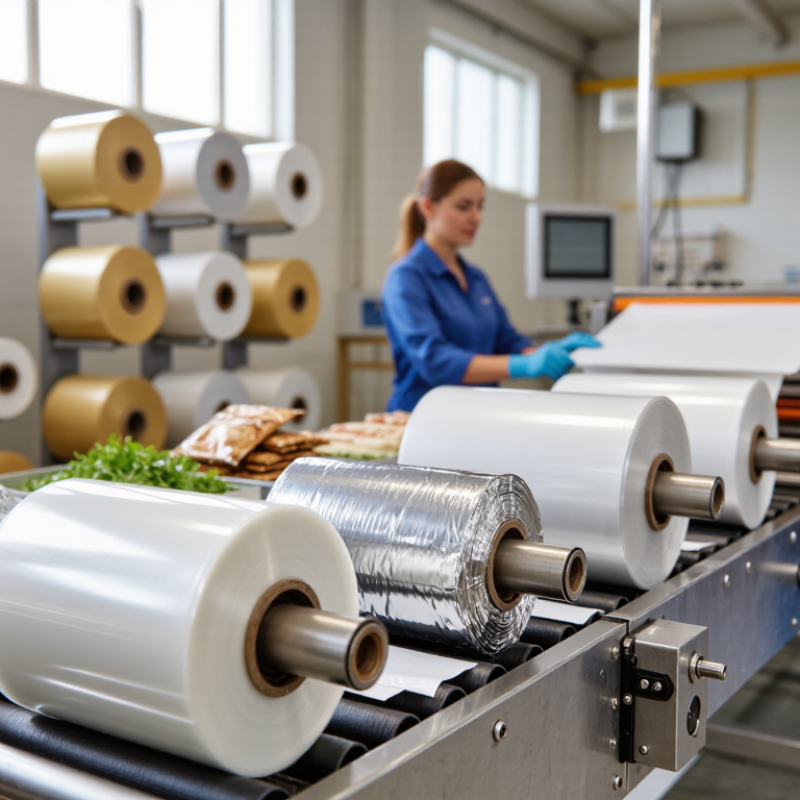
Wrapper film does more than cover a product. It protects against moisture, dust, oxygen, light, and handling damage. It also creates the seal that keeps packaging closed during transport and storage. A weak seal can fail beside a strong-looking package.
Material choice controls much of this performance. Polyethylene film offers flexibility and reliable heat sealing. Polypropylene often provides clearer presentation and better stiffness. Polyester adds strength and dimensional stability, especially when packaging faces heat or rough movement. Barrier layers may reduce oxygen or moisture transfer, but they can also increase cost and complicate recycling. It is not decoration.
In packaging trials, I check seal strength, film tension, puncture resistance, and machine speed. A film that performs well in a laboratory may wrinkle on a fast production line.
Product shape matters too. Sharp corners need stronger puncture resistance, while oily surfaces may require a different sealing approach. I have seen teams choose a film by appearance alone. That decision looked reasonable, but failed during drop testing.
Test before scaling.
Temperature, storage humidity, and filling conditions should guide the final selection. Ask for technical data, then confirm it with samples and real production settings. Film thickness alone does not guarantee protection. A thinner, well-designed structure can outperform a thicker one, though this depends on the application. Packaging decisions deserve evidence, not assumptions.
How to Choose the Right Wrapper Film for Packaging?
A wrapper film should match the product, filling line, and distribution route. Do not choose by clarity alone. For oily snacks, test grease resistance and oxygen transmission. For fresh produce, moisture control and controlled breathability matter more. A dry powder may need strong seals and low static. It can leak everywhere.
The 2024 State of Flexible Packaging report valued the U.S. flexible packaging market at about 39.5 billion dollars in 2023. This scale shows why small material decisions matter. A high-barrier PET or metallized structure can protect aroma-sensitive goods, while PE often supports flexible sealing and pouch performance. Ask for oxygen and water-vapor transmission data, seal strength, puncture resistance, and coefficient of friction. Then test the film on the actual machine. A film that performs well in a laboratory may wrinkle at high speed.
UNEP’s Food Waste Index Report 2024 estimated that 1.05 billion tonnes of food were wasted in 2022. Suitable packaging cannot solve waste alone, but it can reduce damage and shelf-life losses when properly designed. I have seen teams overvalue premium barrier properties and ignore recyclability or sealing temperature. That is an expensive bias. Film selection should balance protection, line efficiency, material use, and end-of-life options. The best choice may still require revision after transport trials. Packaging is rarely perfect on the first attempt.
Match film properties with the product’s barrier, sealing, mechanical, and appearance requirements.
The chart uses a practical 1–5 screening scale based on the typical behavior of common packaging films: 1 indicates limited suitability and 5 indicates strong suitability. LDPE provides excellent sealability and flexibility, BOPP offers strong clarity and stiffness, PET delivers high stiffness and printability, PA provides strong puncture resistance, and EVOH-based structures provide very high oxygen-barrier performance. Final selection should be verified against the actual product, package structure, sealing process, and required shelf life.
Film selection begins with the product, not the wrapper’s appearance. Moisture-sensitive goods need strong water-vapor resistance. Products exposed to air may require better oxygen protection. A dry snack and a chilled product face different risks.
Temperature changes matter during filling, storage, and delivery. A film that seals well at room temperature may weaken on a cold production line. High heat can also cause shrinking, curling, or seal distortion. Check the full temperature range. Short tests are not enough.
Product shape creates another challenge. Sharp edges can puncture thin film, while oily surfaces may weaken seals. Fast wrapping equipment demands stable tracking and consistent sealing pressure. In plant trials, small changes in speed often reveal unexpected wrinkles. The film looked suitable on paper. It was not.
Humidity can affect both film performance and product quality. In damp warehouses, poor moisture barriers may cause softening or clumping. In dry environments, static can disturb film feeding and alignment. Transport adds vibration, compression, and repeated handling. These conditions should be included in testing.
A practical evaluation should measure seal strength, puncture resistance, transparency, and runnability. Test filled packages, not empty samples. Leave some room for mistakes. Packaging teams sometimes overlook storage time or actual transport distance. That omission can produce costly surprises. Temperature cycling and short pilot runs provide more reliable evidence than a single laboratory result.
How to Choose the Right Wrapper Film for Packaging?
Film selection should begin with measurable performance, not appearance. Test puncture resistance, seal strength, oxygen transmission, and moisture transmission under real filling conditions. A thin film may reduce material use, but it can increase leaks, waste, and customer complaints. Smithers’ industry forecast projects the global flexible packaging market will surpass 300 billion US dollars by 2028, showing strong demand for efficient film structures. Yet growth does not remove technical trade-offs.
Cost needs a wider calculation. Compare film price, machine speed, sealing temperature, changeover time, and product losses. A lower-cost roll may run poorly on a fast line. That difference can erase the initial saving. In practical trials, record scrap by shift and inspect seals after transport simulation. The spreadsheet is not enough. I have seen small sealing variations create large waste volumes.
Sustainability also requires evidence. The Ellen MacArthur Foundation’s New Plastics Economy reports that packaging represents about 40% of global plastic use. Lightweighting helps, but recyclability depends on structure, additives, inks, and local collection systems. Recycled content can lower virgin material demand, although supply quality may vary. Use life-cycle data where available, and compare functional units, such as film per protected product. This approach is imperfect. Still, it is more reliable than judging sustainability by thickness alone.
Comparative reference data for common wrapper-film structures. Values are representative industry ranges and should be validated with supplier specifications, product trials, and the intended packaging application.
| Evaluation Dimension | LDPE / LLDPE Monolayer Film | Cast PP Monolayer Film | BOPP Monolayer Film | PET / PE Multilayer Laminate | Paper / PE Laminate |
|---|---|---|---|---|---|
| Typical Packaging Uses | Stretch wrap, produce bags, bundling, flexible overwrap | Bakery products, snack overwrap, garment and multipack wrapping | Snack packs, confectionery, labels, clear overwrap | Retort pouches, coffee packs, high-barrier food and non-food packaging | Dry goods, gift wrap, sachets, premium secondary packaging |
| Typical Thickness | 20–100 micrometres | 20–80 micrometres | 15–40 micrometres | 60–150 micrometres, depending on layers | 60–140 micrometres, depending on paper weight and coating |
| Tensile Strength | Approximately 10–35 MPa | Approximately 25–45 MPa | Approximately 100–180 MPa in the machine direction | Approximately 80–220 MPa, depending on structure and orientation | Highly dependent on paper basis weight; generally lower flexibility than plastic films |
| Elongation at Break | High: commonly 200–700% | Moderate to high: commonly 100–600% | Low to moderate: commonly 30–150% | Low to moderate: commonly 20–150% | Low compared with polyolefin films; may tear when sharply folded |
| Puncture and Tear Resistance | Good for flexible and irregular loads | Good, with good heat-sealing performance | Moderate; may require a sealant layer for demanding applications | Very good when properly designed and sealed | Moderate; sensitive to moisture and sharp edges |
| Moisture Barrier | Good | Good to very good | Very good | Very good | Limited to moderate unless coated |
| Oxygen Barrier | Low without a barrier coating or additional layer | Low without a barrier layer | Low to moderate; coatings can improve performance | High when combined with suitable barrier layers | Low to moderate; coating selection is critical |
| Optical Properties | Clear to translucent; soft gloss | Clear, glossy, and relatively stiff | High clarity and gloss | Clear, glossy, or metallized; strong print appearance | Opaque, natural paper appearance, and suitable for matte finishes |
| Heat-Sealing Performance | Excellent over a broad sealing window | Very good, especially with sealant-grade layers | Usually requires a heat-sealable coating or coextruded sealant | Good when designed with an appropriate sealant layer | Good only when the polymer coating and paper structure are compatible |
| Typical Material Cost Index* | Low: 1.0–1.4 | Low to medium: 1.1–1.6 | Medium: 1.3–1.9 | High: 2.0–3.5 | Medium to high: 1.6–3.0 |
| Conversion and Equipment Cost | Low to medium; widely compatible with standard sealing equipment | Low to medium; may require temperature control for sealing | Medium; printing, coating, or lamination may be required | High because of multiple layers, adhesives, and barrier processing | Medium to high; handling and sealing settings may need adjustment |
| Lightweighting Potential | High because of low density and good flexibility | High | Very high for applications needing stiffness and clarity | Medium; barrier requirements can limit downgauging | Medium; paper thickness is often needed for stiffness and appearance |
| Recyclability in Existing Systems | Potentially recyclable where flexible polyolefin collection and recycling exist | Potentially recyclable where polypropylene film recycling exists | Potentially recyclable as polypropylene where suitable collection exists | Limited because bonded layers are difficult to separate | Limited when polymer coatings or laminates prevent paper recycling |
| Recycled Content Potential | Recycled content may be used in suitable non-food or approved applications | Recycled content may be used when purity and regulatory requirements are met | Recycled content is possible, subject to quality and food-contact requirements | Usually more difficult to incorporate into high-performance multilayer structures | Recycled fiber may be incorporated, subject to strength and hygiene requirements |
| Renewable or Bio-Based Options | Bio-based polyethylene options are available but may not be biodegradable | Bio-based polypropylene options are emerging; performance remains application-specific | Bio-based polypropylene options are emerging | Bio-based PET may replace part of the fossil-based feedstock without changing recyclability by itself | High renewable fiber content; polymer coating may still be fossil-based |
| End-of-Life Consideration | Prefer mono-material designs and avoid unnecessary additives or attached components | Prefer polypropylene mono-material formats where collection is available | Use compatible coatings and inks to support polypropylene recycling streams | Use only when the required barrier or shelf life justifies the multilayer structure | Choose repulpable coatings if paper recycling is the intended route |
| Best Choice When | Low cost, flexibility, stretch, and reliable sealing are priorities | Balanced stiffness, clarity, sealability, and moderate cost are required | High clarity, gloss, stiffness, and strong shelf presentation are important | Long shelf life, high barrier, and demanding distribution conditions are essential | Paper appearance, renewable fiber content, and tactile presentation are key objectives |
| *Cost index: Relative material and conversion indicator only, where 1.0 represents a low-cost reference film. Actual prices vary with resin markets, film thickness, order volume, printing, coatings, barrier requirements, and regional supply. Important: Recyclability depends on local collection infrastructure, package format, thickness, additives, inks, coatings, and applicable design-for-recycling guidelines. “Bio-based” does not automatically mean biodegradable or compostable. | |||||
Choosing a wrapper film should begin with testing, not appearance. In pilot trials, examine the product, filling speed, storage temperature, and handling conditions. A glossy surface may look impressive, yet it can tear around sharp edges. Measure film thickness across several rolls. Small variations can affect sealing pressure and package strength.
Test seal strength at different temperatures and dwell times. Record weak seals, wrinkles, and trapped product. Run puncture and tensile tests before and after refrigeration. Moisture and oxygen barrier tests are also important for sensitive products. Use samples from normal production, not only carefully prepared laboratory pieces. That detail matters.
Test on the actual packaging line. Watch the film during feeding, cutting, folding, and sealing. A material that performs well by hand may slip at higher speed. Our first trial seemed successful, but repeated handling exposed corner splits after two days. That result was disappointing, but useful. Repeat tests with conditioned samples and compare results against defined acceptance limits. Review safety documentation and applicable packaging requirements before approval. Keep test records, including film lot, machine settings, temperature, and failure photos. No single result proves the best choice. Performance can change with humidity, storage time, and operator adjustments.
Universal Pumping
625 Apache Trail
Woodstock, GA 30189
Mon - Fri | 9:00 AM - 5:00 PM
Universal Pumping is staffed with industry professionals with 20-45 years experience with high pressure pumping systems. We represent only the “elite producers” in pump manufacturing: Britain’s EMS and Germany’s EMMERICH. Our engineering and manufacturing approach is conservative, and we do not use “guess work” in the design or sales of our pumping and filtration equipment.


