
What is a Micro Switch and How Does It Work?

micro switches are crucial in various applications, from household appliances to industrial machines. These devices provide reliable control in systems where precision is essential. According to a market research report by Grand View Research, the global micro switch market is projected to reach $1.4 billion by 2025. This growth reflects the increasing demand for automation in sectors like automotive and consumer electronics.

The technology behind micro switches allows for rapid on-off operations. They typically actuate with minimal pressure, which increases their efficiency. For instance, a small movement can produce a large electrical response. These switches have been a staple in industries due to their performance and durability. However, users must remain aware of their limitations. Environmental factors can affect performance, leading to failures in critical applications.

Challenges exist in ensuring consistent quality and reliability. Over time, the contacts within a micro switch may degrade, affecting functionality. Users often overlook maintenance, which can result in unexpected breakdowns. This reality underscores the need for regular checks and assessments in any application using micro switches. Continuous improvement in design and materials is essential to address these concerns.
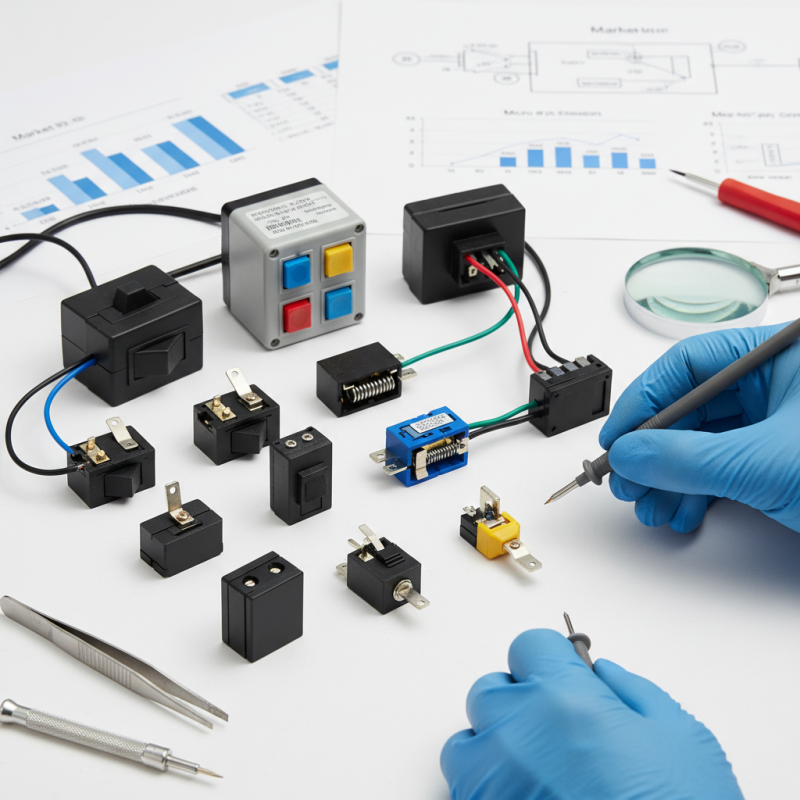
What is a Micro Switch and How Does It Work?

What is a Micro Switch?

A micro switch is a small electromechanical device used for switching applications. It operates with minimal force and can control circuits with a simple action. These switches are the backbone of many electronic devices. They are often used in appliances, automobiles, and machinery.

Micro switches consist of a lever and a spring mechanism. When pressed, the lever opens or closes an electrical circuit. This action happens very quickly, allowing for efficient operation. The size of the switch makes it easy to integrate into various designs. However, not all micro switches deliver the same performance. Some may wear out quickly, leading to failures in devices.

The sensitivity of micro switches is striking. They can be triggered from slight movements. While this feature is impressive, it can sometimes lead to accidental activations. Users might find themselves frustrated with unintentional clicks. It raises questions about design reliability and user experience. Evaluating the right switch for specific applications is crucial. Understanding limitations also plays a vital role in achieving optimal results.

Components of a Micro Switch

A micro switch is a small, snap-action switch. It is widely used in various devices, from home appliances to industrial machines. Understanding its components helps in grasping its functionality.

The core of a micro switch is the actuator. This small lever or button triggers the switch. When pressed, it rapidly changes the circuit state. The actuator ensures responsiveness. It is crucial for quick actions in devices like keyboards or safety equipment.

Another vital part is the terminals. They connect the micro switch to electrical circuits. There are typically three terminals: COM, NO, and NC. COM stands for common. NO is normally open, and NC is normally closed. This design allows for versatile switching. However, users must choose connections wisely. Misconnections can lead to malfunctions. Effective use of micro switches depends on understanding these components and their roles.

What is a Micro Switch and How Does It Work? - Components of a Micro Switch

Component Function Material Typical Application
Operation Lever Activates the switch mechanism when pressed Plastic or Metal Appliances, Control Panels
Spring Provides the mechanism to return the lever to its original position Stainless Steel Electronic Devices
Contacts Allows or interrupts the electrical flow Copper Alloy Industrial Machinery
Housing Protects internal components and provides structural support Plastic Consumer Electronics

How Micro Switches Operate Mechanically

A micro switch is a small device used in various applications. It is designed to detect mechanical actions. The switch operates based on a simple principle: when a mechanical force is applied, a lever pivots and triggers the switch. This activation happens quickly and efficiently.

Mechanically, micro switches rely on a spring-loaded mechanism. When the lever is pressed, it compresses a spring. The spring's tension holds the lever in place until enough force is applied. This mechanical movement is precise. As the lever moves, it makes or breaks an electrical connection, signaling a device to activate or deactivate.

It's fascinating how these tiny switches can impact larger systems. They are found in appliances, machinery, and many electronic devices. However, the mechanism can wear out over time. Frequent usage may lead to inconsistencies. Users might experience delays in response or even complete failure. Reflecting on these points helps us appreciate the simplicity and complexity of micro switches.

Applications of Micro Switches in Various Industries

Micro switches play an essential role in various industries due to their reliability and precision. In the automotive sector, they are widely used in safety systems. Reports indicate that over 60% of modern vehicles utilize micro switches for functions such as seatbelt reminders and airbag activations. Their compact size allows them to fit into tight spaces, but this might lead to challenges in maintenance. It's crucial to check their functionality regularly to avoid failures.

In manufacturing, micro switches also find numerous applications. They are pivotal in assembly lines for quality control, ensuring each component meets specifications. A study from a leading industrial organization found that factories using these switches reported a 25% decrease in operational errors. However, over-reliance on technology can induce complacency. Employees must remain vigilant and routinely inspect systems to prevent oversight.

The healthcare sector values micro switches for medical devices. They ensure proper functioning of equipment, from infusion pumps to diagnostic tools. According to industry data, devices equipped with micro switches have a failure rate of less than 1%. However, this statistic can be misleading as regular testing is necessary. A lapse in this can compromise patient safety, highlighting the need for constant diligence.

Advantages of Using Micro Switches in Devices

Micro switches are essential components in many devices. Their compact size and reliable performance make them a popular choice across industries. They operate by using a mechanical actuator to open or close an electrical circuit. When pressed, they provide a tactile feedback that users appreciate. According to industry reports, micro switches can handle millions of cycles, which speaks to their durability.


The advantages of using micro switches are manifold. First, they offer swift response times. This is crucial in devices requiring instant on-off control. For example, in automotive applications, a delay could impact safety. Studies indicate that devices utilizing micro switches can improve efficiency by up to 30%. Their small footprint allows for integration in tight spaces without sacrificing functionality.


Another noteworthy benefit is their versatility. Micro switches are found in various applications, from home appliances to industrial machines. Yet, it's essential to note that not all micro switches are created equal. Choosing the right type for specific applications can be challenging. Cost factors, durability ratings, and environmental conditions must be considered. Failing to account for these can lead to increased repair costs or device failures.

Company Info

Universal Pumping

625 Apache Trail
Woodstock, GA 30189

Mon - Fri | 9:00 AM - 5:00 PM

Connect With Us

About Universal Pumping

Universal Pumping is staffed with industry professionals with 20-45 years experience with high pressure pumping systems. We represent only the “elite producers” in pump manufacturing: Britain’s EMS and Germany’s EMMERICH. Our engineering and manufacturing approach is conservative, and we do not use “guess work” in the design or sales of our pumping and filtration equipment.