
Universal Pumping | High Pressure Pumps
High Pressure Pumps for Difficult to Pump Slurry, Sludge, and Food Waste.
What Is a Nitrogen Generator and How Does It Work?
A Nitrogen Generator produces nitrogen on-site from ordinary compressed air. It removes oxygen, moisture, and other unwanted gases through a controlled separation process. The result is a steady nitrogen supply for manufacturing, food packaging, laboratories, laser cutting, and many other applications.
“Air is a mixture of gases, and industrial separation depends on their different physical properties,” explains Dr. John H. Perry, a respected chemical-engineering authority. This principle remains central to modern nitrogen generation. A membrane generator allows smaller, faster-moving molecules to pass through selectively. A pressure swing adsorption system uses carbon molecular sieves. It adsorbs oxygen when pressurized, then releases it during depressurization.
The equipment may look simple. It is not.
A typical system includes an air compressor, filters, dryers, separation vessels, valves, sensors, and a storage tank. Each part affects purity, pressure, energy use, and service life. For example, oil or water entering the adsorption beds can reduce performance quickly. A neglected filter may create an expensive problem.
This guide will explain how a Nitrogen Generator works, how its main technologies differ, and where each design fits best. It will also examine purity ratings, flow capacity, operating costs, and maintenance requirements. Some explanations are simplified. Real systems behave less perfectly, especially during start-up, changing demand, or poor air treatment. That detail matters when selecting equipment for safe and reliable operation.
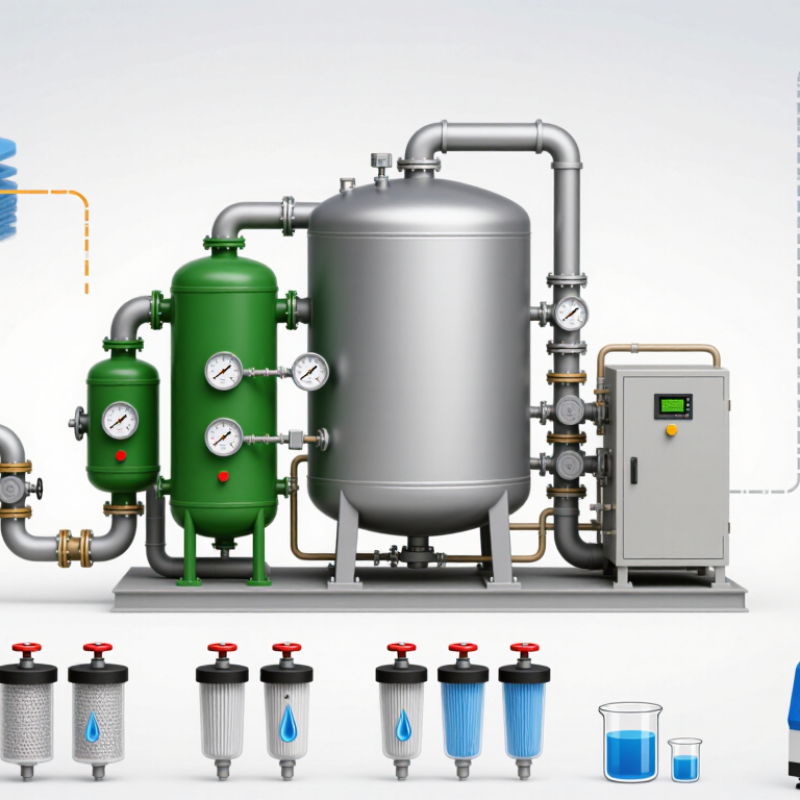
A nitrogen generator is an on-site system that produces nitrogen from ordinary compressed air. Air contains about 78.08% nitrogen, according to data from the National Oceanic and Atmospheric Administration’s Global Monitoring Laboratory. The generator removes oxygen, water vapor, and other gases through separation technology. It does not create nitrogen chemically.
Two common methods are pressure swing adsorption and membrane separation. Pressure swing adsorption uses carbon molecular sieve beds. These beds retain oxygen while nitrogen passes through. Membranes separate gases at different speeds. The choice depends on required purity, flow rate, pressure, and operating hours. A food package may need a different specification from a laboratory instrument. That detail matters.
Compressed air quality is also critical. ISO 8573-1 classifies particles, water, and oil in compressed air, helping engineers define suitable pretreatment. The U.S. Department of Energy’s Improving Compressed Air System Performance guide reports that leaks can waste 20% to 30% of compressor output. Poor filtration can increase maintenance and reduce nitrogen purity. The label sounds simple. The installation is not. Operators should check dew point, filter condition, pressure stability, and actual demand before selecting capacity. Oversizing seems safe, but it can increase energy use. Even experienced teams sometimes overlook seasonal air demand.
A nitrogen generator separates nitrogen from compressed air. Common systems use pressure swing adsorption or membrane separation. Each method removes oxygen, water vapor, and other gases to produce nitrogen on demand. Unlike delivered cylinders, a generator supplies nitrogen at the point of use. This reduces storage space, delivery scheduling, and manual cylinder handling. Clean, dry compressed air remains essential. Poor air quality can damage filters and lower nitrogen purity.
Nitrogen is used because it reacts slowly with many materials. In food packaging, it can displace oxygen and help slow oxidation. In metal processing, it supports cleaner cutting and reduces unwanted discoloration. Storage tanks may use nitrogen blanketing to limit moisture and oxygen exposure. Laboratories and electronic production areas also use controlled nitrogen for sensitive processes. Purity and flow must match the application, not simply exceed it.
A reliable design begins with measured demand, required purity, pressure, and operating hours. Engineers also check peak consumption, because average usage can hide sudden shortages. In practice, leaks are easy to overlook. They can waste compressor energy and reduce system performance. Filters, dew point, and oxygen concentration need regular monitoring. A generator is not automatically the cheapest choice. Electricity, maintenance, noise, and backup supply affect its real cost. No installation is perfect, and process conditions may change over time.
A nitrogen generator produces nitrogen on site by filtering ordinary air. Air contains about 78% nitrogen, along with oxygen, argon, water vapor, and trace gases. The generator does not create nitrogen. It separates and concentrates it.
In a pressure swing adsorption system, an air compressor pushes clean, dry air through carbon molecular sieve material. This material attracts oxygen, water vapor, and other gases more strongly than nitrogen. Nitrogen passes through the sieve and moves into a storage tank. When the material becomes saturated, the system lowers pressure and releases the trapped gases. The sieve then becomes ready for another cycle.
Membrane generators use a different method. Their hollow fibers allow smaller, faster-moving gases, such as oxygen, to pass through the membrane walls. Nitrogen travels more slowly and remains in the product stream. Membrane systems can be compact, although their achievable purity depends on pressure, temperature, and feed-air quality.
The process repeats automatically.
Reliable separation starts before the generator. Filters remove oil and solid particles, while dryers control moisture that could damage the sieve or membrane. Poor maintenance may cause rising oxygen levels, unstable flow, or unexpected pressure loss.
Operators should verify purity with calibrated instruments rather than trusting display readings alone. It is easy to describe nitrogen generation as a simple filtration process, but that explanation misses the importance of timing, airflow, and contamination control. Real systems are less forgiving than diagrams suggest.
A nitrogen generator separates nitrogen from air instead of relying on delivered cylinders or bulk tanks. Its main types are pressure swing adsorption (PSA), membrane, and cryogenic systems. PSA units use carbon molecular sieves. They usually produce nitrogen from about 95% to 99.999% purity, depending on airflow and cycle settings. Membrane generators push compressed air through hollow fibers. They are compact, quiet, and commonly suited to moderate purity requirements, often below 99.5%. The boundary is not always neat. Some applications need tighter control than a catalogue suggests.
Cryogenic generators cool air until its components liquefy and separate. They support very high purity and large, continuous flows, but demand greater capital, technical skill, and energy. A 2024 MarketsandMarkets report projects the nitrogen generator market to grow from approximately USD 11.3 billion in 2023 to USD 16.1 billion by 2028. This growth reflects wider demand for on-site gas supply, especially in food packaging, electronics, metals, and chemical processing. Yet market growth does not prove every installation will save money.
Site experience shows that sizing is often the weak point. A generator running far below its rated capacity may waste compressor power. The U.S. Department of Energy reports that compressed-air leaks can waste 20% to 30% of compressor output. Small leaks matter. Operators should measure peak flow, required purity, pressure, and duty hours before selecting a type. Periodic gas analysis also matters, because sieve aging, membrane damage, or moisture can quietly reduce performance. Real installations need testing. Forecasts are useful, but operating data should make the final decision.
| Generator Type | Operating Principle | Typical Nitrogen Purity | Typical Capacity | Main Energy Requirement | Key Advantages | Common Applications |
|---|---|---|---|---|---|---|
| Pressure Swing Adsorption (PSA) | Compressed air passes through carbon molecular sieve beds. Oxygen, moisture, and other gases are preferentially adsorbed while nitrogen passes through. The beds alternate between adsorption and regeneration. | 95%–99.999% N₂, depending on design and airflow | From a few Nm³/h to several thousand Nm³/h | Electricity for an air compressor, controls, and valves | High purity range; suitable for continuous, large-volume production; relatively low nitrogen production cost at scale | Heat treatment, metal processing, food packaging, electronics, chemical processing, and inerting |
| Membrane Separation | Compressed air enters hollow-fiber membranes. Oxygen, water vapor, and some faster-permeating gases pass through the membrane more rapidly than nitrogen. | Typically 95%–99.5% N₂ | From less than 1 Nm³/h to hundreds of Nm³/h | Electricity for compressed air; no cyclic valve switching is normally required | Compact, quiet, mechanically simple, and fast to start; often has low maintenance requirements | Laser cutting, tire inflation, wine production, fire prevention, oil and gas operations, and general inerting |
| Cryogenic Distillation | Air is purified, cooled to very low temperatures, and separated into nitrogen, oxygen, and argon according to their different boiling points. | Usually 99.999% N₂ or higher | Generally hundreds to many thousands of Nm³/h | Significant electrical power for air compression, refrigeration, and liquefaction | Produces very high-purity nitrogen and can provide both gaseous and liquid products | Large chemical plants, semiconductor manufacturing, steel production, industrial gas supply, and large-scale storage |
| Hybrid PSA–Membrane System | A membrane system provides bulk nitrogen production, while a PSA polishing stage removes additional oxygen when higher purity is required. | Commonly 99.5%–99.999% N₂ | Application-dependent; commonly tens to hundreds of Nm³/h | Electricity for compressed air and the PSA polishing stage | Balances purity, capacity, footprint, and operating cost for variable demand | Specialty manufacturing, controlled-atmosphere packaging, laboratory supply, and industrial inerting |
A nitrogen generator produces nitrogen on site by separating it from compressed air. It reduces dependence on delivered gas cylinders and supports more consistent supply. Most systems use pressure swing adsorption or membrane separation. In adsorption units, carbon molecular sieves retain oxygen, moisture, and other gases. Nitrogen then passes into a storage receiver. Membrane systems use hollow fibers that allow smaller, faster gases to permeate.
The main components include an air compressor, filters, dryer, separation module, valves, sensors, and control panel. Each part affects purity and operating stability. Poor filtration can damage the separation material. Wet air can also reduce performance. The receiver helps manage changing demand and limits frequent compressor cycling. Operators should check pressure, flow, dew point, and oxygen concentration regularly. Small leaks matter.
Performance depends on feed-air quality, inlet pressure, temperature, and required purity. Higher purity usually means lower flow. That trade-off is easy to overlook. A system sized only for average demand may struggle during production peaks. Real measurements are better than estimates, although measurements can still be incomplete. Maintenance records, alarm history, and daily operating patterns provide useful evidence.
Nitrogen generators serve food packaging, metal heat treatment, electronics manufacturing, laboratories, and laser cutting. In packaging, nitrogen can slow oxidation and protect product texture. In metal processing, it can reduce unwanted reactions during heating. Laboratory users often need stable purity and controlled flow. Applications differ, so the correct generator should match actual consumption, pressure requirements, and safety procedures. A larger unit is not automatically better.
Universal Pumping
625 Apache Trail
Woodstock, GA 30189
Mon - Fri | 9:00 AM - 5:00 PM
Universal Pumping is staffed with industry professionals with 20-45 years experience with high pressure pumping systems. We represent only the “elite producers” in pump manufacturing: Britain’s EMS and Germany’s EMMERICH. Our engineering and manufacturing approach is conservative, and we do not use “guess work” in the design or sales of our pumping and filtration equipment.


