
Universal Pumping | High Pressure Pumps
High Pressure Pumps for Difficult to Pump Slurry, Sludge, and Food Waste.
Sourcing Greener Cleaning products in 2026 requires more than choosing a bottle labeled “natural.” Procurement teams must examine ingredients, packaging, supplier practices, product performance, and disposal conditions. A greener option should clean effectively without creating avoidable risks for workers, customers, or waterways.
Leslie Reichert, author of The Joy of Green Cleaning, has said, “Green cleaning is not just about the products you use; it is about the process.” Her point remains practical. A concentrated formula may reduce plastic and transport emissions, but only when staff measure it correctly. Refillable systems can cut packaging waste, yet they may fail when return logistics are inconvenient. Small details matter.
Start with evidence. Request full ingredient disclosure, safety data, certification records, recycled-content claims, and independent testing. Compare dilution rates instead of comparing bottle prices alone. Review whether suppliers support responsible manufacturing and transparent reporting. Certifications can help, but they are not perfect answers. A product may meet one environmental standard while creating another concern during production or disposal.
Pilot products in real spaces. Test them on school floors, hotel bathrooms, healthcare surfaces, or office kitchens. Record cleaning time, user feedback, residue, scent strength, and packaging waste. Expect some disappointing results. That is useful information.
The strongest Greener Cleaning strategy combines verified claims, practical experience, and regular review. No product is impact-free. However, careful sourcing can make everyday cleaning safer, more efficient, and measurably less harmful in 2026.
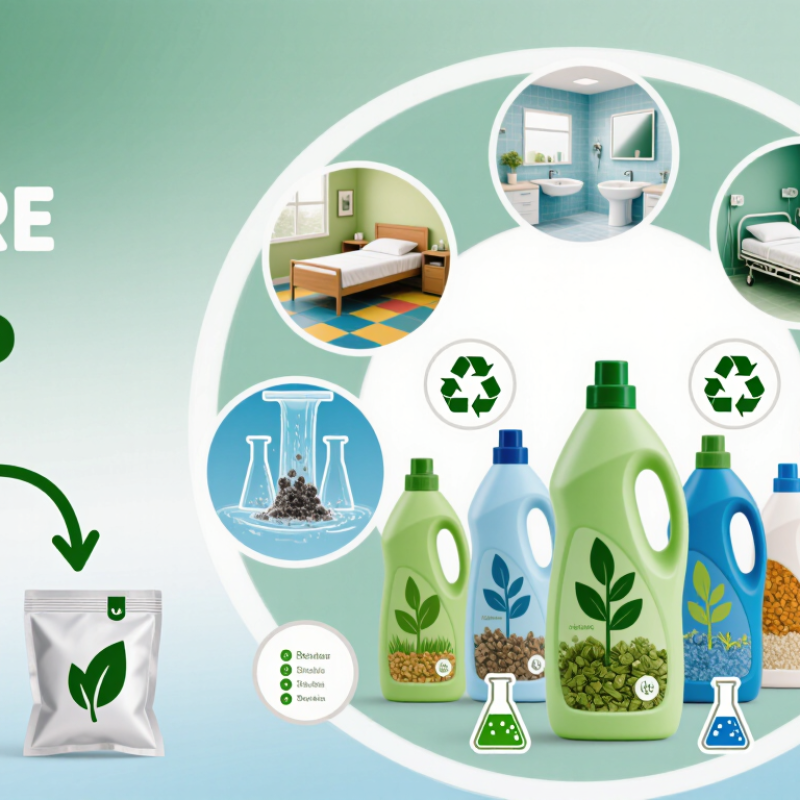
In 2026, a greener cleaning product should be judged across its full life cycle, not by a leaf on the label. Examine ingredients, manufacturing energy, packaging, transport, use, and disposal. Plant-based ingredients may still perform poorly if they require excessive water or repeated applications. Green claims need evidence.
For sourcing teams, request ingredient information, safety data, recycled-content details, packaging weight, and manufacturing records. Prefer concentrated formulas when they reduce transport emissions without weakening performance. Refillable packaging can help, but only when local collection systems exist. Check independent certifications, test methods, and current environmental reports. Ask suppliers to explain what their claims exclude.
Performance remains essential. A weaker cleaner can increase consumption, labor, wastewater, and plastic use. Test products on real surfaces, including greasy kitchen floors and mineral-stained washrooms. Record dosage, contact time, rinse water, worker feedback, and cleaning results. Small trials reveal more than polished brochures. No option is perfect. Packaging may improve while ingredients remain unclear. A certified product may suit one facility but fail in another. Recheck supplier data yearly, because formulas, energy sources, and recycling access change.
In 2026, greener cleaning procurement should begin with measurable criteria, not attractive claims. I would score every product against safety, performance, packaging, and lifecycle impact. The OECD reported 353 million tonnes of plastic waste globally in 2019, while only 9% was recycled. This makes packaging a purchasing issue, not a decoration.
Set minimum environmental thresholds before comparing prices. Require full ingredient disclosure, readily biodegradable surfactants, low aquatic toxicity, and verified restrictions on persistent substances. Use recognized ecolabel criteria as a reference, but check their current version. Packaging should be lightweight, recyclable in local systems, or refillable. A refill is not automatically greener. Transport distance and return logistics still matter.
Performance must remain measurable. Test products on identical soil, surfaces, water hardness, dilution ratios, and contact times. Record cleaning success, rework, worker exposure, and product consumption per square metre. A concentrated formula may reduce packaging, yet poor dosing can erase that advantage. The U.S. EPA’s Safer Choice framework evaluates ingredients for human health and environmental effects, offering a credible screening model. Still, certification alone cannot replace site testing. Our first trial looked efficient on paper, but operators used extra product under heavy soil conditions. That mistake changed the purchasing scorecard. Evidence should include laboratory results, supplier documentation, and three months of real-use data.
Sourcing greener cleaning products in 2026 requires evidence, not attractive wording. Request the full ingredient list, safety data sheet, and ingredient function for every product. Check preservatives, fragrances, solvents, and surfactants against recognised hazard databases. “Plant-based” is incomplete information. A plant-derived ingredient can still create aquatic toxicity or persistence concerns.
Packaging needs equal scrutiny. Record container weight, recycled content, material type, and closure design. Confirm whether local facilities actually accept that material. The OECD Global Plastics Outlook (2022) reported that packaging generated 40% of global plastic waste. That figure makes lightweighting useful, but not automatically sustainable. Refill systems can also fail when transport distances, contamination, or unused concentrate increase emissions. Measure the whole system.
Treat certifications as specific evidence. ISO 14024 describes Type I ecolabels as independently verified, multi-criteria schemes. Ask for the certificate number, validity period, covered product, and certification scope. Supplier claims should include test methods, dates, locations, and supporting records. The U.S. EPA’s Safer Choice program shows why ingredient-level review matters, rather than relying on broad green claims. Supplier audits should examine wastewater controls, energy data, packaging records, and corrective actions. Keep the documents.
A spreadsheet helps, but it can still hide uncertainty. I would mark missing data clearly, request corrections, and avoid rewarding confident claims without proof. Reliable sourcing is sometimes slower, less convenient, and more expensive. That discomfort is useful.
How to Source Greener Cleaning Products in 2026?
Compare Products Through Lifecycle, Cost, and Safety Assessments
A greener purchase starts with the full lifecycle, not a recycled-looking label. The European Commission’s Product Environmental Footprint method examines 16 impact categories, including climate change, water use, and resource depletion. Ask suppliers for lifecycle data covering raw materials, manufacturing, transport, use, and disposal. Concentrated products may reduce packaging and delivery weight. They can also create dosing mistakes. That detail matters.
Cost needs a wider lens. Compare purchase price, dilution rate, labor time, packaging, storage, and waste fees. A low-cost liquid may require repeated applications or larger volumes. The U.S. Environmental Protection Agency recommends evaluating product performance alongside human health and environmental criteria through its Safer Choice standard. Request test methods, dilution instructions, and independent certification records. Marketing language is not evidence.
Safety assessments should include fragrance ingredients, preservatives, worker exposure, and indoor air effects. The EPA reports that indoor pollutant levels can be two to five times higher than outdoor levels, and sometimes much higher during activities. Choose clear hazard communication and practical dispensing controls. UNEP’s Global Resources Outlook 2024 reports that resource extraction has tripled since 1970 and could rise another 60% by 2060. That makes refill systems and durable packaging worth measuring, not merely praising. I still find supplier data incomplete. Record assumptions, compare alternatives, and revisit them after real-world use.
How to Source Greener Cleaning Products in 2026?
Build a Practical Sourcing and Monitoring Process
Start with a clear product brief. Define cleaning performance, packaging limits, safer ingredient preferences, and acceptable cost ranges. Ask suppliers for ingredient disclosures, safety data sheets, manufacturing locations, and environmental claims. Evidence matters more than attractive wording. Request independent test results where possible, and check whether certifications match the exact product.
Create a supplier scorecard with simple, weighted measures. For example, assign points to verified ingredients, recycled packaging, refill options, water use, transport distance, and worker safety practices. Keep performance important. A greener product that leaves residue may increase water use and staff time. Test samples in real areas, such as kitchens, washrooms, and high-traffic floors. Record dilution rates, cleaning time, surface results, and user feedback.
Monitor the process monthly, not only during purchasing. Review delivery records, packaging changes, complaints, and updated supplier documents. Photograph damaged containers and note unusual odours or residue. Our first scorecard looked precise, but it ignored staff behaviour and storage conditions. That was a useful failure. Adjust the questions when site evidence challenges the original assumptions. Keep dated records, name responsible reviewers, and investigate claims that cannot be independently supported. Suppliers should explain changes before the next order.
| Product Category | Preferred Environmental Criteria | Key Data to Collect Before Approval | Packaging Requirements | Supplier Evidence | Monitoring Frequency | 2026 Status | Next Sourcing Action |
|---|---|---|---|---|---|---|---|
| All-purpose cleaner | Concentrated formulation; low aquatic toxicity; readily biodegradable surfactants; no intentionally added phosphates; fragrance-free option available. | Use dilution ratio; pH; volatile organic compound information; aquatic toxicity data; ingredient disclosure; cleaning performance test. | Minimum 30% post-consumer recycled plastic where technically feasible; recyclable bottle and cap; avoid unnecessary secondary packaging. | Current safety data sheet; full ingredient disclosure; third-party ecolabel certification such as EU Ecolabel or an equivalent recognized scheme; packaging material specification. | Quarterly review of formulation, packaging composition, and purchase volume. | Preferred | Prioritize concentrated formats and compare impact per diluted litre rather than per container. |
| Floor cleaner | Effective at the required dilution; low-residue formulation; no intentionally added microplastics; reduced aquatic hazard classification. | Recommended dilution; performance score; pH; aquatic hazard classification; annual volume; wastewater disposal considerations. | Use lightweight containers with clearly identified plastic resin codes; reusable dosing system preferred for large-volume sites. | Technical data sheet; independent performance test; hazard classification under the applicable chemical regulation; packaging declaration. | Monthly consumption tracking and semi-annual product performance review. | Approved | Set a consumption baseline in litres of ready-to-use solution per 1,000 m² cleaned. |
| Toilet and bathroom cleaner | Acid-based product only where required for scale removal; controlled corrosivity; no unnecessary chlorine use; clear worker-safety instructions. | Active acid type and concentration; pH; corrosivity classification; exposure controls; cleaning frequency; incident records. | Child-resistant or secure closure where required; leak-resistant packaging; recycled-content and recyclability data. | Safety data sheet; product label review; worker risk assessment; independent ecolabel or equivalent environmental documentation. | Every six months and immediately after any formulation or regulatory change. | Higher Control | Replace routine high-strength use with the lowest effective concentration and measured dosing. |
| Glass and surface cleaner | Low-VOC formulation; no intentionally added ammonia where a safer effective alternative is available; streak-free performance at low dosage. | VOC content; fragrance allergens; pH; dilution or spray rate; indoor-air requirements; user feedback. | Trigger sprayer designed for reuse or refill; lightweight bottle; recyclable mono-material packaging preferred. | Safety data sheet; VOC declaration; ingredient disclosure; packaging technical specification; performance test. | Quarterly review of VOC data and refill adoption. | Evidence Pending | Require a documented VOC value and test refill systems before contract renewal. |
| Dishwashing liquid | Readily biodegradable surfactants; efficient cleaning at low dosage; no intentionally added phosphates; dermatological compatibility information. | Surfactant biodegradability; dosage per wash; aquatic hazard data; preservative system; product concentration. | Refillable bulk container or high-recycled-content bottle; pump or cap must prevent leakage during transport. | Ingredient disclosure; biodegradability test information; safety data sheet; packaging composition declaration. | Monthly dosage tracking and annual ingredient review. | Preferred | Measure product used per 100 washing cycles and investigate unexplained increases. |
| Disinfectant | Use only where infection-control requirements justify it; approved active substance; effective contact time; avoid routine over-application. | Active substance and concentration; regulatory authorization; contact time; spectrum of efficacy; annual usage; worker exposure controls. | Secure closure; clear hazard labelling; packaging compatible with the active substance; take-back or controlled disposal process where available. | Regulatory authorization; efficacy test against the required microorganisms; safety data sheet; training records. | Monthly usage monitoring and annual necessity review. | Higher Control | Separate routine cleaning from disinfection and document the trigger for each use. |
| Microfiber cleaning textiles | Durable textile with documented wash-life; high cleaning efficiency with water or low chemical dosage; avoid unnecessary single-use materials. | Material composition; expected wash cycles; cleaning performance; lint and particle release; replacement rate. | Minimal packaging; recycled or recyclable packaging; avoid individual plastic wrapping where hygiene rules permit. | Product specification; wash-life test; material certification where applicable; packaging declaration. | Quarterly tracking of units purchased, wash cycles, and replacement rate. | Approved | Calculate environmental impact per completed wash cycle instead of per item purchased. |
| Paper towels and tissue products | Recycled fibre or responsibly sourced virgin fibre; chlorine-free bleaching preferred; adequate absorbency to prevent excessive consumption. | Recycled-fibre percentage; post-consumer content; basis weight; absorbency; annual volume; disposal route. | Paper-based outer packaging preferred; avoid mixed-material wrapping; packaging must remain dry during storage. | Chain-of-custody certification such as FSC or PEFC; recycled-content declaration; product technical sheet. | Monthly usage per occupied area or user count. | Preferred | Set a consumption target and install dispensers that limit unnecessary sheet length. |
| Supplier management process | Supplier must disclose product composition, environmental claims, manufacturing location, packaging data, and material changes. | Completed environmental questionnaire; evidence expiry dates; corrective-action history; delivery distance; product change notifications. | Consolidated shipments preferred; packaging reduction plan required for high-volume orders. | Valid certificates; audit records; laboratory or test reports; signed change-control commitment. | Quarterly dashboard review and annual supplier reassessment. | Process Build | Introduce a minimum evidence checklist and suspend unverified environmental claims. |
Universal Pumping
625 Apache Trail
Woodstock, GA 30189
Mon - Fri | 9:00 AM - 5:00 PM
Universal Pumping is staffed with industry professionals with 20-45 years experience with high pressure pumping systems. We represent only the “elite producers” in pump manufacturing: Britain’s EMS and Germany’s EMMERICH. Our engineering and manufacturing approach is conservative, and we do not use “guess work” in the design or sales of our pumping and filtration equipment.


