
China Top Bellows Valve Manufacturers and Suppliers?

China’s Bellow Valve manufacturing sector serves chemical plants, refineries, pharmaceutical facilities, and high-purity process lines worldwide. Choosing a supplier requires more than comparing prices or polished factory photographs. Buyers must examine design experience, material traceability, pressure testing, and after-sales support.

Valve engineer Michael Chen states, “A reliable Bellow Valve protects the process before it protects the equipment.” This practical view matters because bellows must control stem leakage while surviving pressure, temperature changes, vibration, and repeated cycling. A strong manufacturer should explain bellows forming methods, weld procedures, body materials, and inspection records clearly. Stainless steel, alloy steel, and special alloys may suit different media. The correct choice depends on actual operating conditions.

Not every large supplier offers the right solution.

This guide reviews leading China Bellow Valve manufacturers and suppliers through technical capability, certifications, production capacity, customization, and export experience. It also considers details that buyers may overlook, such as packing design, seat construction, shell testing, helium leak testing, and spare-part availability. These points can reveal whether a supplier understands demanding service or simply follows a sales checklist.

Some information may still require direct verification. Factory audits, sample testing, and documented quality procedures remain valuable. A supplier’s website cannot replace engineering dialogue. The best choice should match the valve to the process, not force the process to match a catalog. This article offers a practical starting point for comparing manufacturers with greater confidence, while recognizing that project specifications can change the final decision.
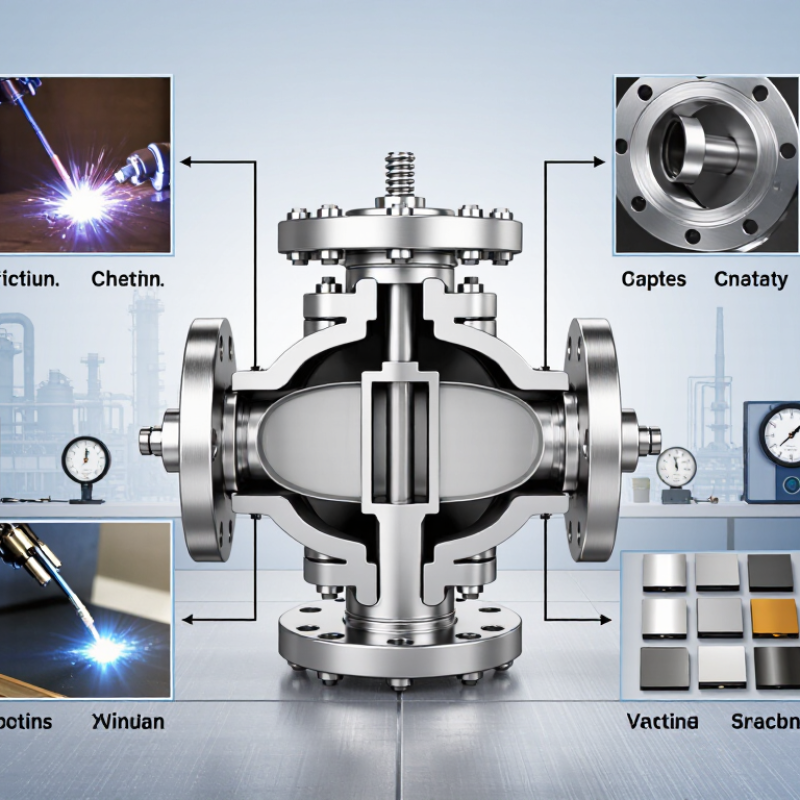
China Top Bellows Valve Manufacturers and Suppliers?

What Is a Bellows Valve and How Does It Work?

A bellows valve is an industrial valve designed to control fluids while reducing stem leakage. Its main sealing element is a flexible, welded metal bellows. This bellows surrounds the valve stem and creates a tight barrier between the process medium and the outside air. When the handwheel turns, the stem moves upward or downward. The stem then lifts or lowers the valve plug, controlling flow through the seat. The bellows flexes during movement without allowing the fluid to escape along the stem. This design suits toxic, corrosive, radioactive, or high-purity media. It also helps prevent outside contamination.

Tips: Check the pressure, temperature, medium, and cycling frequency before selecting a valve. Confirm the bellows material matches the fluid. Installation should keep the valve aligned with the pipe. Excessive side loads may shorten bellows life. Keep the travel smooth. Small errors matter.

In practical maintenance, technicians inspect welds, body connections, and operating torque. A rising torque level may indicate seat damage or bellows fatigue. Many suppliers and manufacturers in China offer stainless steel, alloy, and customized configurations.

However, low purchase cost should not control the decision. Service records, pressure testing, material certificates, and traceable quality checks provide stronger evidence of reliability. Bellows valves are not perfect; repeated thermal cycling can still cause fatigue. Engineers should review expected cycles instead of trusting appearance alone. A suitable valve protects workers, equipment, and process cleanliness.

Why Choose Chinese Bellows Valve Manufacturers and Suppliers?

Chinese bellows valve manufacturers and suppliers attract global buyers for practical reasons. Many combine precision machining, welding, assembly, and pressure testing in one production network. This structure can shorten lead times and reduce coordination problems. In field applications, a well-made bellows valve helps limit stem leakage in vacuum, chemical, pharmaceutical, and high-purity gas systems. That protection matters when maintenance access is difficult.

Experienced Chinese suppliers often support customized materials, connection standards, pressure classes, and actuator arrangements. Engineers can review drawings, media conditions, temperature ranges, and cycle requirements before production. Some facilities use helium leak testing, hydrostatic testing, and dimensional inspection. Ask for actual test records, not only attractive catalog statements. Clear inspection procedures show technical maturity.

Communication can be efficient.

Cost is another strong reason to consider China. A broad local supply chain provides access to stainless steel, nickel alloys, seals, machining services, and control components. This may create competitive pricing without removing essential testing. However, not every supplier offers the same reliability. A low quotation may reflect thinner material, limited inspection, or unclear warranty terms. Buyers should check factory experience, production capacity, traceability, export documentation, and response time. Video audits and sample orders can reveal practical weaknesses. I have found that small details, such as clean packaging and correctly marked flow directions, often predict stronger project discipline. Some suppliers still need improvement in technical English and after-sales follow-up, so written specifications should remain precise.

China Top Bellows Valve Manufacturers and Suppliers? - Why Choose Chinese Bellows Valve Manufacturers and Suppliers?

Evaluation Dimension Commonly Available Capability in China Practical Buyer Benefit Recommended Verification Point
Product Types Metal-bellows globe valves, gate valves, stop valves, angle valves, and customized vacuum or high-purity designs are widely available. Buyers can source different valve configurations from one manufacturing region and match the design to the piping system. Confirm valve pattern, end connection, bonnet design, flow direction, and service application.
Bellows Construction Multi-ply formed or welded metal bellows are commonly produced from corrosion-resistant alloys such as 316L stainless steel, 321 stainless steel, or nickel-based alloys. Metal bellows isolate the valve stem from the process medium and help reduce external stem leakage. Request bellows material certificates, ply construction, weld procedure information, and cycle-test results.
Pressure Ratings Industrial designs are commonly offered in ASME Class 150, 300, 600, 900, 1500, and 2500, as well as selected EN pressure classes such as PN16 to PN100. A broad pressure range supports applications in steam, chemical processing, power generation, and oil and gas systems. Check the pressure-temperature rating in accordance with the selected material, size, and applicable standard.
Nominal Size Range Small-bore bellows valves are frequently supplied for instrumentation and high-purity service, while larger sizes are available for process piping. The product range can cover both compact equipment connections and larger industrial pipelines. Confirm nominal size, bore diameter, face-to-face dimension, and allowable flow coefficient.
Materials Body materials commonly include carbon steel, stainless steel, duplex stainless steel, and selected nickel alloys. Trim materials are selected according to the medium and temperature. Material selection can be adapted to corrosive, high-temperature, high-pressure, or clean-service conditions. Review chemical composition reports, material certificates, hardness requirements, and corrosion compatibility.
Applicable Standards Manufacturing and testing may be aligned with standards such as ASME B16.34, API 602, EN 12516, ISO 5208, API 598, and ISO 15848-1 when specified in the purchase order. Recognized standards make technical comparison, inspection, and project approval easier. Require the exact standard edition, design class, inspection level, and compliance documents before production.
Fugitive Emission Control The welded or formed bellows design is intended to provide a secondary barrier around the valve stem. Low-emission designs may be tested against ISO 15848-1 or equivalent requirements. Improved stem sealing can reduce process emissions and maintenance caused by packing leakage. Request fugitive-emission test reports, helium leak-test results, or an approved equivalent test procedure.
Leakage Testing Shell tests, seat tests, and back-seat tests can be performed using hydrostatic or pneumatic methods according to the specified valve standard. Documented testing helps confirm pressure integrity and shutoff performance before shipment. Confirm test pressure, holding time, medium, acceptance criteria, and whether a third-party witness is required.
End Connections Common options include flanged, butt-weld, socket-weld, threaded, and customized connections. ASME, EN, and other regional flange systems may be supported. Connection flexibility simplifies integration with existing piping and equipment layouts. Check flange facing, pressure class, welding dimensions, thread standard, and face-to-face requirements.
Temperature Suitability Operating temperature depends on body material, bellows alloy, packing, gasket, seat material, pressure, and process medium. Metal-seated designs are available for demanding temperatures. The valve can be engineered for steam, thermal oil, cryogenic support systems, and other temperature-sensitive services. Obtain a pressure-temperature chart and confirm minimum and maximum design temperatures for the complete assembly.
Customization Many Chinese manufacturers support customized dimensions, materials, actuators, limit switches, surface treatments, marking, packaging, and inspection plans. Customization can reduce adaptation work when standard catalog dimensions do not match the project design. Approve drawings, datasheets, bill of materials, welding details, nameplate information, and change-control procedures.
Manufacturing Scale China has a large industrial supply base with machining, casting, forging, welding, heat treatment, assembly, and export-packaging capabilities. A broad manufacturing network can support both standard repeat orders and engineered valve projects. Audit production capacity, critical-process control, equipment list, subcontractor management, and quality records.
Quality Management Qualified suppliers may operate quality systems based on ISO 9001 and maintain inspection procedures for dimensional, material, welding, pressure, and functional checks. A controlled quality system improves consistency across production batches. Request a valid certificate, quality manual summary, inspection and test plan, and sample nonconformance records.
Cost Efficiency Large-scale industrial production and integrated sourcing of castings, forgings, machining, and components can provide competitive total manufacturing costs. Potential savings may be achieved without sacrificing required standards when specifications and inspections are clearly defined. Compare total landed cost, certification, testing, tooling, packaging, freight, warranty, and after-sales support—not only the unit price.
Lead-Time Planning Standard valves generally require less production time than customized valves involving special alloys, non-standard dimensions, third-party inspection, or special testing. Early technical confirmation helps reduce delays in procurement and project commissioning. Obtain a written manufacturing schedule covering drawing approval, material procurement, production, testing, inspection, and shipment.
Export and Documentation Export-oriented suppliers commonly provide commercial invoices, packing lists, certificates of origin, material certificates, pressure-test reports, drawings, and operation manuals when requested. Complete documentation supports customs clearance, installation, maintenance, and project handover. Define the required document package, language, legalization, marking, packing method, and delivery terms in the contract.
Best-Fit Applications Typical applications include steam systems, chemical plants, refineries, power plants, vacuum equipment, high-purity processing, and emission-sensitive services. Bellows-sealed valves are particularly useful where external stem leakage, contamination, or frequent packing maintenance must be minimized. Provide the process medium, pressure, temperature, flow direction, cycle frequency, cleanliness level, and applicable safety requirements.

Note: Actual capabilities, pressure ratings, materials, delivery times, and certifications vary by supplier and valve design. All technical data should be confirmed against approved drawings, applicable standards, and project-specific inspection requirements.

Key Types and Applications of Bellows Valves in China

China’s bellows valve market serves demanding systems where leakage control matters. Welded bellows valves suit high-vacuum and ultra-clean service. Formed bellows designs often support lower-cost chemical and utility applications. Straight-through and angle-pattern bodies fit different piping layouts. Manual, pneumatic, and motorized versions provide varied control options.

In semiconductor plants, bellows-sealed valves protect process gases from atmospheric contamination. Pharmaceutical lines use polished, drainable designs around sterile fluids. Chemical facilities select corrosion-resistant alloys for acids, solvents, and heated media.

LNG and cryogenic systems require materials that remain flexible at very low temperatures. The wrong bellows geometry can fatigue early. That detail is easy to underestimate.

Grand View Research projects the global industrial valves market to grow at about 4.8% annually from 2024 to 2030. This wider trend supports stronger demand for specialized sealing technology in China. China’s National Bureau of Statistics reported continued growth in industrial production during 2024, increasing pressure on reliable process equipment. Buyers should compare cycle-life data, helium leak rates, weld inspection records, and pressure-temperature curves. Supplier claims are not enough. Factory audits, sample testing, and traceable material certificates reveal practical weaknesses before installation.

How to Evaluate China’s Bellows Valve Manufacturers

Evaluating China’s bellows valve manufacturers requires more than comparing quotations. Grand View Research estimates the global industrial valves market reached about USD 78 billion in 2023. This scale attracts capable factories, but also inconsistent suppliers. I examine production records, not polished websites. A credible manufacturer should provide material certificates, heat numbers, welding procedures, and traceability from raw material to shipment.

Bellows quality deserves close attention. Ask for helium leak-test results, pressure-test records, and documented cycle testing. ISO 15848-1 provides a useful framework for fugitive-emission performance. For high-purity or hazardous service, request the actual test method and acceptance level. “Passed inspection” is too vague. I also check whether technicians inspect formed bellows under magnification. Small wrinkles can become fatigue points after repeated movement.

The factory visit often reveals more than the sales meeting. Look for clean assembly areas, calibrated instruments, controlled storage, and visible nonconformance records. Bureau Veritas’ 2023 supplier-quality research indicates that traceability and process control remain major drivers of manufacturing reliability. Still, reports are not proof. I have seen excellent documentation paired with weak packaging and delayed feedback. Require third-party inspection when risk justifies it, and compare sample valves with production units. Ask uncomfortable questions. That is where judgment matters.

Quality Standards, Customization, and Export Services in China

China’s leading bellows valve suppliers compete through quality control, customization, and dependable export support.

Grand View Research valued the global industrial valves market at approximately USD 78.7 billion in 2023. It also forecasts steady growth through 2030. This pressure encourages Chinese manufacturers to improve traceability, testing, and delivery performance.

Quality starts with material verification. Serious factories record heat numbers for stainless steel, inspect welded bellows, and test every valve for shell strength and leakage. ASME B16.34 provides widely used requirements for pressure-containing valves. ISO 15848-1 supports fugitive-emission testing and classification. However, a certificate alone proves little. Buyers should request test records, calibration dates, welding procedures, and sample inspection videos. Small gaps still appear.

Customization is often practical, not decorative. Suppliers can adjust valve size, pressure class, end connections, actuator interfaces, and surface treatment. Some projects also need oxygen-cleaned parts or special alloy bellows. Engineers should confirm temperature cycles and operating frequency before approving a design. Export services matter equally. Experienced suppliers provide English documentation, packing photographs, HS-code support, and pre-shipment inspections. They should also explain warranty limits clearly. Delivery estimates can remain imperfect, especially during component shortages, so buyers should keep realistic safety time.

Company Info

Universal Pumping

625 Apache Trail
Woodstock, GA 30189

Mon - Fri | 9:00 AM - 5:00 PM

Connect With Us

About Universal Pumping

Universal Pumping is staffed with industry professionals with 20-45 years experience with high pressure pumping systems. We represent only the “elite producers” in pump manufacturing: Britain’s EMS and Germany’s EMMERICH. Our engineering and manufacturing approach is conservative, and we do not use “guess work” in the design or sales of our pumping and filtration equipment.