
Universal Pumping | High Pressure Pumps
High Pressure Pumps for Difficult to Pump Slurry, Sludge, and Food Waste.
Choosing a Galvanized Steel Wire Supplier is not just a matter of comparing prices. The right partner should understand the intended application, whether the wire will support fencing, cable production, construction, or agricultural use. Diameter, tensile strength, zinc coating, and finish all affect performance. A small mismatch can cause installation delays or early corrosion.
Details matter. A clear specification sheet, consistent test records, and traceable production batches help buyers assess quality with confidence. Ask how coating thickness is checked and whether samples can be tested before a large order. Delivery capacity and communication also deserve attention. A low quote may look attractive, but it means little if the wire arrives late or varies between batches.
This guide explores how to identify the top suppliers and what evidence to review before making a decision. It considers product range, quality controls, technical support, and supply reliability rather than relying on marketing claims alone. The strongest choice will depend on your wire specification, order volume, and destination. There is no universal winner. Even experienced buyers can overlook one practical point: a supplier’s capabilities should match the exact requirements of the project, not just its general product list. Compare carefully, ask direct questions, and verify claims with documentation where possible.
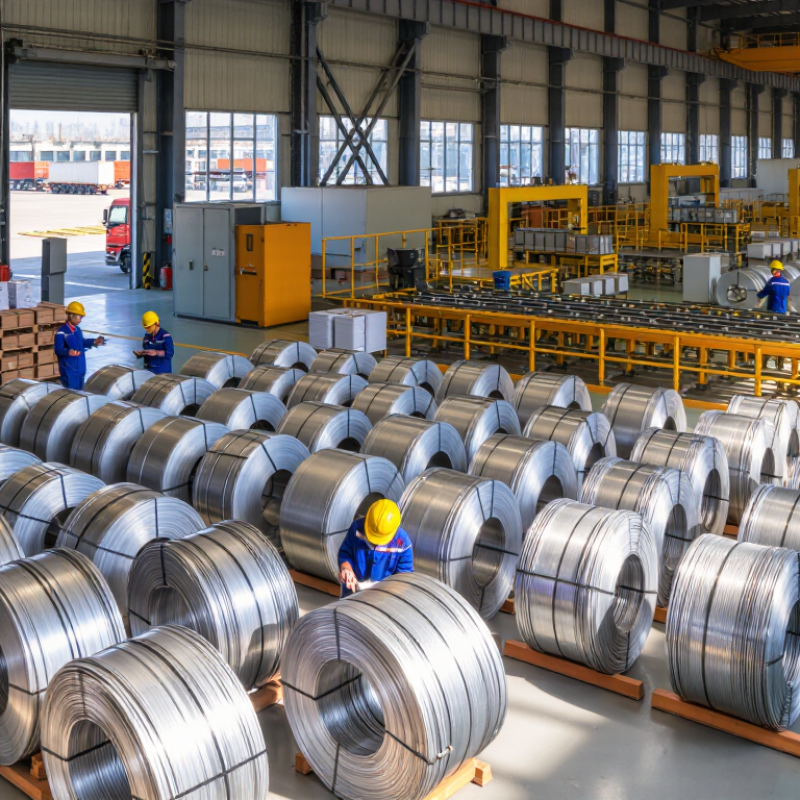
Galvanized steel wire is steel wire protected by a thin zinc coating. The zinc slows rust by separating steel from moisture and air. If the coating is scratched, zinc can also corrode before the exposed steel does. That protection has limits. Salt, chemicals, and repeated abrasion can shorten its service life.
Production usually begins with steel rod, which is cleaned and drawn through dies to reach a chosen diameter. For hot-dip galvanizing, workers remove scale and oil, rinse the wire, and apply a flux. The wire then passes through molten zinc, where heat forms a bonded coating. Wiping equipment controls excess zinc, followed by cooling and inspection.
Small defects count. Uneven coating or missed spots can leave weak areas, though a quick visual check may not reveal everything. Some wire is galvanized before final drawing, while other processes coat it afterward; the choice affects finish and flexibility.
Buyers should compare coating weight, wire diameter, and intended exposure, not rely on “galvanized” alone. A specification can still miss real-world handling damage.
Evaluating galvanized steel wire suppliers starts with the wire’s intended use. A fence, cable core, and agricultural support wire face different loads and weather conditions. Ask for the specified diameter, tensile strength, zinc coating mass, and permitted tolerances. Then compare test reports with a physical sample. Small differences matter. A smooth, even coating is useful to inspect, but appearance alone cannot confirm coating thickness or adhesion.
Tips: Request a recent test report linked to the production batch. Check whether the supplier can explain its testing method and provide traceability records. A salt-spray result can help compare samples, but it does not predict exact outdoor service life. Ask about packaging, too; wet or damaged bundles may arrive with surface problems.
Production consistency deserves close attention. Ask how wire is checked during drawing and galvanizing, and how out-of-spec material is handled. Review sample results from more than one batch when possible. Also assess response times, delivery estimates, and willingness to clarify technical details. A polished quotation is not proof of dependable production. Some buyers focus heavily on price, and that can be a mistake; still, a higher price does not guarantee better quality. Verify the evidence against your application before choosing a supplier.
This illustrative scorecard shows practical criteria for comparing suppliers without ranking or naming individual companies. The weights are a suggested evaluation model, not a universal industry standard; confirm requirements against the intended application and purchase specification.
| Evaluation dimension | Weight | How it is evaluated | Evidence to request |
|---|---|---|---|
| Product specification and compliance | 20% | Check that wire diameter, coating class, steel grade, and other agreed requirements match the purchase specification and applicable standards. | Technical data sheet, product specification, and relevant test reports. ASTM A641/A641M may be applicable to zinc-coated carbon steel wire where specified. |
| Zinc-coating quality | 20% | Verify coating mass or thickness against the specified requirement, and inspect coating coverage and adhesion using the agreed test method. | Coating test results, inspection records, and a clear description of sampling and test methods. |
| Mechanical properties | 15% | Compare tensile strength, elongation, and any specified bend or torsion results with the required grade and application. | Test certificates tied to the supplied lot and the relevant product specification. |
| Dimensional consistency | 10% | Assess wire-diameter measurements, permitted tolerances, and consistency across samples or production lots. | Dimensional inspection records and documented measurement tolerances. |
| Corrosion-performance suitability | 10% | Determine whether the coating level and validated performance are appropriate for the intended environment. Use exposure testing only when it is relevant and defined in the specification. | Application-specific test data, coating details, and a stated test method and exposure conditions, where required. |
| Quality management and process control | 10% | Review controls for incoming material, galvanizing, in-process inspection, nonconforming product, and corrective actions. | Quality procedures, audit information, and applicable management-system certificates with valid scope and dates. |
| Delivery and production capability | 8% | Assess the supplier’s demonstrated ability to meet order quantities, lead times, packaging requirements, and agreed delivery schedules. | Capacity and lead-time information, order history or references, and shipment performance records where available. |
| Traceability and documentation | 4% | Check whether product lots can be linked to material, production, inspection, and shipment records. | Sample certificate package, lot-identification method, and traceability procedure. |
| Commercial and technical support | 3% | Compare quotation clarity, responsiveness to technical questions, claims handling, and support during specification review. | Written quotation, service terms, response process, and warranty or claims policy. |
| Total suggested weighting | 100% | Score each supplier against the same specification and evidence requirements for a consistent comparison. | |
Global buyers source galvanized steel wire through several supplier types, and each serves a different part of the market. Integrated steel mills can manage production from steel rod to finished wire. This may help buyers seeking consistent batches, custom diameters, or large volumes. Their scale can also mean longer lead times for smaller orders.
Independent wire drawers and coating processors buy rod or semi-finished wire, then draw it to size and apply a zinc coating. They often offer more flexibility on specifications and packaging. A buyer might request coils suited to a particular machine, for example. Regional stockists and export traders keep standard sizes closer to end users and can consolidate mixed orders. That matters. These categories overlap; some processors also hold inventory, while some traders coordinate custom production.
Choosing a supplier type requires more than comparing price per ton. Buyers should check wire diameter tolerances, coating weight, tensile requirements, coil dimensions, and how each batch is identified. Ask for test reports and traceability records, then confirm that the documents match the actual shipment. For international orders, clarify packing, moisture protection, and delivery terms early. Not always. A low-cost offer can still fit poorly if its specifications or lead time do not match the job. The right supplier depends on volume, required consistency, and how much technical support the buyer needs.
Supplier Types Serving the Global Market
Integrated steel producers, specialist wire manufacturers, regional processors, and trading distributors all participate in international supply. The scores show a qualitative comparison of typical global supply-chain reach—not market share or measured company performance. Actual reach varies by supplier and product.
Compare galvanized steel wire suppliers by matching the specification to the job, not by comparing price alone. Check wire diameter, tensile strength, zinc-coating mass, coating adhesion, and permitted tolerances. ASTM A641/A641M and EN 10244-2 provide recognized requirements for zinc-coated wire; ask which standard and coating class each quotation follows. A certificate should identify the test method and production batch. A polished certificate is useful, but it is not the coil.
Scale makes careful checks worthwhile. World Steel Association’s World Steel in Figures 2025 reports 1,882.6 million tonnes of crude steel production in 2024. That figure describes the wider steel market, not galvanized-wire quality. For a fair comparison, request recent batch test results and confirm that the tested diameter and coating class match the material being offered. Where corrosion exposure is severe, ask how the proposed coating suits the site conditions. One detail buyers sometimes miss: a thicker coating can affect wire dimensions and handling.
Tip: Compare sample wires under the same checks. Look for bare spots, uneven zinc, and flaking after bending. Record results by batch. If a supplier cannot explain a mismatch clearly, pause before ordering.
Choosing a galvanized steel wire supplier starts with the job, not the catalogue. For fencing, identify required tensile strength, wire diameter, and coating mass; for cable strand, check strand construction and applicable requirements such as ASTM A475. ASTM A641/A641M covers zinc-coated carbon steel wire, with coating classes suited to different needs. Ask suppliers for test certificates showing dimensions, tensile results, and zinc coating measurements. A bright surface helps inspection, but it does not prove coating consistency. Looks can mislead.
Exposure conditions matter. Coastal spray, farm chemicals, and trapped moisture can shorten service life, so specify the environment and expected maintenance interval. The NACE IMPACT study estimated corrosion costs at US$2.5 trillion globally, or 3.4% of global GDP, in 2016. That figure covers many industries, not galvanized wire alone, but it shows why corrosion planning deserves attention. Request evidence from comparable applications, plus sample inspection records and batch traceability. Check packaging too: wet coils stored tightly can arrive with damage or staining. Price still matters, of course. Yet a low quote without coating data leaves an important gap. A small trial order can reveal handling and consistency issues before a full purchase.
Universal Pumping
625 Apache Trail
Woodstock, GA 30189
Mon - Fri | 9:00 AM - 5:00 PM
Universal Pumping is staffed with industry professionals with 20-45 years experience with high pressure pumping systems. We represent only the “elite producers” in pump manufacturing: Britain’s EMS and Germany’s EMMERICH. Our engineering and manufacturing approach is conservative, and we do not use “guess work” in the design or sales of our pumping and filtration equipment.


