
Universal Pumping | High Pressure Pumps
High Pressure Pumps for Difficult to Pump Slurry, Sludge, and Food Waste.
Choosing a rental LED screen supplier in China involves more than comparing prices or browsing polished product photos. Event companies need displays that assemble quickly, travel safely, and perform reliably under changing conditions. A bright screen can look impressive in a showroom; its cabinet locks, cables, and spare modules matter just as much on a busy event floor.
This guide explores suppliers often considered by buyers and explains what to check before requesting a quotation. Useful comparisons include pixel pitch, brightness, refresh rate, cabinet weight, maintenance access, and available screen sizes. Ask how products are tested, what spare parts are included, and whether technical support can respond during installation. Clear answers are valuable. Vague promises are not.
Supplier experience also deserves careful review. Look for project examples, detailed specifications, warranty terms, and consistent communication. Where possible, request a sample or arrange a factory visit to inspect assembly and quality-control processes. Shipping schedules, flight cases, and replacement-part availability can affect total costs as much as the initial price. No shortlist is perfect. A supplier that suits a touring concert may not fit a small exhibition budget, and online information can be incomplete. Use the following overview as a starting point, then verify important details directly with each company. That extra check can prevent costly surprises.
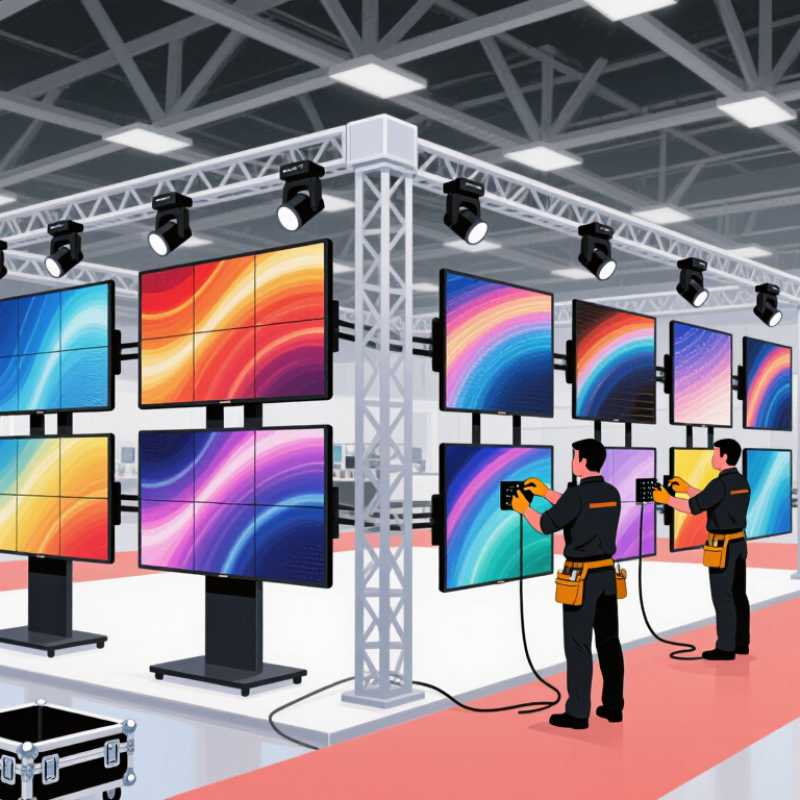
A professional rental LED screen supplier does more than ship cabinets. It helps match pixel pitch, brightness, refresh rate, and cabinet weight to the venue and viewing distance. For example, a fine-pitch indoor wall may suit a conference stage, while a brighter, weather-resistant setup is better for an outdoor event. The supplier should also provide clear cabinet drawings, power estimates, spare-parts guidance, and practical setup instructions. Small details matter: a confusing lock or cable route can slow a crew during a short load-in.
AVIXA’s Industry Outlook and Trends Analysis 2024 estimated global professional audiovisual revenue at $325 billion for 2024, with a projection of $402 billion by 2029. This broader market forecast is not specific to rental LED screens, but it reflects continued demand for professional display systems. A dependable supplier can show documented testing procedures, consistent batch quality, and realistic delivery timelines. Ask how products are checked before dispatch and how technical questions are handled during installation. No supplier gets every detail right in every project; response and correction matter too.
Tips: Request a sample cabinet, inspect its seams and connectors, and confirm the stated refresh rate with suitable equipment. Check spare-part availability before booking the event.
China’s leading rental LED screen suppliers compete on more than brightness. Touring crews need cabinets that lock together quickly, survive repeated loading, and remain consistent across a wide stage. A lightweight panel can save time when technicians carry it up narrow venue stairs. Fast service access also matters when a module needs replacement during a tight changeover.
Compare suppliers by pixel pitch, cabinet weight, refresh performance, and the availability of spare parts. Ask for a live demonstration with moving footage, not only a polished showroom image. Check how the screen behaves at close viewing distance and under camera exposure. Small differences show up. Also review flight cases, rigging options, and support response times before committing to a large rental fleet. A strong specification sheet is useful, but it cannot guarantee smooth work on site. Not always. Venue layouts, crew experience, and transport conditions can change the result, so request a trial using the hardware and workflow your team actually plans to use.
A 500 × 500 mm cabinet is a practical starting point for rental LED screens. Its compact size fits common stage layouts, and crews can move individual panels through narrow loading areas. A typical 6 × 4 m screen uses 96 cabinets, making panel count and handling time easy to estimate. Check cabinet weight, locking hardware, and cable access before choosing a supplier. Small differences can slow a fast changeover.
IP65 can help when a screen faces dust or water outdoors, but confirm which cabinet surfaces the rating covers. Front and rear protection may differ. Ask for current test documentation, and check whether connectors and power supplies have matching protection. Rain is not the only concern. Wind, standing water, and sudden temperature changes also affect safe operation. IP65 is not a guarantee against every site condition.
Ask suppliers how quickly they can provide spare modules, receiving cards, and repair support during an event. Request a sample cabinet and inspect its seams, handles, and pixel alignment under close viewing. Specs look neat on paper. In practice, panels may arrive with minor color variation, so ask how calibration is handled across rental batches. A good supplier explains those limits clearly, rather than promising that every screen will look identical.
Supplier-selection matrix for rental LED screens. It compares verifiable product and service capabilities rather than ranking or naming individual companies.
| Selection dimension | What to look for | Why it matters for rental | Questions to ask a supplier | Practical evaluation |
|---|---|---|---|---|
| 500 × 500 mm cabinet format | A cabinet with nominal external dimensions of 500 × 500 mm, with compatible hanging, stacking, alignment, and locking hardware. | The compact format can make screen layouts easier to adapt to different stage widths and heights. It can also simplify transport and handling compared with larger cabinet formats, depending on cabinet weight and packing. | Are the cabinet dimensions exact? Can 500 × 500 mm units connect with other cabinet sizes in the same product system? What are the cabinet weight and setup limits? | Request dimensioned drawings, cabinet weight, connection details, and a sample assembly. Confirm that mixed sizes do not create unsupported joins or visible alignment differences. |
| Pixel pitch and viewing distance | Pixel pitch should suit the expected audience distance, content, and budget. Smaller pitch provides more pixels across a given screen area but does not by itself guarantee better image quality. | A 500 × 500 mm cabinet can use different pixel pitches; its physical size does not determine resolution. Selecting an appropriate pitch helps balance image detail, cost, and viewing conditions. | What is the exact pixel pitch and cabinet resolution? Can the supplier provide a close-viewing sample and pixel-level inspection results? | Compare the stated pitch, resolution, and measured viewing performance for the same content and brightness settings. Avoid choosing by pitch alone. |
| Outdoor protection and IP65 | Ask whether IP65 applies to the front, rear, or both sides, and request test documentation for the actual assembled cabinet or product configuration. | Under IEC 60529, the first digit 6 indicates dust-tight protection; the second digit 5 indicates protection against water jets. IP65 does not mean the screen is waterproof for immersion or suitable for every weather condition. | Which sides are rated IP65? Does the rating cover connectors, seams, and the installed configuration? What precautions are required for power, drainage, and maintenance? | Check the rating on the datasheet and supporting test report. Do not assume that an IP65 front face means the rear and all connections are also IP65. |
| Indoor or outdoor application | Choose the product configuration for the installation environment, including ambient light, exposure to rain or dust, and expected operating conditions. | Outdoor rental screens generally need higher brightness and suitable environmental protection. Indoor screens may prioritize close-viewing image quality and lower operating brightness. | What brightness range and operating conditions are specified? Are brightness and protection claims documented for the exact model being quoted? | Match the specification to the venue and event plan. Verify that the proposed product is intended for the actual environment rather than relying on a generic product description. |
| Rental assembly and serviceability | Look for secure quick locks, repeatable alignment, accessible service points, and clear procedures for replacing modules or power and data components. | Rental equipment is repeatedly assembled, dismantled, transported, and serviced. A maintainable design can reduce setup delays and simplify repairs between events. | Can front or rear service be performed? Which spare parts are interchangeable? Are setup instructions and maintenance procedures supplied? | Request a hands-on assembly demonstration and confirm access to spare modules, power supplies, cables, and other replaceable components. |
| Control, calibration, and compatibility | Confirm the required receiving and sending equipment, supported signal workflow, configuration files, and calibration process for the proposed screen. | Compatible control equipment and consistent calibration help the screen operate as one image and make replacement cabinets easier to integrate during a rental job. | What control equipment is required? Are configuration files included? How are brightness and color differences managed between cabinets? | Ask for a full-screen test using the intended control setup and content. Confirm the exact equipment list and compatibility before ordering. |
| Quality assurance and documentation | Request a written datasheet, inspection records, warranty terms, installation guidance, and any applicable conformity or environmental test documentation. | Clear documentation makes it easier to verify claims, plan installation, maintain equipment, and resolve issues during a rental project. | Are specifications tied to a specific model and revision? What do the warranty and service response terms cover? | Compare written documents with the delivered product and quote. Treat unsupported performance claims as unverified. |
| Supplier capability and delivery support | Evaluate the supplier’s ability to provide consistent production, spare parts, technical support, export packing, and delivery schedules. | For rental fleets, repeat orders and timely access to compatible replacement parts can matter as much as the initial screen specification. | What is the quoted production and dispatch schedule? How are spare parts supplied? Is technical support available during installation? | Check references for comparable rental projects, confirm lead times in writing, and agree on spare-parts quantities and support arrangements. |
Note: Specifications vary by model and configuration. Verify cabinet dimensions, weight, pixel pitch, brightness, protection rating, and test documentation against the exact product being purchased. IP ratings are defined by IEC 60529; an IP rating does not certify resistance to immersion unless a separate rating states this.
Rental LED suppliers should be judged by measured performance, not headline figures. A 3,840 Hz refresh rate can reduce visible flicker in camera footage, but it is not a guarantee. Ask for a test recording at the shutter settings used for your event. Check for scan lines, brightness shifts, and color changes. Small details show up fast on a live camera feed. Still, one number can mislead.
Pixel pitch is the distance between neighboring pixel centers. A tighter pitch usually suits closer viewing, while wider spacing may work for distant audiences. For example, a 2.6 mm screen can look crisp from a few meters away, but the viewing distance and content matter. The International Committee for Display Metrology’s Information Display Measurements Standard stresses consistent measurement conditions; request comparable test data from each supplier. AVIXA’s 2024 Industry Outlook estimated global professional audiovisual revenue at $325 billion that year, reflecting a broad, competitive market—not proof of any supplier’s quality. Check module uniformity, spare-part availability, and brightness after calibration, too. Numbers help, but the demo should match your actual camera and venue.
Comparing rental LED screen suppliers starts with the service behind the panels. Ask who handles setup, signal checks, and troubleshooting during an event. A written response time is more useful than a vague promise of support. Check whether technicians are available onsite or only by phone. Small details matter.
Request current, verifiable documents for relevant product and safety certifications, then confirm they apply to the supplied equipment. Ask for a sample test report and inspect the cabinet labels. Also review the supplier’s process for checking dead pixels, color consistency, and cabinet connections before dispatch. A few spare modules can prevent a small fault from becoming a visible gap. This comparison is not perfectly neat; documentation quality varies, so verify details directly.
Compare total cost, not just the daily panel rate. Include transport, installation labor, control equipment, power distribution, spare parts, overtime, and damage terms. Ask for an itemized quotation based on your screen size, pixel pitch, venue, and rental period. For example, a low quote may exclude overnight technicians or return freight. Clarify who pays if weather delays load-out, and get each assumption in writing. A simple cost sheet makes competing offers easier to assess.
Universal Pumping
625 Apache Trail
Woodstock, GA 30189
Mon - Fri | 9:00 AM - 5:00 PM
Universal Pumping is staffed with industry professionals with 20-45 years experience with high pressure pumping systems. We represent only the “elite producers” in pump manufacturing: Britain’s EMS and Germany’s EMMERICH. Our engineering and manufacturing approach is conservative, and we do not use “guess work” in the design or sales of our pumping and filtration equipment.


