Top 10 Sludge Transfer Pump Types for Global Buyers

Choosing the right sludge transfer pump is rarely a simple catalog exercise. Global buyers face thick sludge, abrasive grit, variable solids, and demanding operating schedules. A pump that performs well at a municipal plant may struggle in a mining application. The difference often appears in small details, such as impeller clearance, seal design, suction conditions, and cleaning access.

Pump specialist Dr. Lev Nelik offers a useful principle: “Pump selection begins with the duty, not the catalog.” That idea guides this comparison of the top ten sludge transfer pump types. Each type is examined through practical criteria, including flow rate, discharge pressure, solids handling, viscosity tolerance, energy use, maintenance demands, and installation conditions. Buyers should check the actual sludge profile before trusting any ranking. No universal winner exists.

The list covers centrifugal, positive displacement, progressive cavity, air-operated double-diaphragm, peristaltic, rotary lobe, screw, submersible, vortex, and cutter pumps. Some suit large volumes and open systems. Others handle sensitive sludge with lower shear. A few tolerate ragging better than expected, but their energy costs can surprise operators. That trade-off matters.

Field experience also exposes an uncomfortable truth: specification sheets rarely show the whole operating story. Temperature changes, solids settling, pipe length, and irregular feeding can reduce performance. This guide therefore connects pump theory with real purchasing decisions. It does not replace site testing. That limitation is important. Reliable selection begins with measured data, honest maintenance expectations, and a clear understanding of the sludge transfer pump’s daily duty.
Top 10 Sludge Transfer Pump Types for Global Buyers

Sludge Transfer Pump Fundamentals: 1–70% Solids and 1–100,000 cP

Top 10 Sludge Transfer Pump Types for Global Buyers

Sludge transfer begins with two difficult variables: solids concentration and viscosity. A stream may contain 1–70% solids and range from 1 to 100,000 cP. That range changes everything, including power, wear, flow stability, and cleaning needs. The U.S. EPA’s 2022 Clean Watersheds Needs Survey identified approximately $630 billion in wastewater infrastructure needs. Reliable sludge handling remains a major investment area. For thin sludge near 1% solids, centrifugal, vortex, and submersible pumps can provide economical transfer. For thicker media, progressive cavity, peristaltic, twin-screw, rotary lobe, diaphragm, piston, recessed-impeller, and air-operated diaphragm pumps offer better control. These are the ten common pump categories global buyers should compare.

At 10,000 cP, a pump designed for water may stall, overheat, or lose capacity. At 70% solids, shear sensitivity and blockage risks become more serious. WEF Manual of Practice No. 8 recommends evaluating sludge rheology, grit, fiber, temperature, and gas content before equipment selection. Flow data alone is not enough. I have seen specifications fail because viscosity was measured at one temperature only. That mistake is expensive, but often preventable. A small pilot test can reveal torque spikes, pulsation, and actual wear.

Tips: Request viscosity curves, not one cP value. Confirm solids by dry-weight testing. Check suction lift carefully. Compare cleaning time and spare-part access. Select variable-speed control when feed conditions change. Do not assume the largest pump is safest; oversizing can increase shear, power use, and maintenance.

Top 10 Types: Centrifugal, Vortex, Cutter, and Submersible

Top 10 Sludge Transfer Pump Types for Global Buyers

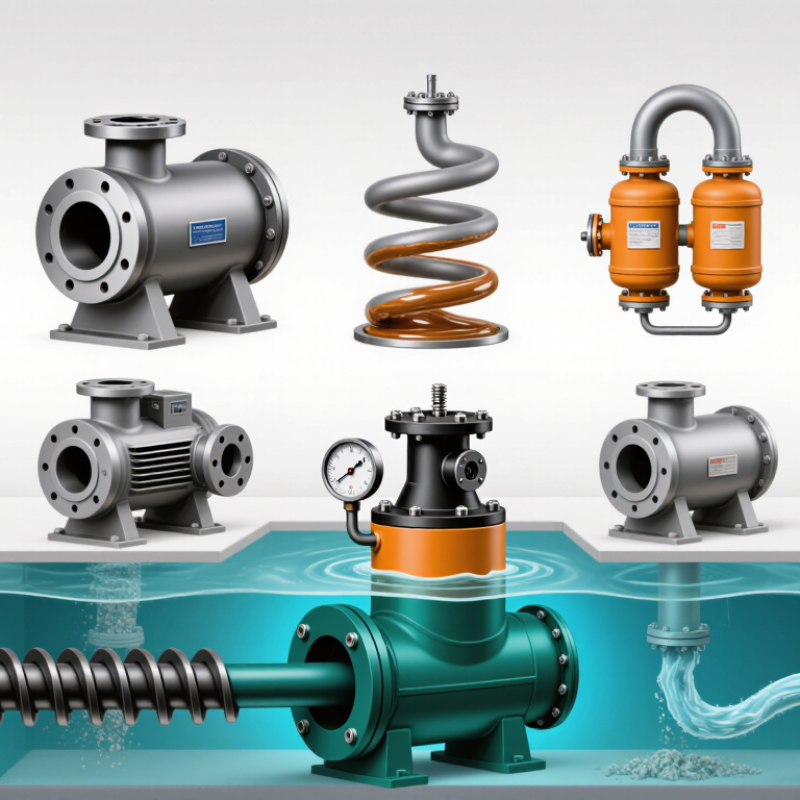
Centrifugal pumps suit low to medium viscosity sludge with steady flow.
Vortex pumps handle suspended solids with reduced clogging risk.
Cutter pumps break fibrous material before discharge.
Submersible pumps operate inside wet wells and reduce suction-lift problems.
Progressive cavity pumps deliver controlled flow for thick, abrasive sludge.
Diaphragm pumps tolerate air, solids, and intermittent operation.
Peristaltic pumps isolate sludge inside a replaceable hose.
Screw pumps move dense material gently with limited shear.
Air-operated double-diaphragm pumps fit variable flow and difficult installation areas.
Piston pumps generate high pressure for long transfer distances.

The correct type depends on solids size, moisture content, viscosity, temperature, and required flow. A centrifugal impeller may perform well today but struggle after sludge concentration rises. Vortex clearance should be checked against rags, grit, and expected particle size. Cutter systems need inspection because blades gradually lose cutting performance. Submersible units require suitable cable protection and reliable level controls. Thick sludge can overload a pump that looks correctly sized on paper.

No selection chart is perfect. Field samples matter. Buyers should request a tested performance curve, materials list, seal details, and maintenance intervals. Confirm motor voltage and local safety requirements before ordering. Leave room for fluctuating solids. That small allowance is often forgotten. Performance claims also need careful review, especially when testing uses clean water instead of real sludge. A pilot trial can reveal unexpected settling, vibration, or hose wear.

Top 10 Types: Progressive-Cavity, Lobe, Screw, Piston, Diaphragm, Peristaltic

Top 10 Sludge Transfer Pump Types for Global Buyers

Global sludge buyers should assess solids, moisture, distance, and cleaning access. Progressive-cavity pumps move thick sludge steadily through long discharge lines. Their rotor and stator need careful inspection when grit is present. Lobe pumps handle soft solids and gentle transfer, but pressure spikes can damage timing elements. Screw pumps suit dewatered sludge and fibrous material, especially where stable flow matters. They need consistent inlet feed; starvation can increase wear. Piston pumps create high pressure for dense sludge and long pipelines. Pulsation is real, so dampening equipment may be necessary.

Diaphragm pumps tolerate abrasive mixtures and intermittent flow. Air consumption and valve maintenance deserve close attention. Peristaltic pumps isolate sludge inside a flexible hose, reducing seal contact and contamination risks. They work well with abrasive, shear-sensitive media, but hose fatigue can stop production without warning. Operators should record flow, pressure, solids percentage, temperature, and cleaning time during trials. A pump that looks efficient on paper may clog during a cold morning startup. I have seen specifications hide this weakness. Selection should include spare parts, local service skills, and safe inspection access. No pump is universally best. That assumption can cost more than the equipment.

Selection by Duty: 0.1–5,000 m³/h Flow and 5–100 m Head

Choosing among the top 10 sludge transfer pump types starts with duty, not catalog popularity. Required flow may range from 0.1 to 5,000 m³/h, while head can reach 100 meters. For low flow and thick sludge, progressive cavity, peristaltic, piston, plunger, or air-operated diaphragm pumps provide controlled movement. Twin-screw pumps suit variable viscosity and gentle handling. Centrifugal, vortex, recessed-impeller, and submersible slurry pumps generally fit higher flows, especially below 40 meters of head. Hydraulic calculations still matter.

At 50–100 meters of head, staged centrifugal systems or positive-displacement designs may be more practical. Check solids size, dry-solids concentration, temperature, suction conditions, and expected wear. A pump handling 300 m³/h of thin sludge may fail quickly with abrasive grit. Conversely, an oversized positive-displacement pump can waste energy and complicate control. Field experience shows that actual sludge changes during the day. Design data is rarely perfect.

Tips: Measure sludge density at several operating times, not once. Confirm the real pipe length, elbows, elevation, and discharge pressure. Keep a margin, but avoid excessive oversizing. Ask for performance curves using similar solids, not clear water. I have seen selection errors begin with a clean-water test. That lesson deserves repeating. Safety guards, pressure relief, isolation valves, and maintenance access should be included before purchase.

Global Buyer Checklist: ISO 5199, ATEX, IE3 Motors, and 50/60 Hz

Choosing among the top 10 sludge transfer pump types requires more than comparing flow rates. Centrifugal, vortex, progressive cavity, twin-screw, diaphragm, peristaltic, rotary lobe, submersible, cutter, and piston pumps handle solids differently. In commissioning reviews, I check particle size, fiber content, viscosity, suction conditions, and cleaning access. A pump that looks efficient on paper may clog beside a thick sludge line.

ISO 5199 documentation should state design limits, hydraulic performance, materials, shaft sealing, and inspection procedures. Ask for test records, not only a compliance sentence. For hazardous areas, ATEX suitability must match the zone, gas or dust group, temperature class, and complete pump assembly. The motor certificate alone is not enough. Small details matter.

Check the IE3 motor rating, starting method, enclosure protection, thermal sensors, and service conditions. IE3 improves efficiency, but it does not correct poor sizing. Frequency is equally important. A 50 Hz motor may produce different speed, head, and flow than a 60 Hz version. Confirm voltage, phase, frequency, rotation, and control-panel compatibility before ordering. Keep spare-part dimensions in the file. This is often missed. A neat checklist can still fail when local electrical practice, ambient temperature, or sludge changes during the year.

Top 10 Sludge Transfer Pump Types for Global Buyers

Typical specification availability for ISO 5199, ATEX suitability, IE3 motors, and 50/60 Hz operation

This screening matrix shows whether each pump type is commonly available with the listed buyer requirements. ISO 5199 is primarily associated with centrifugal pump designs, while ATEX suitability, IE3 motors, and dual-frequency operation depend on the complete pump, motor, drive, and installation configuration. Final certification and performance limits should be verified with the supplier.

Company Info

Universal Pumping

625 Apache Trail
Woodstock, GA 30189

Mon - Fri | 9:00 AM - 5:00 PM

Connect With Us

About Universal Pumping

Universal Pumping is staffed with industry professionals with 20-45 years experience with high pressure pumping systems. We represent only the “elite producers” in pump manufacturing: Britain’s EMS and Germany’s EMMERICH. Our engineering and manufacturing approach is conservative, and we do not use “guess work” in the design or sales of our pumping and filtration equipment.