

Universal Pumping | High Pressure Pumps
High Pressure Pumps for Difficult to Pump Slurry, Sludge, and Food Waste.
The 2026 power sector is entering a demanding phase. Electricity demand is rising, renewable generation is expanding, and aging grids require careful modernization. A Power Substation now supports more than voltage transformation. It must manage protection, automation, cybersecurity, grid stability, and increasingly complex power flows.
This article examines the leading Power Substation suppliers expected to shape the 2026 market. The evaluation considers engineering experience, transformer quality, GIS and AIS capabilities, digital substation platforms, protection systems, project delivery, and long-term maintenance. Major industry names may include Hitachi Energy, Siemens Energy, GE Vernova, Schneider Electric, Toshiba Energy Systems, and Hyundai Electric. Their strengths differ. One may lead in digital controls, while another performs better in high-voltage equipment or emerging-market service.
John D. McDonald, an IEEE Fellow and recognized power-system automation specialist, has observed, “The electric power industry is in the midst of a major transformation.” That transformation is visible in control rooms, where operators monitor remote assets through digital relays and fiber networks. It is also visible outdoors, beside large transformers, cooling fans, busbars, and carefully designed grounding systems.
No ranking is flawless. Regional standards, climate conditions, financing, and local service capacity can change the final choice. A supplier with excellent technology may still struggle with delayed spare parts or limited field support. Buyers should examine verified project records, failure-response procedures, lifecycle costs, and independent performance evidence. This introduction sets the foundation for a practical comparison, while recognizing that market leadership can shift quickly.
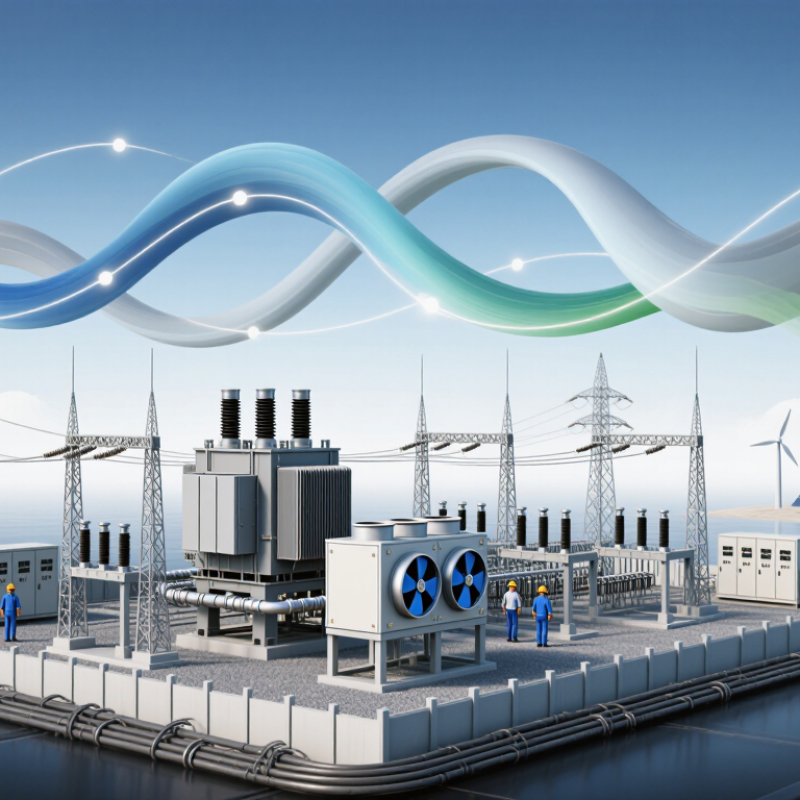
In 2026, a top power substation supplier is defined by more than equipment ratings or a polished website. It understands how transformers, protection systems, control panels, and communications behave together under stress. Experienced engineers study load growth, terrain, weather, and maintenance access before drawing the first layout. They also ask uncomfortable questions. What happens when a relay fails at 2 a.m.? Can technicians isolate the fault safely? Field experience turns these questions into practical designs, not impressive promises. Small details matter.
Professional knowledge must appear in verifiable work. A credible supplier documents design assumptions, factory tests, protection settings, inspection records, and commissioning results. Independent testing and recognized electrical standards provide useful checks. They do not replace judgment. The supplier should explain limitations in plain language and provide evidence from comparable projects, without hiding difficult performance data. Training is equally important. Operators need clear procedures, realistic simulations, and timely technical support. A strong handover leaves fewer unanswered questions.
Reliability continues after energization. Top suppliers plan spare parts, remote diagnostics, cybersecurity controls, maintenance intervals, and upgrade paths from the beginning. They track failures and correct recurring defects instead of blaming site conditions. That discipline builds authority slowly. No design is perfect. Unexpected heat, delayed deliveries, or unclear local requirements can expose weak assumptions. A responsible supplier records those lessons and revises its methods. In practice, trust grows through transparent decisions, measured performance, and people who answer when the lights go out.
A supplier-neutral evaluation table based on internationally recognized technical standards, grid-integration requirements, lifecycle performance, and project-delivery capability.
| Evaluation Dimension | 2026 Top-Tier Benchmark | Typical Evidence Required | Why It Matters | Reference Framework |
|---|---|---|---|---|
| High-voltage equipment compliance | Full type-test compliance for the applicable voltage class, insulation level, short-circuit rating, and switching-duty requirements. | Independent laboratory type-test reports, routine-test records, design certificates, and documented conformity assessment. | Confirms that switchgear and related equipment can withstand specified electrical, thermal, mechanical, and environmental stresses. | IEC 62271 series; applicable national grid codes |
| Power transformer capability | Designs covering utility transmission and distribution applications, with verified losses, temperature-rise performance, dielectric strength, and noise data. | Transformer test reports, guaranteed-loss schedules, temperature-rise results, oil or insulation-system documentation, and factory acceptance tests. | Transformer efficiency and reliability affect operating cost, network availability, and long-term asset performance. | IEC 60076 series; IEEE C57 series where applicable |
| Digital substation integration | Native support for interoperable protection, control, monitoring, and automation architectures using standardized communication protocols. | IEC 61850 conformance documentation, engineering tools, interoperability test results, time-synchronization design, and cybersecurity procedures. | Interoperability reduces engineering complexity and supports modern automation, condition monitoring, and remote operation. | IEC 61850; IEEE 1588 Precision Time Protocol |
| Protection and control performance | Application-specific protection schemes with documented selectivity, dependability, security, redundancy, and disturbance-recording capability. | Protection coordination studies, relay test plans, trip-circuit supervision records, redundancy diagrams, and commissioning reports. | Fast and selective fault clearing limits equipment damage and helps maintain system stability. | IEC 60255 series; utility protection requirements |
| Short-circuit withstand capability | Equipment ratings selected from the project fault study, with verified short-time withstand, peak withstand, and making capacity. | Network fault calculations, equipment rating schedules, type-test evidence, and coordination with upstream and downstream protection. | Correct fault-duty selection prevents unsafe operation and premature equipment failure. | IEC 62271-1; IEC 62271-200; applicable system studies |
| Insulation and environmental design | Insulation coordination and enclosure protection matched to altitude, pollution, humidity, temperature, corrosion, seismic conditions, and installation environment. | Altitude correction calculations, pollution-class selection, IP test results, corrosion protection specifications, and seismic qualification where required. | Environmental suitability is essential for dependable operation across different climates and site conditions. | IEC 60071; IEC 60529; IEC 62271-1; IEC 62271-207 |
| Renewable-energy and storage readiness | Proven capability to connect solar, wind, battery-storage, and other inverter-based resources while meeting voltage, frequency, fault-ride-through, and power-quality requirements. | Grid-connection studies, dynamic simulations, harmonic assessments, reactive-power capability curves, and commissioning test procedures. | Inverter-based generation changes fault behavior and requires advanced voltage-control and system-stability solutions. | Applicable transmission and distribution grid codes; IEEE 1547 where applicable |
| Cybersecurity maturity | Risk-based cybersecurity controls covering secure development, access management, network segmentation, patching, logging, incident response, and supplier assurance. | Cybersecurity management plan, asset inventory, vulnerability-management process, secure remote-access policy, and audit evidence. | Digitized substations increase operational efficiency but also expand the attack surface of critical infrastructure. | IEC 62443; IEC 62351; ISO/IEC 27001 |
| Reliability and maintainability | Condition-monitoring options, maintainable designs, clear failure-mode documentation, spare-parts planning, and measurable service-performance targets. | Reliability data, maintenance manuals, diagnostic-system documentation, mean-time-to-repair assumptions, and recommended spare-parts lists. | Lifecycle availability depends on early fault detection, efficient maintenance, and rapid restoration after failures. | IEC 60300 series; asset-management best practices |
| Factory and site quality assurance | Documented quality gates from design review through manufacturing, factory acceptance testing, installation, commissioning, and final handover. | Inspection and test plans, material traceability, nonconformance records, FAT and SAT protocols, calibration certificates, and as-built documentation. | Consistent quality control reduces commissioning defects and the risk of hidden manufacturing or installation problems. | ISO 9001; project-specific inspection and test plans |
| Delivery and project execution | Integrated engineering, procurement, construction, commissioning, and schedule-control capability with transparent risk management. | Detailed project schedule, interface matrix, logistics plan, risk register, document-control process, and change-management procedure. | Substation projects involve many interfaces; disciplined execution reduces delays, claims, and commissioning risk. | ISO 21502; contract-specific project controls |
| Sustainability and environmental performance | Documented reduction of embodied carbon, energy losses, hazardous materials, leakage risks, and end-of-life disposal impacts. | Environmental product declarations where available, lifecycle assessments, material declarations, greenhouse-gas controls, and recycling plans. | Utilities increasingly evaluate total environmental impact in addition to purchase price and technical compliance. | ISO 14001; IEC 62271-4; applicable environmental regulations |
| Occupational health and safety | Formal safety management covering electrical isolation, arc-flash risk, lifting, confined spaces, commissioning, and contractor control. | Health and safety plans, arc-flash studies, permit-to-work procedures, training records, incident statistics, and emergency-response plans. | Substation construction and maintenance involve high-energy hazards requiring systematic controls throughout the project lifecycle. | ISO 45001; local electrical-safety regulations |
| Service and lifecycle support | Regional service coverage, trained field personnel, accessible spare parts, technical documentation, remote support, and defined response targets. | Service-level agreements, training programs, parts availability plans, warranty terms, service-center coverage, and escalation procedures. | Long-term support directly influences outage duration, maintenance cost, and asset availability. | Contract-specific service requirements; IEC 60300 series |
| Total cost of ownership | Evaluation based on purchase price plus losses, maintenance, outages, upgrades, environmental compliance, and end-of-life costs. | Loss capitalization model, maintenance schedule, expected service life, upgrade roadmap, warranty conditions, and decommissioning assumptions. | The lowest initial bid may not provide the lowest lifecycle cost or the highest network availability. | Utility procurement methodology; lifecycle-cost analysis principles |
Note: Benchmark requirements vary by voltage level, network configuration, climate, local regulations, utility specifications, and project risk profile. Final supplier qualification should be based on verified project documentation rather than marketing claims alone.
Universal Pumping
625 Apache Trail
Woodstock, GA 30189
Mon - Fri | 9:00 AM - 5:00 PM
Universal Pumping is staffed with industry professionals with 20-45 years experience with high pressure pumping systems. We represent only the “elite producers” in pump manufacturing: Britain’s EMS and Germany’s EMMERICH. Our engineering and manufacturing approach is conservative, and we do not use “guess work” in the design or sales of our pumping and filtration equipment.


