Universal Pumping | High Pressure Pumps
High Pressure Pumps for Difficult to Pump Slurry, Sludge, and Food Waste.
Global buyers entering 2026 face a practical question: which water removal pump fits the site, not merely the catalogue? Flooded basements, construction pits, mines, farms, and municipal chambers demand different hydraulic performance. A submersible drainage pump suits clear or lightly contaminated water. A trash pump handles larger solids. Diaphragm pumps remain useful where air, sludge, or difficult priming complicates operation. No single ranking is perfect.
The need is substantial. The WHO and UNICEF Joint Monitoring Programme reported that 2.2 billion people lacked safely managed drinking water in 2022. Meanwhile, the U.S. Department of Energy’s Improving Pumping System Performance sourcebook identifies pumping systems as major industrial energy users. These findings support a broader market shift toward efficient motors, automated controls, corrosion-resistant materials, and easier maintenance. MarketsandMarkets’ Water Pumps Market report also tracks rising demand across municipal, industrial, agricultural, and infrastructure applications.
Dr. Lev Nelik, a recognized pump reliability specialist, emphasizes a useful engineering truth: “A pump is only as reliable as the system around it.” That warning deserves attention. Buyers should compare total cost, solids passage, head, flow rate, seal design, power supply, noise, spare parts, and local service. IP protection and certified electrical components matter in wet environments. So does real field experience. A pump that performs well in a laboratory may struggle with sand, tangled debris, voltage instability, or careless installation. This 2026 guide examines the leading water removal pump types, their practical limits, and the selection mistakes global buyers still make.
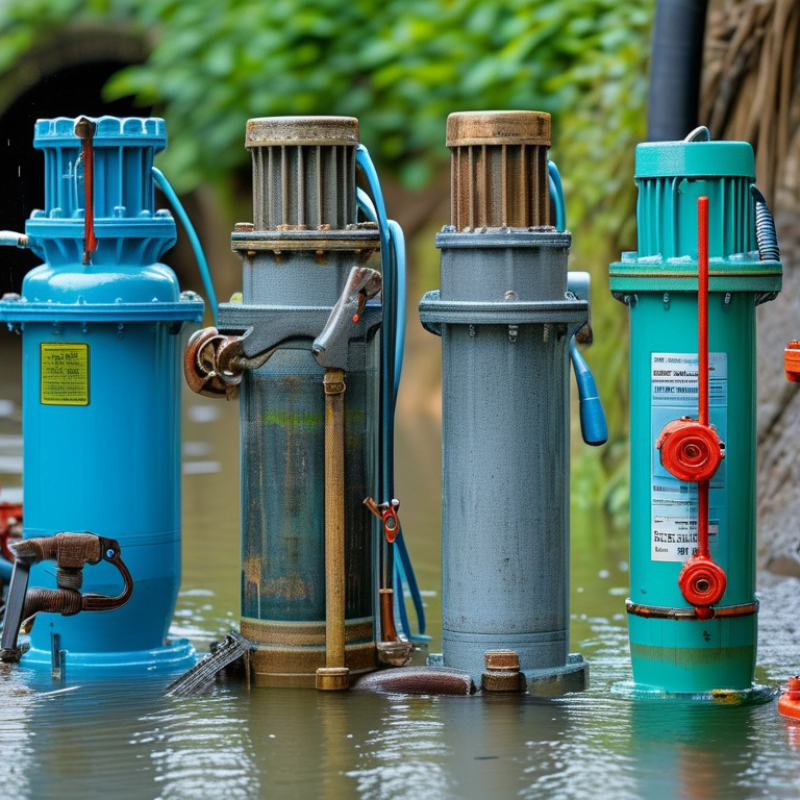
For global buyers, water-removal pump selection starts with fluid behavior, not catalogue horsepower. In field reviews, submersible pumps remain practical for flooded basements, wells, and construction pits. They operate below the waterline and need limited priming equipment. Centrifugal pumps suit clearer water and steady transfer. Their efficiency drops when suction lifts, air enters, or solids exceed the passage size.
Small detail, big consequence.
The UN World Water Development Report 2024 states that 2.2 billion people lacked safely managed drinking water in 2022. This pressure increases demand for reliable drainage and municipal infrastructure. Diaphragm pumps handle sludge, air, and intermittent duty well. They are slower, but forgiving. Trash pumps use wide passages for leaves, gravel, and fibrous debris. However, self-priming does not mean blockage-proof. Field conditions often defeat neat specifications.
Energy deserves equal attention. The U.S. Department of Energy’s Pumping System Sourcebook reports that pumping systems can represent about 27% of industrial motor electricity use. Buyers should compare total operating cost, not only purchase price. A submersible model may reduce installation work, while a centrifugal unit may lower energy use during long transfers.
My own preference is cautious: debris size, discharge length, duty cycle, and service access should be tested together. One overlooked variable can change the correct pump type.
2026 Top Water Removal Pump Types for Global Buyers
For floodwater, construction pits, and sewage bypasses, buyers usually compare submersible, trash, and diaphragm pumps. The right choice depends on five measurable factors. Flow rate shows how quickly water leaves the site, while head describes the vertical lift plus pipe losses. A pump rated at 100 m³/h may deliver far less through a long, narrow hose. U.S. DOE pumping-system guidance estimates that pumping can represent 25–50% of industrial electricity use, so efficiency deserves serious attention.
Solids size is equally practical. Clear-water pumps may clog when mud, gravel, or fibers enter the inlet. Check the documented free-passage diameter, not only the inlet size. NPSH is often overlooked. Hydraulic Institute standards explain that inadequate NPSH margin can cause cavitation, vibration, and early damage. Temperature, altitude, suction-lift conditions, and suction piping can reduce available NPSH. A clean datasheet is not enough. Site measurements are imperfect, but they are safer than guessing.
Tips: Request performance curves, not isolated flow figures. Compare duty-point efficiency at the actual head. Confirm solids size with real debris samples. Keep a margin for seasonal water changes, but avoid excessive oversizing. The U.S. EPA’s energy-management guidance also supports measuring operating conditions before equipment decisions. Small details matter. A pump running quietly today may still be inefficient tomorrow. Recheck flow, voltage, vibration, and discharge pressure during commissioning and after heavy use.
| Water Removal Pump Type | Typical Application | Flow Rate | Total Head | Typical Pump Efficiency | Maximum Solids Size | Typical NPSHr | Key Selection Considerations |
|---|---|---|---|---|---|---|---|
| Submersible Drainage Pump | Construction-site dewatering, floodwater removal, basements, pits, and utility vaults | 10–250 m³/h | 5–40 m | 45–75% | 5–30 mm | Not normally specified | Best for clean to lightly contaminated water. Confirm continuous-duty rating, cooling method, cable length, and float-switch compatibility. |
| Submersible Sewage Pump with Vortex Impeller | Municipal sewage, wastewater sumps, commercial drainage, and effluent handling | 10–180 m³/h | 8–40 m | 40–68% | 50–100 mm | Not normally specified | Provides good clog resistance and non-contact pumping. Evaluate vortex losses, odor control, guide-rail systems, and solids loading. |
| Submersible Non-Clog Trash Pump | Stormwater, drainage channels, construction slurry, and water containing leaves or fibrous debris | 30–300 m³/h | 10–35 m | 55–75% | 50–100 mm | Not normally specified | Suitable where blockage resistance is more important than maximum pressure. Check impeller passage, abrasion resistance, and lifting arrangements. |
| Self-Priming Centrifugal Trash Pump | Open-pit dewatering, emergency flood response, irrigation drainage, and remote job sites | 20–250 m³/h | 15–50 m | 55–78% | 25–75 mm | 3–6 m | Useful when the pump must remain above water level. Verify suction-lift limits, priming time, foot-valve requirements, and suction-pipe diameter. |
| Diaphragm Pump | Sludge, abrasive water, mud, contaminated water, and intermittent site dewatering | 5–80 m³/h | 20–70 m | 35–60% | 25–75 mm | Not generally applicable | Handles air, sludge, and variable suction conditions well. Compare compressed-air consumption, pulsation, diaphragm life, and maintenance intervals. |
| Slurry Pump with Abrasion-Resistant Impeller | Mining drainage, dredging support, sand-laden water, mineral processing, and heavy mud removal | 10–200 m³/h | 10–60 m | 40–70% | 25–100 mm | 4–8 m | Select according to solids concentration, particle hardness, specific gravity, and pH. Wear parts may require regular inspection and replacement. |
| High-Head Multistage Centrifugal Pump | Deep excavation dewatering, long discharge pipelines, boiler-drainage support, and high-elevation transfer | 5–80 m³/h | 50–200 m | 65–85% | 3–10 mm | 2–5 m | Delivers high pressure with relatively clean water. Requires effective filtration or a settling stage when suspended solids are present. |
| Axial-Flow or Mixed-Flow Pump | Large-volume flood control, canal drainage, stormwater transfer, and low-lift water removal | 100–1,000 m³/h | 2–15 m | 70–88% | 10–50 mm | 2–5 m | Efficient for very high flow at low head. Confirm intake hydraulics, anti-vortex provisions, debris screening, and operating point stability. |
2026 Top Water Removal Pump Types for Global Buyers
Submersible pumps remain practical for flooded basements, construction pits, drainage channels, and emergency water removal. A 10–500 m³/h range covers small sites and large municipal projects. However, capacity alone is misleading. Buyers must check the pump curve at the required head, discharge distance, and solids size. A pump rated at 500 m³/h may deliver far less against a high lift. That mistake is common.
IP68 protection deserves careful attention. Under IEC 60529, IP68 confirms dust-tight construction and continuous immersion under specified conditions. It does not define one universal immersion depth or duration. Ask for the tested depth, cable-entry design, seal structure, and motor protection details. The 2024 United Nations World Water Development Report highlights rising water stress worldwide, while FAO data shows agriculture uses about 70% of global freshwater withdrawals. Reliable drainage equipment therefore supports more than flood response; it protects infrastructure and water efficiency.
Tips: Match flow, head, solids passage, and duty cycle before comparing prices. Use corrosion-resistant materials for salty or chemically affected water. Confirm thermal overload protection and float-control reliability. IP68 is valuable, but it is not magic. Periodic seal inspection still matters. Some specifications look impressive on paper, yet field performance may disappoint when hoses kink, voltage drops, or sediment blocks the inlet.
Submersible pump reference capacities from 10 to 500 m³/h with IP68 protection requirements.
The chart presents practical reference flow capacities for common water-removal applications. IP68 protection is specified for continuous submersion and protection against dust ingress, while the final pump selection should also consider total head, solids handling, liquid temperature, cable sealing, and local electrical requirements.
Diaphragm and trash pumps suit demanding dewatering sites with 25–75 mm solids. Diaphragm pumps move abrasive sludge, mud, and water containing sharp gravel. They can tolerate short dry-running periods, which helps during unstable intake conditions. Their flow is usually lower, however. Trash pumps deliver higher volumes through semi-open impellers. They handle stones, leaves, rags, and coarse sediment when suction lines remain clear.
The UN World Water Development Report 2024 states that 2.2 billion people lack safely managed drinking water. This pressure increases demand for dependable temporary pumping during floods, construction, and infrastructure repairs. Buyers should compare solids capacity, total head, suction lift, fuel use, and service access. A 75 mm passage sounds powerful, but real performance falls when sludge thickens or hoses bend sharply. My practical view is imperfect: oversized pumps can waste fuel, while undersized units may overheat continuously.
Tips: Match the pump to the largest solid, not average debris. Use a short, reinforced suction hose and inspect strainers frequently. Measure discharge turbidity before release, following local requirements. Keep spare diaphragms, gaskets, and wear components nearby. Test the pump under dirty water, not only clean water.
2026 Top Water Removal Pump Types for Global Buyers
Global demand is becoming harder to serve. The WHO/UNICEF JMP 2023 report estimates that 2.2 billion people lacked safely managed drinking water in 2022. The 2024 UN World Water Development Report projects global water demand could rise 20–30% by 2050. Buyers therefore need more than flow and head figures.
Frequency is a practical risk. A 50 Hz motor may run differently on a 60 Hz supply, changing speed, head, current, and overheating margins. Confirm voltage, phase, motor protection, and the tested pump curve. Do not trust a simple “50/60 Hz” label. It may hide a poor duty-point match.
ATEX selection must follow the installation zone, gas or dust group, temperature class, and equipment category. CE marking requires applicable conformity documentation, not just a printed logo. UL acceptance can also depend on the destination market and installation authority. ISO 9906:2012 provides performance-test procedures and tolerance grades; request the test point, efficiency, NPSH data, and signed report. Field inspections often find certificates covering the motor, but not the complete pump assembly. That gap matters. No checklist is perfect. Recheck every document against the actual nameplate, cable gland, seal material, and hazardous-area classification.
Universal Pumping
625 Apache Trail
Woodstock, GA 30189
Mon - Fri | 9:00 AM - 5:00 PM
Universal Pumping is staffed with industry professionals with 20-45 years experience with high pressure pumping systems. We represent only the “elite producers” in pump manufacturing: Britain’s EMS and Germany’s EMMERICH. Our engineering and manufacturing approach is conservative, and we do not use “guess work” in the design or sales of our pumping and filtration equipment.