Universal Pumping | High Pressure Pumps
High Pressure Pumps for Difficult to Pump Slurry, Sludge, and Food Waste.
Choosing a filter press feed pump in 2026 requires more than comparing flow rates and prices. The right pump must match slurry behavior, filter press capacity, operating pressure, and maintenance conditions. A pump that performs well with mineral concentrate may struggle with food waste or chemical sludge. That difference matters.
This guide explains the practical decisions behind reliable pump selection. It examines diaphragm, centrifugal, peristaltic, and progressive cavity designs. Each option responds differently to abrasive particles, changing viscosity, and pressure fluctuations. We will also consider feed rate, cake formation, energy use, seal protection, and cleaning requirements. Small details can decide whether a press fills evenly or stops with half-formed cakes.
Real plants are rarely so tidy. Slurry density changes during a shift. Operators may adjust valves by hand. The feed tank may contain unexpected grit. Therefore, a filter press feed pump should be selected from tested process data, not a brochure alone. Ask suppliers for performance curves, materials information, pressure limits, and references from similar applications.
Measure twice.
A dependable selection process also includes field experience. Check how often parts need replacement, whether the pump can run dry briefly, and how easily technicians can access wear components. These questions often receive less attention than purchase price. That can be a costly mistake. Still, no recommendation fits every site perfectly. Pilot testing, conservative sizing, and honest review of operating data remain essential.
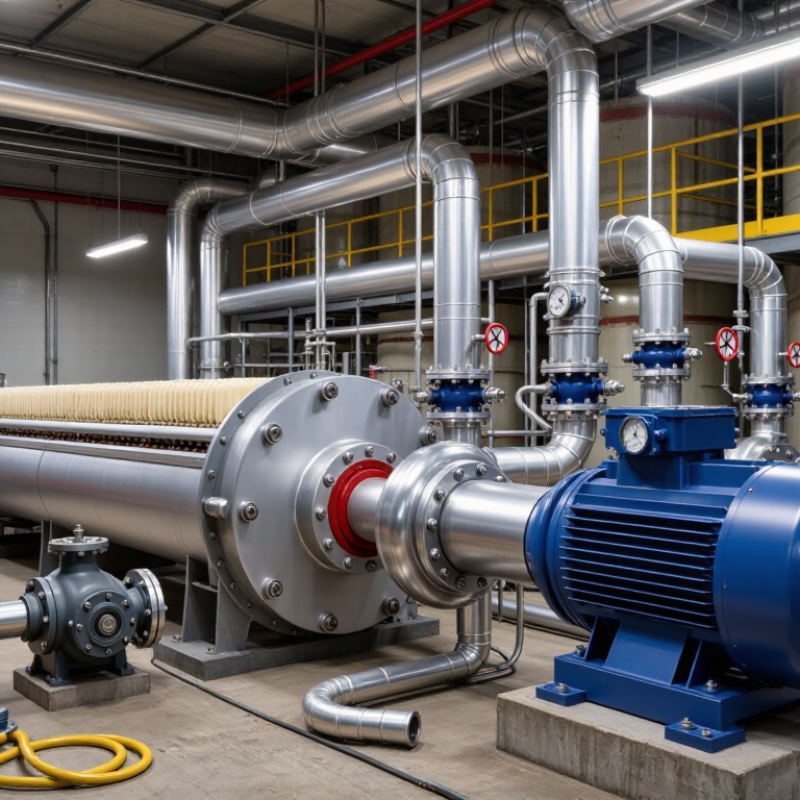
How to Choose a Filter Press Feed Pump in 2026?
Define the Filter Press Requirements and Operating Conditions
Start with the filter press, not the pump catalogue. Record plate size, chamber volume, cloth type, slurry concentration, target cycle time, and cake moisture. Measure actual flow and pressure at the press inlet. Do not rely only on historical specifications. A 2024 technical report from the U.S. Department of Energy indicates that pumping systems may consume nearly 20% of industrial electricity, so an oversized pump can create avoidable operating costs.
Slurry behavior changes the selection. Note particle size, temperature, pH, density, and viscosity at the highest solids concentration. Measure the feed pressure needed during the filling and compression stages. A pump may deliver 30 m³/h at low resistance, yet fall below 8 m³/h near the final cake stage. That difference matters. Very much.
The Hydraulic Institute recommends evaluating pumps as complete systems, including piping losses, control methods, and operating points. Select a pump that tolerates intermittent duty, abrasive particles, and frequent starts. Check the net positive suction head under the hottest operating condition. Include a pressure gauge near the press and a flow meter upstream. Field measurements often expose assumptions that drawings hide. In practice, I would leave a controlled adjustment range, not excessive capacity. More flow is not always better; it can damage cloths, disturb cake formation, and raise filtrate turbidity. Industry guidance from the European Commission’s Best Available Techniques reference documents also emphasizes energy monitoring and process optimization for industrial water treatment systems. Something gets missed here. Recheck the slurry after seasonal changes.
Define the filter press requirements and operating conditions before selecting pump capacity, pressure rating, and control method.
The chart shows a typical filter press filling cycle: flow is reduced as cake resistance increases, while feed pressure rises toward the final filtration pressure. These indicative engineering values help define the required pump operating envelope. The selected pump should also be checked against slurry solids concentration, particle size, viscosity, temperature, corrosion risk, and the filter press manufacturer's maximum pressure.
How to Choose a Filter Press Feed Pump in 2026?
Match the pump to the filter press, not only to the slurry tank. Start with required flow: divide chamber volume by the target filling time, then allow for line losses and gradual cake resistance. A pump rated only by maximum flow may overload the press early. Start with the cake.
Pressure must cover filter-cake resistance, piping friction, elevation, and a practical safety margin. The U.S. Department of Energy reports that pumping systems can represent about 25% of industrial electricity use, making unnecessary pressure expensive. Variable-speed control can reduce energy waste, but unstable speed may cause uneven cake formation. That trade-off deserves testing.
Slurry properties often decide the pump type. Measure solids concentration, particle size, viscosity, settling rate, and abrasiveness. High-solids slurries may need positive-displacement operation, while dilute slurries can behave differently. The U.S. EPA’s Biosolids Technology Fact Sheet links feed conditioning and solids content with dewatering performance. However, belt-press data cannot be transferred perfectly to recessed-chamber presses. That limitation matters. Record actual pressure, flow, motor load, and cake moisture during a pilot run. Use those measurements to refine the selection, because laboratory slurry results may look better than plant conditions.
| Slurry Application | Typical Solids Concentration | Typical Viscosity | Recommended Flow Range | Typical Operating Pressure | Recommended Pump Type | Preferred Wetted Materials | Key Selection Considerations |
|---|---|---|---|---|---|---|---|
| Mineral Concentrate | 20–45% by weight | 50–500 mPa·s | 5–50 m³/h | 6–16 bar | Air-operated double-diaphragm or progressive cavity pump | Abrasion-resistant elastomers; hardened alloy or ceramic-lined components | Allow for abrasive wear, maintain low shear, and select a pump that can sustain the final filtration pressure without excessive pulsation. |
| Metal Hydroxide Sludge | 10–30% by weight | 100–2,000 mPa·s | 3–30 m³/h | 5–12 bar | Progressive cavity or hydraulically driven diaphragm pump | Stainless steel or corrosion-resistant alloy; chemically compatible stator and diaphragm materials | Check chemical compatibility, torque demand, and the risk of thickening during stoppages. A variable-speed drive helps control the filling cycle. |
| Municipal Wastewater Sludge | 1–8% by weight | 100–10,000 mPa·s | 10–100 m³/h | 4–10 bar | Progressive cavity, rotary lobe, or eccentric disc pump | Cast iron or stainless steel with elastomers selected for the sludge chemistry | Consider fibrous material, entrained air, ragging, and shear sensitivity. Include access for cleaning and use dry-run protection where required. |
| Food-Process Slurry | 5–35% by weight | 50–5,000 mPa·s | 2–40 m³/h | 3–10 bar | Sanitary diaphragm, progressive cavity, or rotary lobe pump | 316L stainless steel; food-compatible elastomers and sanitary seals | Use hygienic connections, cleanable surfaces, and a pump design suitable for clean-in-place procedures. Avoid unnecessary shear and heat generation. |
| Coal or Mineral Tailings | 25–60% by weight | 100–3,000 mPa·s | 10–150 m³/h | 8–20 bar | Heavy-duty diaphragm or progressive cavity pump | High-chrome alloy, rubber lining, ceramic lining, or other abrasion-resistant materials | Use wear-resistant components, oversize the suction line where practical, and confirm the pump can handle high discharge pressure at the end of the cycle. |
| Lime Slurry | 5–30% by weight | 10–1,000 mPa·s | 3–40 m³/h | 5–12 bar | Diaphragm or progressive cavity pump | Stainless steel, rubber-lined, or chemically resistant wetted components | Prevent settling and crystallization by minimizing dead zones. Verify seal, diaphragm, and elastomer compatibility with high-pH service. |
| Chemical Precipitate | 5–25% by weight | 1–500 mPa·s | 2–30 m³/h | 4–12 bar | Air-operated double-diaphragm or magnetic-drive centrifugal pump | Material selected according to pH, oxidizing potential, and chemical composition | Confirm corrosion resistance, vapor pressure, temperature, and solids size. Use a non-sparking and leak-minimizing design where process conditions require it. |
| Ceramic or Mineral Processing Slurry | 30–70% by weight | 500–10,000 mPa·s | 2–40 m³/h | 8–20 bar | Progressive cavity or high-pressure diaphragm pump | Hardened alloy, ceramic-lined, or abrasion-resistant elastomer components | Evaluate particle size distribution, maximum particle size, suction lift, and rotor or diaphragm wear. Keep the actual flow within the pump’s efficient operating range. |
| Activated Carbon Slurry | 5–25% by weight | 10–1,000 mPa·s | 2–25 m³/h | 4–10 bar | Diaphragm or low-shear progressive cavity pump | Stainless steel or compatible coated components; abrasion-resistant elastomers | Limit shear where particle integrity matters, avoid dead-headed operation, and provide filtration or straining only when it will not restrict the feed line. |
| High-Viscosity Industrial Sludge | 10–40% by weight | 2,000–50,000 mPa·s | 1–20 m³/h | 6–16 bar | Progressive cavity or hydraulic piston diaphragm pump | Heavy-duty steel or stainless steel with application-specific elastomers | Check starting torque, suction conditions, temperature, and viscosity at the lowest operating temperature. Use a hopper or agitator if bridging or settling is likely. |
Selecting a filter press feed pump starts with the process, not the pump catalog. Check slurry density, particle size, viscosity, temperature, and required pressure.
A centrifugal pump suits thin slurries and higher flow rates. Its flow may decline as the filter cake becomes denser.
A positive displacement pump handles changing resistance more consistently.
Diaphragm pumps can manage abrasive slurries and intermittent operation, but pulsation may affect filtration.
Pressure matters.
Measure twice.
Construction materials must match the slurry chemistry.
Stainless steel can suit many neutral or mildly corrosive mixtures. Polypropylene offers useful resistance for several chemical applications. PVDF may perform better with stronger chemical exposure and elevated temperatures.
Abrasive solids require careful attention to impellers, diaphragms, valves, and wear plates. Material compatibility charts provide guidance, but real operating conditions can differ.
Request test data when the slurry contains mixed chemicals.
Field experience often reveals overlooked details.
I once treated viscosity as the main concern, then found that trapped air caused unstable feeding. That assumption was wrong.
Install a reliable pressure gauge near the press inlet. Include a flow-control method and allow easy inspection of wetted parts. A pump rated far above the required pressure can increase wear and energy use. A smaller pump may struggle during final cake formation. Review actual duty cycles, maintenance access, and spare-part availability before selecting the final construction.
How to Choose a Filter Press Feed Pump in 2026?
Energy use should be measured at the required pressure, not at the motor nameplate. The U.S. Department of Energy reports that pumping systems can represent up to 25% of industrial electricity consumption. The International Energy Agency estimates motor-driven systems use about 53% of global electricity. These figures make pump efficiency more than a purchasing detail.
A filter press feed pump needs stable flow during filling and higher pressure near cake formation. A variable-frequency drive can reduce throttling losses and adjust speed as resistance changes. Pressure sensors can support automatic control, but poor calibration creates unstable cycles. Include dry-run protection, overload alarms, and a clear emergency stop. Control sophistication is useful only when operators understand it. That part is often underestimated.
Tips: Record flow, pressure, cycle time, and power for ten batches. Compare kWh per tonne of dry solids, not only hourly consumption. Inspect check valves, diaphragms, seals, and wear plates weekly when abrasive slurry is present. Keep critical spares on site. Maintenance reports from the U.S. DOE repeatedly link proactive practices with lower downtime and energy waste. Still, actual savings vary with slurry density and operator habits. A smaller pump may consume less energy but extend each cycle. That trade-off deserves a real trial, not a spreadsheet guess.
Verify Safety, Compatibility, and Total Ownership Cost
Selecting a filter press feed pump requires more than checking flow and pressure. In field installations, I have seen small compatibility errors cause leaks, blockages, and costly downtime. Confirm the slurry’s solids content, temperature, viscosity, and chemical behavior. Then compare these details with wetted materials, seals, valves, and connection sizes. A pump must also match the filter press cycle, including pressure rise and flow reduction. Safety matters every minute. Inspect guarding, emergency isolation, pressure relief, and dry-run protection before approval.
Tips: Request documented performance curves, material certificates, maintenance instructions, and test records. Measure the actual pipeline length and elevation. Do not rely only on catalog conditions. Real slurry is rarely perfect.
Total ownership cost includes energy, spare parts, labor, cleaning, and unplanned stoppages. A lower purchase price can become expensive after repeated seal failures. Ask how often wear components require replacement and whether technicians can access them safely. Check motor efficiency and control compatibility, especially where pressure changes frequently. I would also review the supplier’s technical support and response process. This detail is often overlooked. It should not be.
Leave room for uncertainty. Slurry properties can change during production, and laboratory samples may not represent every shift. Use conservative design margins, but avoid excessive oversizing. An oversized pump may waste energy and disturb cake formation. Record operating data after installation, then compare pressure, flow, power, and maintenance results. That feedback can reveal whether the original selection was truly suitable.
Universal Pumping
625 Apache Trail
Woodstock, GA 30189
Mon - Fri | 9:00 AM - 5:00 PM
Universal Pumping is staffed with industry professionals with 20-45 years experience with high pressure pumping systems. We represent only the “elite producers” in pump manufacturing: Britain’s EMS and Germany’s EMMERICH. Our engineering and manufacturing approach is conservative, and we do not use “guess work” in the design or sales of our pumping and filtration equipment.