

Universal Pumping | High Pressure Pumps
High Pressure Pumps for Difficult to Pump Slurry, Sludge, and Food Waste.
Choosing the right sludge filter starts with understanding what the process must handle, not simply comparing equipment prices. Sludge varies widely in solids concentration, particle size, viscosity, and chemical composition. A filter that performs well on one wastewater stream may clog quickly on another. Small details matter: sticky fibers, abrasive grit, or a change in feed temperature can alter filtration performance.
Before selecting equipment, define the required throughput, target cake dryness, and acceptable filtrate quality. Then compare technologies such as filter presses, belt filters, and vacuum filters against those requirements. Ask suppliers for performance data using representative sludge, not just ideal test material. A short trial can reveal cycle time, cloth blinding, wash-water demand, and how easily the cake releases. That matters.
Operating conditions deserve equal attention. Consider available floor space, operator workload, maintenance access, energy use, and the cost of replacement filter cloths. Check whether the system can manage expected changes in sludge volume or composition. These are practical checks, not glamorous ones. Yet they often determine whether a sludge filter remains dependable after installation. No single design is best for every plant, and early estimates can be wrong. A careful comparison should state its assumptions and leave room for uncertainty. The sections that follow explain how to assess process needs, compare filter types, and evaluate lifecycle costs before making a decision.
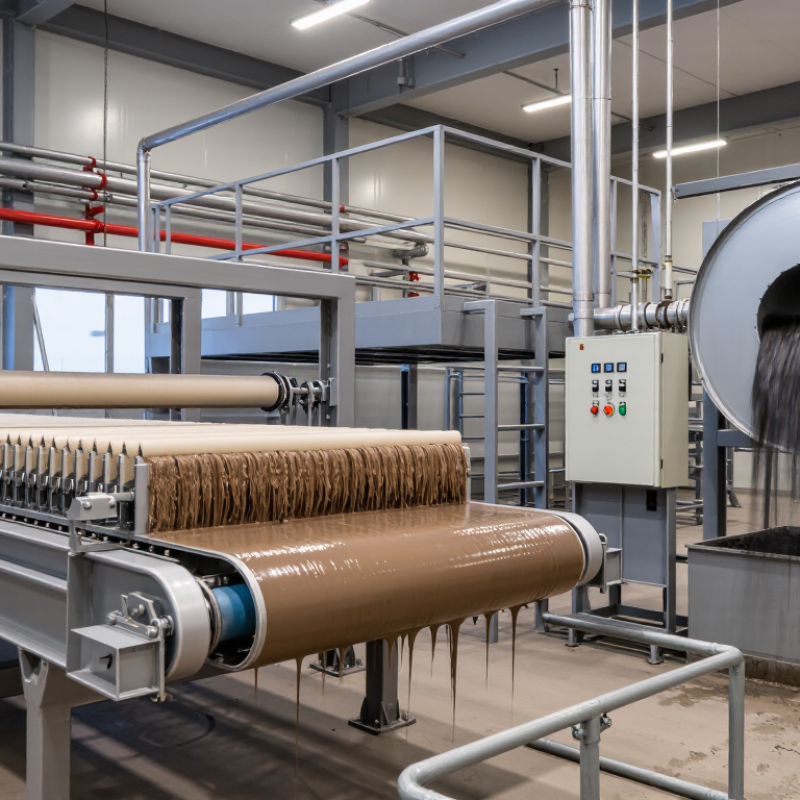
How to Choose the Right Sludge Filter?
Understanding Sludge Filtration and Its Purpose
Sludge filtration removes water from a thick mixture of solids and liquid, making the remaining material easier to handle. At a treatment plant, filtration can turn pumpable sludge into a damp cake for moving, storage, or further processing. The goal is not always to produce a dry solid. Not always. Even a modest reduction in water can lower hauling volume and simplify downstream work. Small changes matter. Feed sludge can vary by hour, especially after cleaning cycles or shifts in production. A filter that performs well on one sample may struggle with the next.
Filtration directs sludge against a permeable surface while pressure or gravity moves liquid through it. Solids stay behind and build into a cake. Operators monitor filtrate clarity, cycle time, cake texture, and how easily the cake releases. These details reveal more than a single dryness figure. Cloudy filtrate may mean fine particles are escaping, while a sticky cake can slow discharge and cleaning. The right setup depends on solids content, particle size, chemistry, and the next handling step. Lab tests help, but they rarely capture every plant condition. Bench results can disappoint at full scale; real sludge is less tidy. Plan for routine checks and room to adjust.
| Technology | How It Works | Commonly Considered For | Typical Advantages | Key Considerations | May Be a Good Fit When |
|---|---|---|---|---|---|
| Belt filter press | Conditioned sludge drains by gravity, then is squeezed between moving porous belts through a series of rollers. | Municipal and industrial sludges that can be conditioned to release water. | Continuous operation; straightforward access for inspection; can process substantial flows. | Usually requires polymer conditioning and regular belt washing. Needs space and management of wash water and odors. | A continuous process is preferred and there is room for the press, belt maintenance, and wash-water handling. |
| Recessed-plate filter press | Sludge is pumped into chambers formed by plates. Pressure drives filtrate through filter cloth while solids build into a cake. | Many industrial slurries and sludges where a relatively dry cake or clear filtrate is important. | Can produce a high-solids cake when the feed and operating conditions are suitable; enclosed configurations are available. | Typically operates in batches. Requires cloth care and time for filling, pressing, opening, and cake removal. Feed characteristics strongly affect cycle time. | Cake dryness or filtrate quality is a priority and batch operation is acceptable. |
| Screw press | A rotating screw moves sludge through a screen while gradually increasing pressure to separate liquid from solids. | Selected municipal and industrial sludges, including some biological sludges, after suitability testing. | Continuous operation; relatively low rotational speed; often has a compact layout and modest operator attention. | Performance depends on sludge properties and conditioning. Screens need cleaning, and cake solids may be lower than those achievable with some high-pressure presses. | Steady, continuous dewatering and a compact installation are important, and the sludge is compatible with the screen-based process. |
| Decanter centrifuge | A rotating bowl separates solids from liquid by centrifugal force; a conveyor moves the settled solids toward discharge. | Municipal wastewater sludge and a range of industrial sludges, subject to feed and equipment assessment. | Continuous, enclosed separation; can handle variable flow rates within the equipment's operating range. | Requires electrical power and attention to wear, vibration, and maintenance. Polymer may be used, and noise control may be needed. | Continuous processing, an enclosed system, and a smaller footprint are valued, and the site can support mechanical maintenance. |
| Vacuum drum filter | A rotating drum partially submerged in a slurry uses vacuum to draw liquid through a filter medium, leaving solids on the drum surface. | Some continuous-process industrial slurries and relatively free-draining solids. | Continuous filtration; cake can be washed or removed as part of the operating cycle, depending on configuration. | Compressible or fine sludges can filter slowly. Vacuum filtration may not achieve the cake dryness possible with pressure filtration. | The feed forms a permeable cake and continuous filtration is more important than achieving the driest possible cake. |
Selection note: Sludge filtration separates liquid from solids; it does not destroy the solids. Actual throughput, cake solids, filtrate quality, and chemical use depend on sludge composition, particle size, conditioning, and operating settings. Pilot or bench testing with representative sludge is recommended before equipment selection.

Universal Pumping
625 Apache Trail
Woodstock, GA 30189
Mon - Fri | 9:00 AM - 5:00 PM
Universal Pumping is staffed with industry professionals with 20-45 years experience with high pressure pumping systems. We represent only the “elite producers” in pump manufacturing: Britain’s EMS and Germany’s EMMERICH. Our engineering and manufacturing approach is conservative, and we do not use “guess work” in the design or sales of our pumping and filtration equipment.


