Universal Pumping | High Pressure Pumps
High Pressure Pumps for Difficult to Pump Slurry, Sludge, and Food Waste.
Choosing a reliable food pump manufacturer requires more than comparing prices or browsing polished product catalogs. Global buyers must examine hygienic design, material quality, pumping accuracy, service capacity, and documented compliance. A suitable food pump should handle products such as sauces, dairy mixtures, oils, or fruit concentrates without damaging texture or creating cleaning risks.
This guide reviews leading manufacturers through a practical buyer’s perspective. It considers stainless-steel construction, sanitary connections, seal performance, temperature tolerance, and compatibility with cleaning procedures. It also examines production experience, international support, spare-parts availability, and the clarity of technical documentation. Details matter. A pump may perform well in a demonstration but struggle with thick fillings, foaming liquids, or frequent washdowns.
Supplier reputation remains important, but it should not replace direct verification. Buyers should request test data, installation references, warranty terms, and maintenance guidance before making a decision. Certifications can support trust, yet certification alone does not prove that a pump fits every production line. That distinction is easy to miss. A polished brochure may hide limitations, while a less famous manufacturer may offer stronger engineering support. This comparison aims to provide balanced, evidence-based guidance for food processors, equipment integrators, and distributors. Some evaluations will remain subjective because factory conditions differ. Still, clear criteria can reduce costly mistakes and improve long-term reliability.
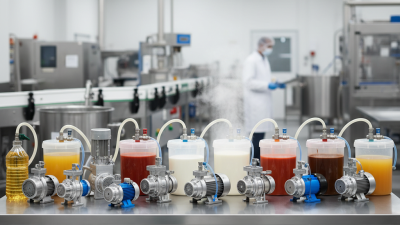
For global buyers, food pump selection should begin with viscosity, not brand reputation. Thin liquids, such as flavored water, often suit centrifugal pumps with steady flow. Thick sauces, yogurt, and fruit fillings need positive displacement designs. Lobe, twin-screw, and progressive cavity pumps can move these products gently. Product texture matters. A delicate emulsion may separate under excessive shear.
Flow rate defines production capacity. Measure it in liters per minute or cubic meters per hour. Then check whether the pump maintains that rate during filling, transfer, and cleaning. Pressure range is equally important. Long pipelines, narrow valves, elevation changes, and plate heat exchangers create resistance. A pump rated for high pressure may still perform poorly if its speed control is limited. Do not trust one catalog number.
Experienced buyers should request test data using the actual product temperature and viscosity. Honey at 20°C behaves very differently from warmed honey at 45°C. Confirm sanitary materials, surface finish, seal design, drainability, and CIP compatibility. Ask manufacturers about pulsation, noise, maintenance access, and spare-part availability. These details affect daily reliability more than polished specifications.
A practical selection sheet should record viscosity, target flow, maximum pressure, temperature, solids content, and cleaning method. This process is not perfect. Viscosity can change during processing, and laboratory measurements may not match factory conditions. Leave operating capacity below the advertised maximum. A small safety margin can prevent unstable flow, damaged seals, and unexpected downtime.
For global buyers, pump comparison should begin with hygienic evidence, not catalog speed. The WHO and FAO estimate that unsafe food causes about 600 million illnesses annually worldwide. That figure makes cleanability a commercial requirement, not a cosmetic feature.
Small details matter.
During supplier audits, buyers should request surface-finish records, seal specifications, weld-inspection reports, and validation data for cleaning chemicals. EHEDG guidance supports designs that reduce residue retention, while 3-A criteria emphasize sanitary construction and inspectability. A pump may appear compliant yet fail when its seal area traps protein after a warm rinse. That is where paperwork becomes less convincing.
The PMMI 2023 report on food and beverage processing trends highlights continuing investment in automation, sanitation, and production flexibility. Buyers should therefore compare energy use, spare-part access, hygienic changeover time, and service coverage. Performance data can still be incomplete. That is worth questioning. A lower purchase price may hide longer cleaning cycles, frequent seal replacement, or difficult inspection access.
When evaluating food pump manufacturers, inspect materials before comparing price or flow rate. Product-contact parts should use documented stainless steel grades, polished welds, and seals suited to acids, fats, and heat. A pump may look hygienic outside yet hide rough internal corners. Ask for surface-finish records, elastomer declarations, and replacement-part traceability. Documentation matters.
CIP capability should match the actual process, not a brochure claim. Check drainability, spray coverage, flow velocity, and cleaning temperature. During a factory trial, watch whether syrup remains behind the rotor or casing. SIP demands more: validated temperature exposure, pressure control, and materials that resist repeated thermal cycling. “Steam ready” is not enough. Request cycle data. Some suppliers provide impressive certificates but weak operating guidance; that gap deserves attention.
Hygienic design also includes connections, shaft seals, inspection access, and dead-leg control. Tri-clamp joints should seat evenly, without product traps or distorted gaskets. The pump should restart reliably after cleaning, not merely pass a showroom test. In my experience, maintenance teams reveal weaknesses faster than sales teams. Ask how often seals are changed, how failures are recorded, and whether operators can inspect critical areas without special tools. A perfect specification rarely survives every production shift.
Global buyers should assess pump suppliers beyond catalog flow rates. Capacity means more than factory size. Request monthly output, test-rig availability, stainless-steel grades, and batch traceability. PMMI’s 2024 State of the Industry report highlights labor pressure and supply-chain resilience as major equipment concerns. A capable supplier should therefore show production capacity and contingency plans. Ask for a documented factory acceptance test. Small details matter.
Certifications require careful interpretation. The ISO Survey 2023 recorded 1,265,216 ISO 9001 certificates and 45,966 ISO 22000 certificates worldwide. These figures show broad adoption, not automatic product quality. Check whether certification covers the manufacturing site. Verify material declarations, hygienic design evidence, and cleaning validation. FDA compliance is not the same as FDA certification. For sanitary applications, relevant 3-A or EHEDG documentation can strengthen technical confidence.
Service and lead time often decide the real purchase cost. Request response-time targets, remote troubleshooting procedures, spare-part locations, and commissioning support. Compare quoted lead times for standard pumps and customized units separately. PMMI research consistently links equipment investment with uptime and workforce efficiency. A supplier promising six weeks sounds attractive, but written assumptions are essential. Customs delays, motor availability, and inspection changes can extend delivery. I would also require a realistic recovery plan, because the cheapest quote may become the most expensive mistake.
Top Food Pump Manufacturers for Global Buyers
Selecting food pump manufacturers requires more than comparing catalog flow rates. Dairy, beverage, sauce, and oil lines behave differently during production. A pump for milk must protect product quality and support reliable clean-in-place cycles. Beverage applications often need gentle handling to reduce foam and preserve carbonation. Sauces may require wider passages because particles can clog narrow valves. Oil systems demand seals that tolerate changing viscosity and temperature.
Look for manufacturers with documented testing, hygienic stainless-steel construction, and clear material specifications. Ask how the pump performs at startup, not only under ideal conditions. A sauce may flow easily when warm, then resist movement after a short shutdown. That detail matters. For dairy, check surface finishes, drainability, and elastomer compatibility. For beverages, review shear performance and pulsation control. For oils, compare pressure stability across different viscosities.
Technical support also separates capable suppliers from ordinary ones. Request sizing calculations based on actual flow, temperature, solids, and suction conditions. Factory testing with your product is valuable. It can reveal air entrainment, excessive heat, or unexpected cleaning time. I have seen selection decisions focus too heavily on purchase price. That approach can create expensive maintenance later. Still, no manufacturer gets every recommendation right. Recheck assumptions during pilot trials and record real operating data. Strong suppliers welcome those corrections and improve the final specification.
Universal Pumping
625 Apache Trail
Woodstock, GA 30189
Mon - Fri | 9:00 AM - 5:00 PM
Universal Pumping is staffed with industry professionals with 20-45 years experience with high pressure pumping systems. We represent only the “elite producers” in pump manufacturing: Britain’s EMS and Germany’s EMMERICH. Our engineering and manufacturing approach is conservative, and we do not use “guess work” in the design or sales of our pumping and filtration equipment.